
The UK’s oil drilling ambitions pose a serious threat to protected marine areas, akin to trying to dance smoothly on a crowded floor. These precious ecosystems face degradation, undermining conservation goals and putting diverse marine life at risk. With oil spills causing health issues for fish and birds, and tricky chemicals polluting habitats, the future looks uncertain. Balancing energy needs and marine protection is essential, and the stakes are high—stay tuned for the latest developments in this ongoing saga.
Quick Overview
- Many UK Marine Protected Areas (MPAs) remain ineffective, with 90% of offshore benthic areas still impacted by destructive bottom trawling activities.
- Oil exploration poses significant risks to marine ecosystems, potentially compromising established conservation goals and the integrity of protected sites.
- Continuous oil spills and harmful chemicals threaten biodiversity, leading to irreversible damage to sensitive habitats like cold-water corals and sponge communities.
- Restoration efforts for degraded marine environments are undermined by ongoing oil projects, threatening future conservation outcomes.
- Balancing energy demands with environmental protection is increasingly challenging, highlighting a growing conflict between conservation and oil development in UK waters.
Oil Drilling vs. Marine Protection Goals
The UK waters feature 181 Marine Protected Areas (MPAs), designed to shield fragile ecosystems. This is a reminder that safeguarding ecosystem services is essential for long-term resilience. However, a shocking 90% of offshore benthic MPAs endure relentless bottom trawling. In total, 158 MPAs in English inshore waters think of these protected zones as glass bubbles, only to discover someone keeps poking holes in them! As of now, the statutory environment act target aims for at least 70% of protected features in MPAs to be in favourable condition by 2042 While the government aims for a 70% success rate of healthy habitats by 2042, current “paper park” effectiveness raises eyebrows.
UK waters boast 377 Marine Protected Areas, yet 90% of benthic zones suffer the unrelenting assault of bottom trawling.
It’s a classic case of juggling: without tighter regulations, something’s bound to slip.
The Impact of Oil Spills on Marine Life and Ecosystems
Imagine fish gulping down toxic oil instead of their usual diet—not quite a gourmet meal! In cities, rain gardens can help capture runoff before it reaches the ocean and support healthier urban waterways. Birds coated in sludge can’t keep warm, leading to an uncomfortable bout of hypothermia. While juvenile dolphins may take decades to emerge healthy from oil-laden waters, entire communities of seabirds can suffer staggering losses. Persistent oil residues can contaminate sediments, impacting benthic organisms and reproductive cycles. Furthermore, the 3.7 million tonnes of oil spilt into oceans since 1970 illustrate the vast scale of this ongoing environmental crisis.
With lingering oil wreaking havoc on coral reefs and shorelines, the ripple effects of these spills resemble a never-ending bad sequel—one that no one wants to watch.
How Will Oil Exploration Shape Future Marine Conservation?
How will oil exploration shape future marine conservation?
How might the future of marine conservation fare under the relentless pursuit of oil exploration? Robust marine protection strategies are essential to safeguard biodiversity in the face of energy expansion. The stakes are high, with treasure troves of biodiversity facing looming threats from oil rigs.
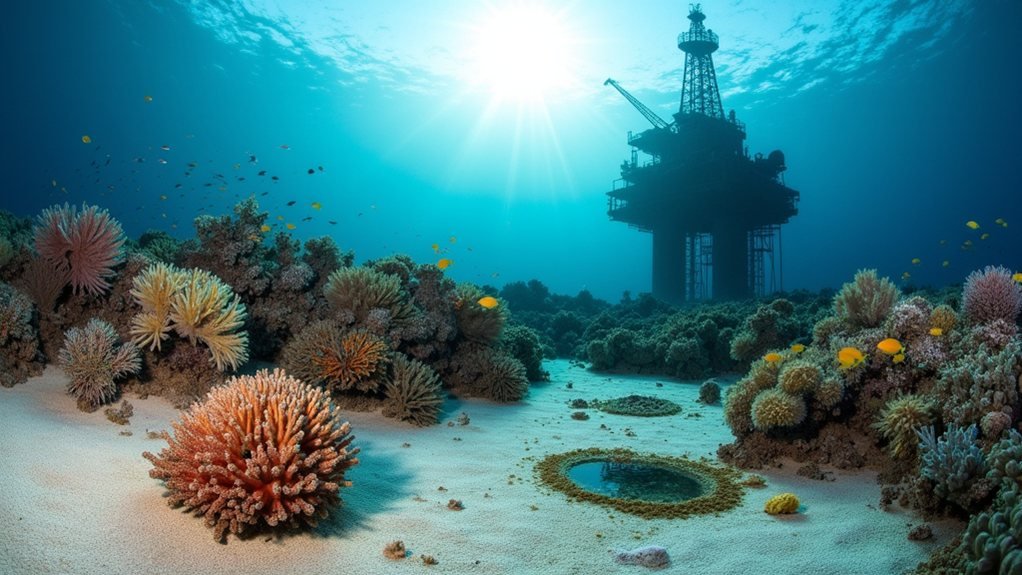
Envision this: deep sponge communities and cold-water corals, nature’s nutrient recyclers, disappearing faster than a magician’s rabbit. As risky chemicals seep into the ocean, marine ecosystems face a fate worse than a bad breakup—irreversible degradation. Chronic oil spills are just one of the many hazards that plague these vital habitats, affecting species that rely on them. Marine ecosystems play a crucial role in regulating climate and supporting the livelihoods of millions around the globe.
New oil projects undermine protected areas and derail restoration goals. With ongoing noise pollution making it hard for whales to chat, the explosion of oil development looks set to turn marine conservation efforts into a rocky relationship.