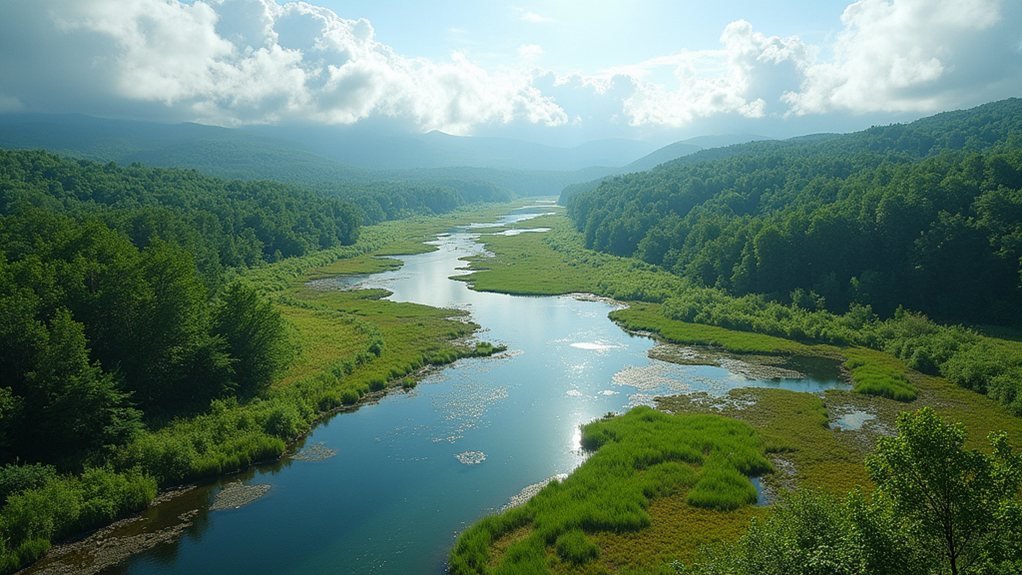

The UK Environmental Intelligence Assessment highlights a dire situation; catastrophic ecosystem security threatens not only biodiversity but also national stability. This study reveals that the collapse of essential ecosystems can lead to skyrocketing food prices and water shortages. With agriculture teetering on the brink, strategic actions like Environmental Delivery Plans aim to bolster resilience. Think of ecosystems like a safety net; when they fray, the fall could be hard. Curious about what solutions are on the table?
Quick Overview
- Biodiversity loss directly threatens UK national security by undermining essential ecosystem services necessary for food production and climate stability.
- Ecosystem collapse leads to food insecurity, reduced agricultural output, and rising food prices, exacerbating household challenges across the UK.
- Economic instability from ecosystem failure poses risks to infrastructure, potentially disrupting social and economic structures within the UK.
- Strategic actions like Environmental Delivery Plans and Biodiversity Net Gain aim to prioritize nature restoration and sustainability in development projects.
- Long-term investment in ecosystem resilience and sustainable resource management is vital for maintaining stability amid growing environmental challenges.
The Alarming Findings From the UK Environmental Intelligence Assessment
The recent UK Environmental Intelligence Assessment stirs the pot of alarm with findings that could make even the most laid-back environmentalist sit up and take notice.
Crucially, biodiversity loss undermines ecosystem services that underpin food security and climate stability.
It reveals that global biodiversity loss threatens the UK’s national security, as essential ecosystems collapse. These ecosystems, like the Amazon rainforest and coral reefs, are nature’s MVPs, supporting food production and climate stability. Without major intervention, the UK may face reduced crop yields and water insecurity. It’s as if Mother Nature sent a warning text—“Um, guys, I need you to pay attention!” Food prices projected to rise threaten household food security, and the urgency is real, with the risks of geopolitical instability looming large, with potential consequences that could ripple through economic and social structures.
The opportunities for change beckon loudly.
Key Implications of Ecosystem Collapse for the UK
One might say that the implications of ecosystem collapse are a cocktail of concern mixed with a dash of urgency. This guide helps identify supply chain risks across production stages.
The UK’s agricultural reality stares down food insecurity as biodiversity dwindles, leaving soils depleted and pollinators scarce. Picture a dinner table where prices rise faster than a soufflé—household food security in jeopardy. Biodiversity loss is a significant factor contributing to this crisis, further exacerbating the challenges we face.
Amid dwindling biodiversity, the UK’s agricultural landscape teeters on the edge of food insecurity, with depleted soils and scarce pollinators.
Water insecurity looms as global shortages threaten supply chains, much like a drought at a garden party. Furthermore, the assessment identifies 6 ecosystems of strategic importance to the UK that are crucial for maintaining stability and resilience.
Economically, instability brews as nature’s failure disrupts crucial infrastructure. With geopolitical tensions rising over dwindling resources, the UK’s position weakens, reminding us that our ecosystems are the unsung heroes of resilience—just floorboards in a wobbly house.
Strategic Actions for Environmental Protection and Resilience
Enter Environmental Delivery Plans (EDPs), a strategic approach empowering developers to contribute to nature restoration while sidestepping exhaustive assessments. This aligns with sustainable resource management principles. With the Biodiversity Net Gain initiative on the horizon, expect compliance reductions for minor projects that keep development practical. Meanwhile, the UK is aligning its regulations with EU standards, fostering trade without sacrificing sustainability. The recent emphasis on banking allowances permits a smoother transition between phases, encouraging long-term investment in environmental resilience. Additionally, the progressive PFAS Plan establishes a comprehensive framework focusing on reducing ongoing exposure to harmful substances in our ecosystems.
These strategic actions are akin to tuning an orchestra—everyone playing harmoniously guarantees the future resonates with resilience and protection, rather than cacophony and chaos in our ecosystems.