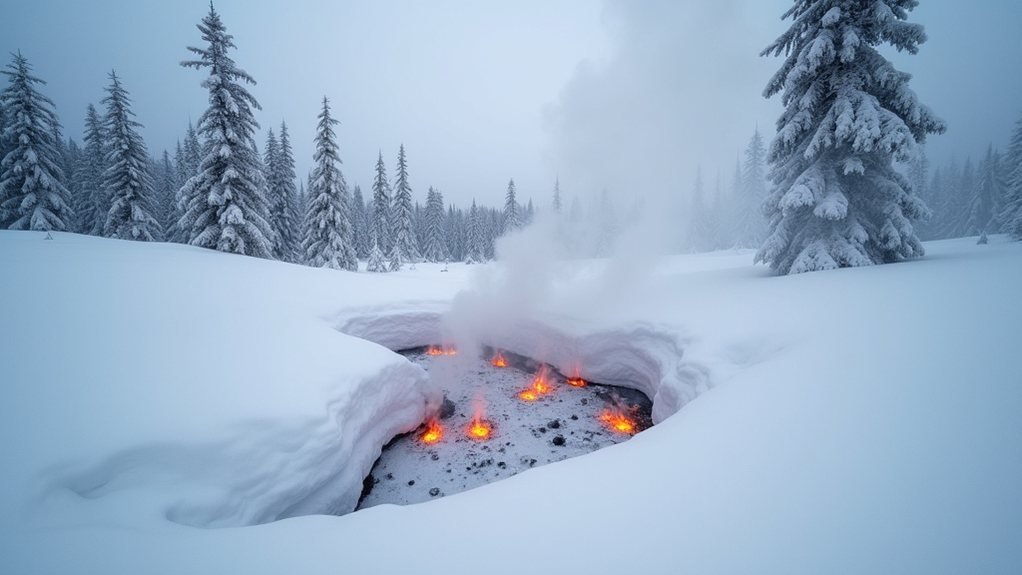

British Columbia is facing a fiery predicament as it enters winter with over 24 zombie fires still smoldering. These sneaky blazes, lurking beneath layers of snow and debris, could flare up in a puff of smoke if conditions dry out. This situation poses serious threats to local ecosystems and wildlife. With past wildfires fresh on everyone’s minds, the urgency to monitor and adapt to these hidden heat sources is higher than ever. Curious about the potential fallout?
Quick Overview
- More than 24 zombie fires are still burning in northeastern British Columbia, posing significant risks as winter approaches.
- These underground fires can reignite due to strong winds and dry materials, threatening ecosystems and communities.
- The prolonged dry conditions and reduced soil moisture increase the likelihood of fire persistence and potential flare-ups.
- Monitoring efforts via satellite are crucial to track these hidden fires and prevent further devastation.
- Preparation and rapid response strategies are essential to mitigate the dangers associated with zombie fires this winter.
Zombie Fires Explained: What They Are and Why They Matter
In the vast and complex world of wildfires, a rather sneaky phenomenon known as “zombie fires” raises eyebrows and sparks curiosity—after all, who doesn’t love a good story about something that refuses to stay dead?
These elusive blazes, also called holdover fires, smolder beneath the snow, waiting patiently to spring back to life in warmer months. They burn through organic layers and peat, creating hidden heat sources that can last for months. Zombie fires can remain undetected, buried under leaves and logs, making them particularly dangerous as they can be reignited by strong winds and nearby dry materials. As climate change extends fire seasons, these zombie fires are becoming more common, threatening ecosystems and altering landscapes in ways that leave a lasting mark on our forests. This phenomenon is exacerbated by reduced soil moisture, which allows fires to persist undetected for longer periods. Protecting natural areas and practicing habitat protection can help reduce the long-term impacts of such fires on species and ecosystems.
What Do Zombie Fires Mean for the 2026 Wildfire Season?
While many may think of wildfires as a seasonal event confined to the summer months, the phenomenon of zombie fires hints at a deeper, more complex narrative unfolding in British Columbia as it gears up for the 2026 wildfire season. This intersects with broader issues of water scarcity, which can amplify wildfire risks by drying soils and vegetation.
With these smoldering underground fires lurking in dried-out peat, the 2026 season is primed for early ignition, possibly as soon as late March. Zombie fires can reignite in spring, exacerbating the wildfire risk in already drought-stricken areas. The ongoing drought conditions mean that areas like northeastern B.C. face heightened risks.
Smoldering underground fires in dried peat could ignite the 2026 wildfire season as early as late March.
The specter of these multi-year burning fires presents uncharted territory, making early preparation and vigilant monitoring essential to prevent a repeat of 2025’s devastation.
Zombie Fires in B.C.: Current Winter Status
As winter blankets northeastern British Columbia, the eerie glow of zombie fires continues to flicker beneath the surface, reminding everyone that not all fires take a season off. This highlights the need for adaptation measures to prepare communities and ecosystems for recurring fire risks.
These holdover fires, smoldering deep in soil and peat, have stubbornly persisted for nearly three years. With 24+ confirmed, the region is on high alert for potential reignition. The ongoing drought conditions have created a perfect recipe for these underground blazes, which could resurface as temperatures rise in spring. Experts warn that zombie fires could start burning above the surface in a few months.
Monitored by satellite, these smoldering monsters pose an unusual challenge, marking uncharted territory in wildfire management and raising eyebrows and concerns for the upcoming seasons. The significant fire activity in the region has heightened the urgency for effective monitoring and rapid response to any potential flare-ups.