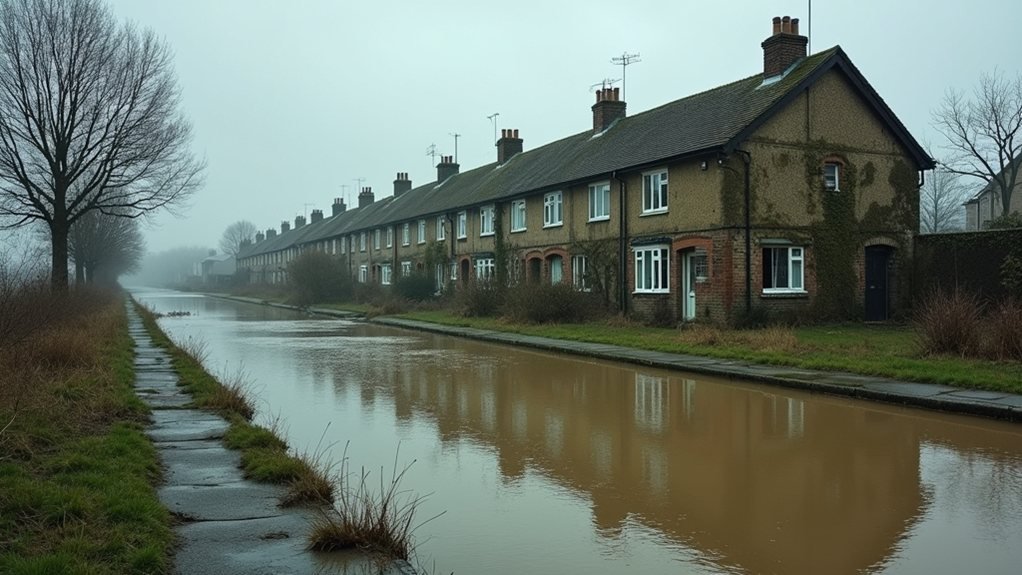

UK homes face increased risks of abandonment due to climate change and floods, with one in six properties now at risk. As water levels rise and extreme weather events become common, home values plummet. Flood-prone areas can see up to a 32% drop in property prices! But fear not—communities are exploring innovative strategies for flood resilience and sustainable planning. Curious about how these measures could impact the future of housing? The conversation is just getting started.
Quick Overview
- One in six people in England are at risk of flooding, with homes facing significant threats due to climate change.
- Approximately 6.3 million homes are currently at risk, with numbers expected to increase by 2050.
- Properties in high-risk areas can see value drops of up to 32%, potentially leading to abandonment.
- Proactive flood preparedness measures, like barriers and sustainable water management, are crucial to prevent home loss.
- Long-term strategies and climate adaptation initiatives are essential to protect communities from the impacts of flooding.
Understanding and Preparing for the Increasing Flood Risks in the UK
In recent years, an astonishing one in six people in England has found themselves facing the unsettling prospect of flooding, and it’s not just a passing summer shower they need to worry about.
With around 6.3 million homes at risk, the stakes are high. Climate change is rewriting the flood playbook, pushing risk zones into uncharted territories. The National Flood Risk Assessment (NaFRA) provides the latest intel, revealing evolving threats through 2100. Recent updates to national flood risk mapping include detailed local flood risk models, enhancing the accuracy of risk assessments. Homeowners should be aware that high unmanaged future flood risk can significantly decrease property value and saleability.
With 6.3 million homes at risk, climate change is reshaping flood zones like never before.
As families prepare, they might consider flood barriers or even family flood plans. After all, better safe than sorry—unless you enjoy spontaneous indoor swimming! Protecting Watersheds for Clean Water and Healthy Ecosystems
How Do Flood Risks Impact Communities and Property Values?
Flooding isn’t just an inconvenience; it’s turning into a full-blown crisis that ripples through communities and property values alike. In the UK, homes at flood risk face a staggering 32% price drop, while even low-risk properties can see values plummet by over 13% after a flood event. Buyers are increasingly wary, favoring safer locations over picturesque coastal views when confronted with flood maps. As climate predictions worsen, the number of properties at risk is expected to rise dramatically, threatening community stability and economic health. This is especially concerning as 400,000 properties are identified as high risk but have not yet been affected by floods. It’s a wet blanket on the property market, leaving homeowners high and dry. Moreover, approximately six million people live in flood risk areas, with this number expected to increase by 2050. The challenge of water scarcity and flood risk underscores the need for sustainable planning and resilient infrastructure to protect communities and economies over the long term. Emphasis on sustainable water management can help reduce vulnerability and support more stable property values as climate risks evolve.
Effective Strategies for Climate Adaptation and Flood Resilience
While the looming threat of climate change may seem intimidating, there are effective strategies emerging that can help communities adapt and build resilience against floods.
The UK’s approach includes a 10-year flood defense program, focusing on bolstering critical infrastructure like housing and transportation. Local climate bonds and flexible funding empower communities to make tailored adaptations. Additionally, this program is part of a broader strategy to address climate change adaptation across various sectors. The event will feature discussions on government strategies responding to climate risks, highlighting the importance of coordinated efforts.
In addition, the integration of innovative research and technology enhances climate risk assessments. It’s like upgrading from a flimsy umbrella to a robust raincoat—better prepared for whatever storms come.
Proactive planning can save both money and homes, ensuring a brighter, drier future for everyone. A comprehensive, sustainable urban development framework guides the integration of green infrastructure, efficient transportation, and resilient design into planning processes.