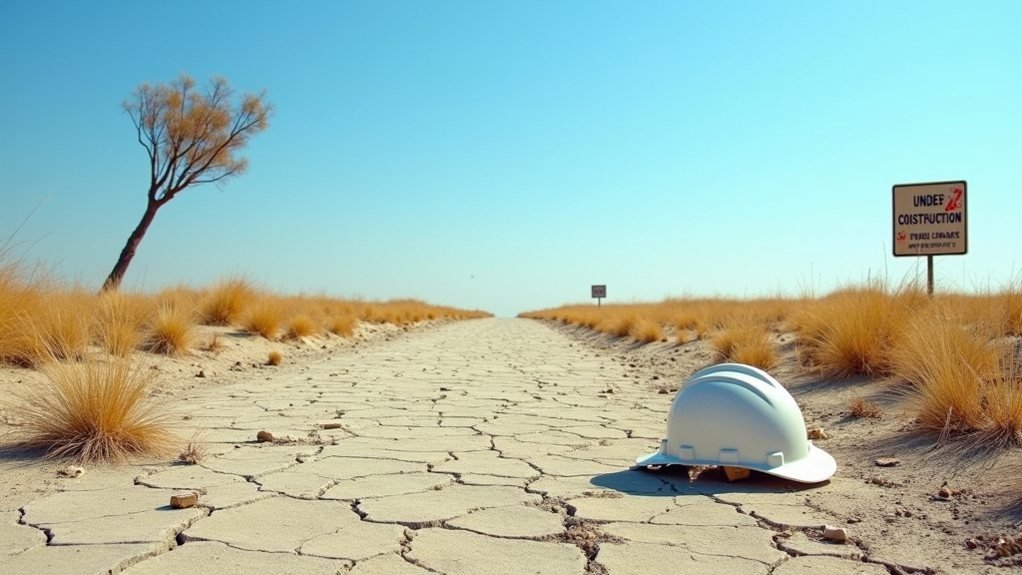

Executive Order 14154 marks a shift in environmental policy, streamlining NEPA regulations and lowering the bar for environmental reviews. Picture a concert where the band decides to skip sound checks—chaos ensues! This order allows agencies to craft their own guidelines, sacrificing thorough assessments for quicker permits. While industry groups cheer, critics worry about less public input and weakened environmental protections. The landscape of environmental oversight is now a bit wobbly, raising intriguing questions about the balance between progress and preservation.
Quick Overview
- Executive Order 14154 allows agencies to create their own NEPA guidelines, removing standardized environmental review requirements.
- Public participation in the environmental review process is expected to diminish under the new CEQ regulations.
- The focus on expedited permitting may lead to fewer comprehensive environmental assessments for various projects.
- Legal challenges are anticipated as the changes could create inconsistencies in environmental oversight across different agencies.
- The shift prioritizes industrial efficiency, potentially compromising long-term environmental protections and sustainability goals.
Understanding Executive Order 14154’s Impact on NEPA Regulations
As the dust settles from the sweeping changes ushered in by Executive Order 14154, one begins to grasp the profound impact on the National Environmental Policy Act (NEPA) regulations.
This order, issued on January 20, 2025, marked a seismic shift in how environmental reviews are conducted. The Council on Environmental Quality (CEQ) swiftly moved to rescind existing regulations, allowing agencies to adapt their own guidelines. Federal agencies will now have varying thresholds for when an environmental review is required, creating potential inconsistencies with longstanding environmental review practice.
While this flexibility sounds appealing, it also means diminished public participation and a narrower scope of analysis. New procedures exhibit variability among federal agencies, which may lead to differing judicial interpretations and outcomes that affect environmental oversight. The revisions aim to enhance American energy dominance through efficient permitting and fundamentally, the rules have been streamlined, but at what cost to environmental oversight? The balance between development and conservation now hangs precariously.
Significant Changes in CEQ Regulations Under Executive Order 14154
With a flick of the pen, Executive Order 14154 has set in motion a series of significant changes to the CEQ regulations, leaving environmental advocates and agencies alike scrambling to adjust.
The order revokes previous authority, pushes for streamlined procedures, and emphasizes quick permitting over careful environmental review. Lack of common standards may lead to inefficiencies and uncertainties in NEPA processes as agencies navigate these changes. CEQ will have no implementing regulations effective April 11, 2025, adding to the uncertainty. Agencies must now adopt a template that reduces public involvement and narrows the scope of environmental analysis, all while they juggle new deadlines.
It’s like switching from a gourmet meal to fast food—quick, but at what cost?
The landscape of environmental oversight is shifting, making the future feel uncertain and precarious, and businesses will need to consider how their operations align with the Sustainable Development Goals as they adapt.
How Stakeholders Reacted and Its Implications for Environmental Oversight
How will the sweeping changes brought by the Trump administration’s revisions to NEPA regulations impact the landscape of environmental oversight?
Industry groups like the Associated Builders and Contractors cheered the reforms, viewing them as a remedy for permitting delays.
In contrast, environmental advocates and legal experts raised alarms over the diminished regulatory authority of the Council on Environmental Quality (CEQ) and the anticipated legal battles ahead. The recent Supreme Court ruling on NEPA mandates substantial judicial deference for federal agencies in document reviews, further complicating the enforcement of environmental protections. With agencies now prioritizing efficiency over environmental justice, the risk of uneven oversight looms large. Furthermore, the 2020 revisions narrowed the scope of actions subject to NEPA, which could lead to fewer projects undergoing thorough environmental assessments.
The emphasis on waste reduction in the waste management hierarchy underscores how prevention and reuse could be deprioritized if environmental review processes are curtailed. Ultimately, the shift may favor rapid project approvals, leaving climate and community concerns in the dust—like a forgotten sandwich at a picnic.