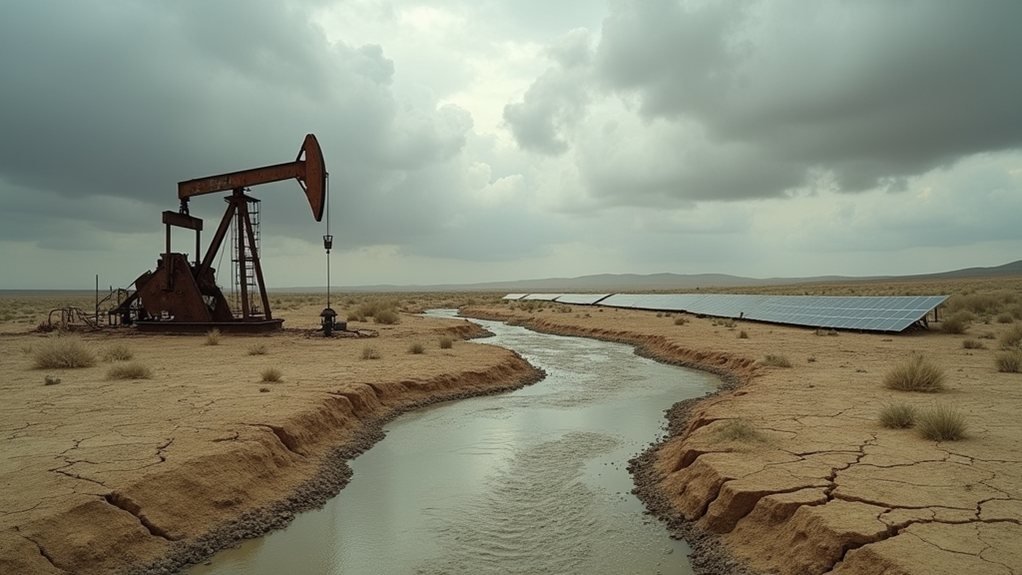

The United States officially completed its withdrawal from the Paris Agreement in January 2026, which stirred quite the buzz in global climate discussions. This decision followed President Trump’s original announcement back in June 2017. With such a move, the U.S. aligns with only a handful of countries like Iran and Libya, raising eyebrows globally. As environmental advocates wring their hands, the question remains: what does this mean for future climate commitments? Stay tuned for more juicy insights!
Quick Overview
- The U.S. officially withdrew from the Paris Agreement on November 4, 2020, under President Trump’s administration.
- The withdrawal was justified by economic concerns, despite ongoing support for the agreement from many states and cities.
- The absence of U.S. leadership raised concerns about global climate progress and emissions tracking.
- U.S. policies post-withdrawal suggest a shift towards fossil fuel reliance, undermining renewable energy incentives.
- The future of U.S. climate commitments and global cooperation remains uncertain following the withdrawal.
Historical Context of the US Paris Agreement Withdrawal
While the world was busy warming up to the idea of collective climate action, the United States found itself in a rather chilly standoff with the Paris Agreement.
In June 2017, President Trump announced withdrawal intentions, claiming economic burdens were too heavy for American shoulders.
Fast forward to November 4, 2020, and the official exit was complete.
Curiously, during this frosty period, thirty states and numerous cities kept the spirit of the agreement alive. The U.S. became an outlier, joining the ranks of Iran and Libya—like a kid who refuses to play in the group but insists on wearing the team jersey. U.S. initiated withdrawal from the Paris Agreement on its first day of Trump’s second term, marking a significant shift in its climate policy. The U.S. withdrawal significantly impacted global efforts to reduce greenhouse gas emissions. A number of subnational governments and businesses developed their own climate strategies to manage risks and reduce emissions.
Impact of the Second Withdrawal on Global Climate Efforts
The second withdrawal of the United States from the Paris Agreement sent ripples through the already turbulent waters of global climate efforts. While the non-binding nature of the agreement means a complete collapse isn’t imminent, the uncertainty it creates is palpable. Without U.S. updates, emissions tracking stumbles, and the potential for a 48% increase by 2035 looms large. This withdrawal comes at a time when the U.S. was the second largest emitter of greenhouse gases, raising concerns about future commitments to emission reductions. Experts note that the US had already adopted a low-profile role in recent climate negotiations, further complicating the situation. Policy shifts in large economies can slow coordinated progress on sectoral decarbonization and energy-system transitions. The EU decries this absence of leadership, questioning the U.S.’s role on the world stage. Meanwhile, economic forces may still drive emissions reductions, but the shadow of this withdrawal could hinder global progress, leaving the planet to ponder its ecological fate.
What’s Next for US Climate Policy After Withdrawal?
As the dust settles from the United States’ second withdrawal from the Paris Agreement, the question of what lies ahead for U.S. climate policy hangs in the air like a thick fog on a chilly morning.
The Environmental Protection Agency (EPA) is set to roll back key regulations, such as the Endangerment Finding, which underpins climate rules. Meanwhile, fossil fuel pursuits are expanding with new drilling leases, while clean car standards face delays. In a significant shift, the US is now the only country to have withdrawn from the Paris Agreement, which aims to limit global warming to 1.5°C above pre-industrial levels. Furthermore, the administration’s policies could halve U.S. progress toward reducing carbon emissions, raising concerns about the future of climate goals.
With renewable energy incentives dwindling, the landscape appears bleak. The nation seems ready to embrace a fossil-fueled future, leaving environmental advocates grasping for a glimmer of hope amid the fog. Businesses may respond by adopting carbon balancing strategies to mitigate remaining emissions.