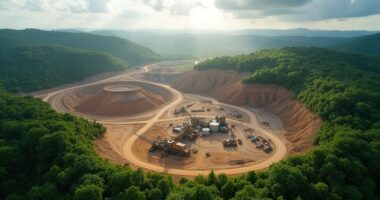

By 2026, sustainable mining in crypto, particularly through initiatives like Grayscale, will focus on reducing environmental footprints while attracting institutional investments. With 29% of Bitcoin mining already powered by renewables, and an increase in ESG compliance, miners face the challenge of balancing profitability and environmental duties. Imagine transforming e-waste into shiny new resources! Institutions are ready to invest billions, reinforcing a greener, more responsible mining landscape. Keep an eye out for how these trends unfold!
Quick Overview
- Grayscale’s focus on sustainable mining aligns with institutional investors’ demand for ESG-compliant practices by 2026.
- Institutional investments in Bitcoin mining are projected to reach $300 billion, enhancing the importance of sustainable operations.
- Sustainable mining practices, such as using renewable energy, are essential for community acceptance and operational longevity.
- Innovations in circular economy principles are transforming mining waste management, attracting institutional partnerships.
- Grayscale’s commitment to environmental stewardship can help mitigate risks associated with resource depletion and aging assets in mining.
Understanding Sustainable Mining in Crypto
While the world of cryptocurrency mining might seem like an energy-guzzling monster lurking in the shadows, sustainable mining is shedding light on a more eco-friendly approach.
This practice focuses on reducing the environmental impact of Proof-of-Work networks, ensuring security while going green. Think of it as turning a gas-guzzler into a slick electric car. Sustainable mining leverages renewable energy sources like hydropower and solar, making it an eco-warrior in the crypto sector. These implementation considerations include location selection near renewable energy sources and optimizing hardware efficiency for maximum energy utilization. In fact, a 2020 study found that 29% of bitcoin mining is powered by renewables, showcasing the industry’s shift towards greener practices. Additionally, 52.4% of miners are now using renewable or nuclear energy, further emphasizing this positive trend.
Top Factors Influencing Sustainable Mining in 2026
Sustainable mining in 2026 is not just a trend; it’s becoming the gold standard for the industry, where eco-conscious practices meet profitability.
Key factors like ESG compliance are essential; miners now need community acceptance to secure their “license to operate.” Think of it as a popularity contest where eco-friendliness wins the crown. Furthermore, the need for resource and reserve depletion highlights the urgency for innovative approaches to maintain profitability amidst declining ore quality. Aging assets and capability gaps further complicate the challenge, necessitating solutions that address the entire value chain for maximum impact.
Environmental stewardship is also important, with principles demanding no net loss in biodiversity, and renewable energy helping miners cut emissions. Effective site rehabilitation plans are becoming mandatory to ensure mining lands return to productive use after extraction activities cease.
Meanwhile, adopting circular economy principles transforms waste into resources, making mining less of a disposable industry.
It’s all about innovation, trust, and balancing business with environmental responsibility.
How Institutional Investors Impact Crypto Mining
As the crypto landscape evolves, institutional investors are stepping into the spotlight, bringing a new level of sophistication and strategy to the world of crypto mining. With an anticipated $300 billion flowing into Bitcoin by 2026, institutions are shifting from speculative bets to smart, strategic allocations. They now hold about 20% of BTC, showcasing their confidence. Additionally, the number of crypto millionaires is projected to reach 241,700 by mid-2025, highlighting the growing interest in the market. As miners pivot to support AI infrastructure, the focus shifts from pure Bitcoin operations to generating revenue through decentralized networks. However, this consolidation raises eyebrows about market manipulation risks, as smaller miners struggle to keep pace with institutional giants dominating the space. Furthermore, the regulatory landscape is becoming more crypto-friendly, enhancing institutional confidence in the mining sector. Forward-thinking mining operations are beginning to implement business objectives that align with environmental sustainability to attract institutional investment.