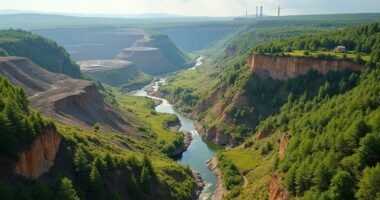
Nature-related risks are set to chop US mining earnings by a staggering 25% by 2031, thanks to issues like water scarcity and tighter pollution rules. It’s a bit like trying to run a marathon while dodging water balloons—pretty tough! This jeopardizes profit margins and highlights the urgent need for strategic responses. Companies need smarter practices, like eco-friendly management techniques, to weather the storm. Curious how these strategies can redefine mining’s future? Stick around for more insights!
Quick Overview
- Nature-related risks, such as water scarcity and stricter pollution regulations, are projected to reduce US mining earnings by 25% by 2031.
- Ecosystem decline could cost US mining companies approximately $430 billion annually, highlighting the financial urgency for strategic adaptations.
- The mining sector’s heavy reliance on water increases its vulnerability, particularly in regions like Australia and Chile.
- Implementing sustainable practices and technology, like smart water management, is crucial for mitigating risks and ensuring operational resilience.
- Long-term strategies focusing on environmental stewardship and compliance frameworks are essential for maintaining profitability in the face of nature risks.
How Nature Risks Affect Mining Earnings
As mining companies dig deeper into the earth for precious metals, they may find themselves grappling with nature-related risks that could undermine their earnings—like a magician revealing a trick that leaves the audience scratching their heads. Barclays’ analysis suggests a possible 25% drop in earnings over five years, exposing the mining sector to heightened risks like water scarcity and stricter pollution regulations. Corporate leaders’ lack of training in managing large-scale environmental impacts exacerbates these vulnerabilities. Ironically, while power companies might see only a 10% decline, mining’s vulnerability looms larger due to its heavy reliance on water. The financial impacts of ecosystem decline could reach $430 billion per year, emphasizing the urgency for mining companies to adapt. Companies must evaluate impacts throughout the entire product lifecycle, from raw material extraction through processing, manufacturing, distribution, use, and final disposal. With nature degradation threatening operations, immediate strategic responses become essential to safeguard profitability.
Specific Nature Risks Impacting Mining Profitability
Nature’s unpredictability can feel like an uninvited guest at a well-planned dinner party, throwing a wrench into even the most robust mining operations.
Water scarcity, especially in places like Australia and Chile, can halt productivity faster than a spilled drink ruins dinner. Sustainable water management approaches could mitigate these operational disruptions if implemented proactively. Moreover, a 25% decline in mining earnings over the next five years is anticipated due to these escalating environmental challenges.
Meanwhile, biodiversity loss acts like a sneaky thief, chipping away at profits as ecosystems degrade.
Add in the heavy costs of carbon pricing and the chaos of extreme weather, and mining becomes a high-stakes game.
As nature throws curveballs, the industry faces a cocktail of risks that threaten its bottom line, making profitability a precarious balance.
Targeted Strategies for Addressing Nature Risks
To navigate the unpredictable waters of nature-related risks, mining companies must adopt targeted strategies that not only safeguard their operations but also secure environmental stewardship. Embracing frameworks like CSRD and GRI helps guarantee compliance while committing to no net loss of biodiversity. Imagine this: avoiding harm first, then minimizing impacts like pollution, much like a chef avoiding burnt toast! Protecting pristine natural areas is essential for maintaining the balance between mineral demand and environmental responsibility. Armed with tech like eDNA for rapid assessments and smart water management practices, miners can keep their operations flowing smoothly. Natural systems integration can provide cost-effective solutions while enhancing resilience against climate-related disruptions. Increasing demand for energy transition minerals necessitates these proactive measures to ensure long-term sustainability in the mining sector.