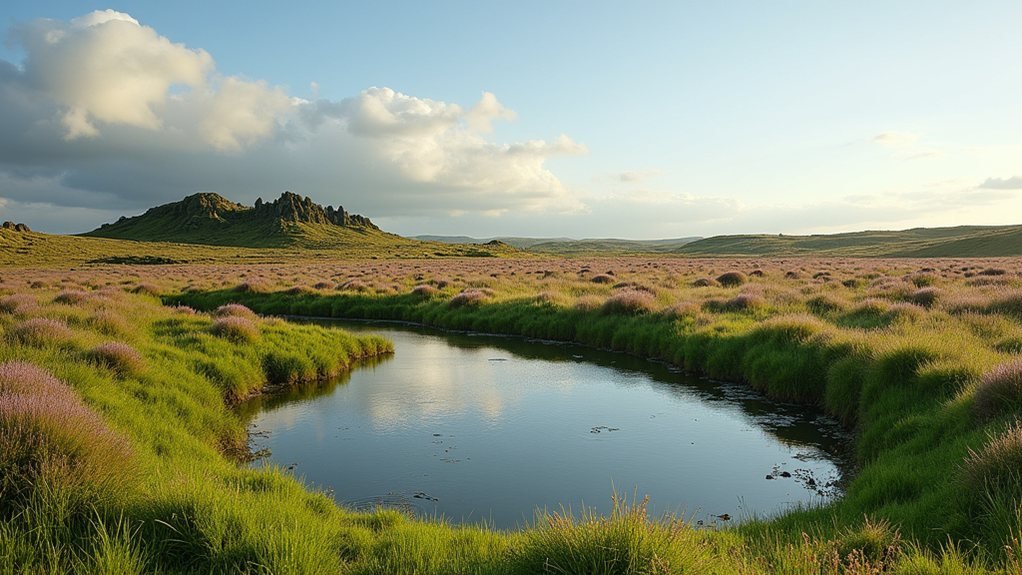

The UK’s peatland burn ban is a game-changer. It’s like swapping an old, leaky bucket for a shiny new one, keeping precious carbon stored safely instead of letting it escape. This policy not only revitalizes wildlife habitats—think curlews happily nesting—but also lowers flood risks with nature’s own sponge, the peatlands, absorbing excess rain. Plus, over 60,000 hectares have already been restored since 2012, creating vibrant ecosystems. Curious about the details behind this transformation?
Quick Overview
- The UK’s burn ban curbs greenhouse gas emissions and aids in restoring degraded peatlands as effective carbon sinks.
- Over 60,000 hectares of degraded peat have been restored since 2012, enhancing wildlife habitats and biodiversity.
- Restoration efforts support rare species like curlews and golden plovers, contributing to ecosystem resilience.
- Intact peatlands improve flood resilience by absorbing rain and reducing peak river flows, mitigating drought impacts.
- The rejuvenation of peatlands provides vital regulating services, including water purification and climate mitigation through carbon storage.
Ecological Significance of Peatlands and the Impact of the Burn Ban
Peatlands, often dubbed the unsung heroes of the natural world, are more than just muddy patches of earth; they play a pivotal role in our ecosystem. Covering around 3 million hectares in the UK, they store a staggering 3.2 billion tonnes of carbon—more than all UK forests combined. However, approximately 78% are degraded, contributing to greenhouse gas emissions. Enter the burn ban: a clever policy shift that not only curbs these emissions but also supports the recovery of these crucial habitats. The new England Peat Map is a key asset for understanding the extent and condition of these vital ecosystems. Think of it as giving peatlands a much-needed spa day, helping them rejuvenate and continue their essential functions. This is crucial because peatlands serve as vital carbon sinks, significantly aiding in the fight against climate change. Beyond carbon storage, these wetland ecosystems provide valuable regulating services that help purify water and control flooding in surrounding communities.
Wildlife Recovery and Habitat Restoration Efforts
Restoration efforts in the UK are proving to be a game changer for wildlife, as habitat recovery initiatives flourish in the wake of the peatland burn ban.
Since 2012, over 60,000 hectares of degraded peat have begun to thrive again, with 2023 alone seeing 10,360 hectares restored in Scotland. Around 75,000 hectares restored to date highlights the significant progress made in rejuvenating these vital ecosystems. 38,877 hectares of wildlife-rich habitat restored since January 2023 showcases the ongoing commitment to enhancing biodiversity.
These efforts, like re-wetting and revegetation, create a feast for species such as curlews and golden plovers, who are keen to return.
The implementation of ecological functions has been crucial to rebuilding ecosystem resilience and supporting the recovery of native plant communities.
With peatlands now mapped for maximum biodiversity, the UK is transforming dry, lifeless land into vibrant ecosystems, giving rare species a fighting chance and making nature’s dinner bell ring once again.
Flood Risk Mitigation and Climate Resilience Benefits
Transforming landscapes into thriving ecosystems does more than just restore habitats; it also plays a vital role in flood risk mitigation and bolstering climate resilience. Intact peatlands act like nature’s sponges, soaking up rain and slowly releasing it, which helps tame those pesky peak river flows. Conversely, drained and burned peatlands amplify floods, turning gentle rain into raging torrents. By rewetting these areas, we boost their water storage capacity, keeping communities safer from flooding. Plus, healthier peatlands can buffer against droughts, making them the ultimate multitaskers in climate resilience. These natural solutions represent nature-based approaches that can be more sustainable and cost-effective than traditional engineering interventions for environmental challenges. Moreover, with 3.2bn tonnes of carbon estimated to be stored in England’s peatlands, their preservation is crucial for climate change mitigation. This is particularly important as peatlands cover 13% of the world’s blanket bog in the UK, highlighting their global significance in carbon storage.