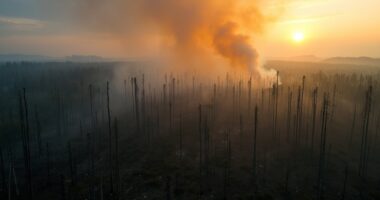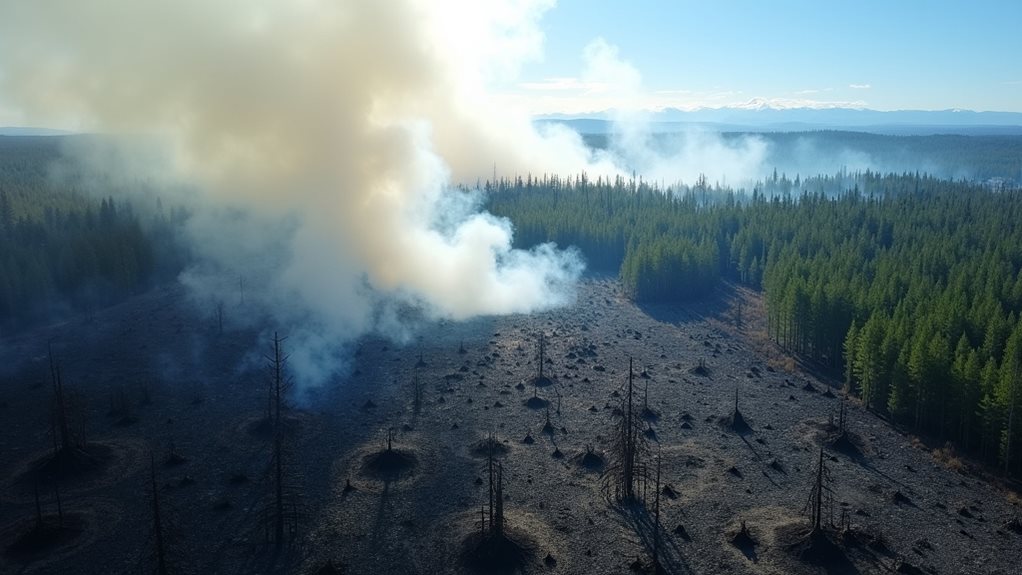

The Bootleg Fire in Southern Oregon burned through over 100,000 acres and wreaked havoc on carbon offset projects. Microsoft’s investment, which relied on tree growth for carbon capture, faced a significant setback as the fire destroyed trees that stored 3.3 million metric tons of CO2. This disaster revealed the fragile nature of these offset strategies, raising eyebrows about their effectiveness and safety. Curious about the bigger picture of carbon markets? There’s more to uncover!
The Impact of Wildfires on Carbon Offsets
What happens when a forest, meant to be a champion of carbon offsets, becomes a casualty of climate change? This unfortunate scenario unfolded with the Bootleg Fire in 2021, which swept through over 100,000 acres of Green Diamond timber lands in Southern Oregon, decimating nearly 20% of a high-profile carbon offset project in the Klamath region.
This project had been a source of nearly 800,000 carbon offsets since 2017, with Microsoft purchasing a substantial 240,000 offsets just a year prior, hoping to secure its carbon footprint amidst growing climate concerns.
Yet, as the flames raged, so too did the doubts about the reliability of forestry offset markets.
Here’s the kicker: forestry projects depend on trees maturing and sequestering carbon dioxide.
Forestry projects hinge on the growth of trees to capture carbon, making them vulnerable to climate disruptions.
But climate-driven events like wildfires can reverse this effort faster than you can say “carbon credit.” Corporate net-zero pledges depend on these offsets for unmitigated emissions, making the stakes even higher. The fire not only destroyed trees but also killed trees storing 3.3 million metric tons of CO2, significantly impacting carbon storage efforts.
While projects often set aside a buffer pool to mitigate such losses, critics argue these reserves might be as effective as a raincoat in a hurricane.
For Microsoft, this was no mere inconvenience; it was a wake-up call.
The funds originally earmarked for transformative forest management now left a gaping hole in their offset inventory.
As the company faced scrutiny over the financial viability of its nature-based investments, the incident highlighted a vital need for robust risk assessment protocols and better insurance mechanisms in voluntary carbon markets.
The Bootleg Fire didn’t just torch trees; it singed credibility in carbon markets.
With the effectiveness of offsets in question, calls for reforms in transparency and regulatory oversight grew louder.
In a world where climate change is no longer a distant concern but an immediate threat, the need for resilient and reliable carbon offset strategies has never been more pressing.
The incident underscores the fundamental challenge of ensuring additionality principles in carbon trading, where offset projects must demonstrate genuine emissions reductions that wouldn’t have occurred otherwise.
One can only hope that this fiery lesson will spark the necessary changes for a more sustainable future.