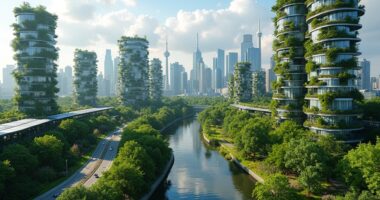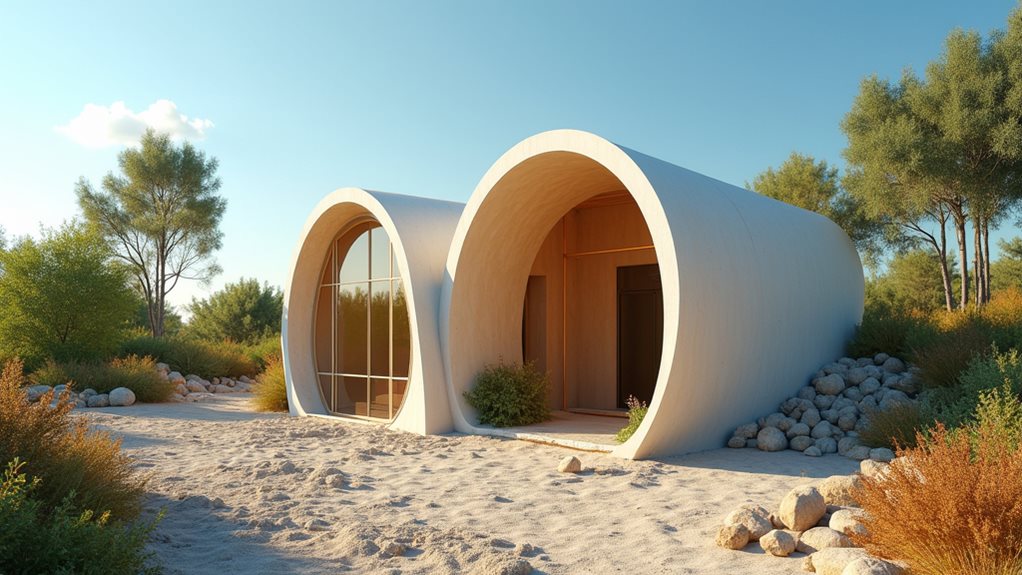

3D printing is flipping the housing script, making it cheaper and more sustainable in one clever swoop. By automating construction, it builds homes in days using recycled materials, slashing labor costs and waste—think of it as a high-tech recycling bin that spits out sturdy walls instead of trash. This method cuts emissions and boosts efficiency, creating tough, eco-friendly dwellings that laugh at extreme weather. Stick around to see how this tech reshapes your future home.
3D Printing: Cheaper and Sustainable Housing
In the world of innovative building, 3D printing stands out as a game-changer for creating cheaper and more sustainable housing.
This technology slashes costs by minimizing labor needs—think of it as a robot crew that never calls in sick.
Traditional construction often involves armies of workers and endless delays, but 3D printing automates the process, building homes in days rather than months.
Traditional construction means endless workers and delays, but 3D printing automates it all, erecting homes in days instead of months.
That means lower financing headaches and streamlined logistics, like prepping a meal in a factory kitchen instead of a chaotic campsite.
As adoption grows, mass production could drop per-unit prices even further, making homeownership as accessible as grabbing a coffee on the go.
Beyond the wallet, 3D printing champions sustainability, tackling the construction industry’s whopping 40% share of global emissions.
It uses bio-based or recycled materials—picture turning yesterday’s plastic waste into tomorrow’s walls, all while wasting less than a squirrel hoarding nuts.
These homes aren’t just eco-friendly; they’re tough, meeting codes for strength in extreme weather, like a fortress built from nature’s leftovers.
And let’s not forget efficiency: projects wrap up swiftly, dodging rain-soaked delays that plague traditional sites.
Similarly to modular building techniques, 3D printing offers prefabricated components that can be rapidly assembled on-site with minimal environmental disruption.
It’s like assembling IKEA furniture on steroids, allowing rapid responses to housing crises.
Material innovation adds another layer, with 3D printers tweaking compositions for local needs—say, enhancing insulation in chilly climates for better energy savings.
Waste? It’s practically a joke; precise deposition leaves scraps minimal, unlike the mess of conventional builds.
Sure, it’s not magic, but this tech is like a witty engineer whispering, “Why haul extra bricks when you can print exactly what’s needed?”
All in all, 3D printing isn’t just promising; it’s revolutionizing homes with a confident, green twist, proving that affordable living can be smart, fun, and kind to the planet. For more insights on this technology, readers can explore resources on the ABC News Network site, though online access might involve Cloudflare protection to safeguard against potential security threats.