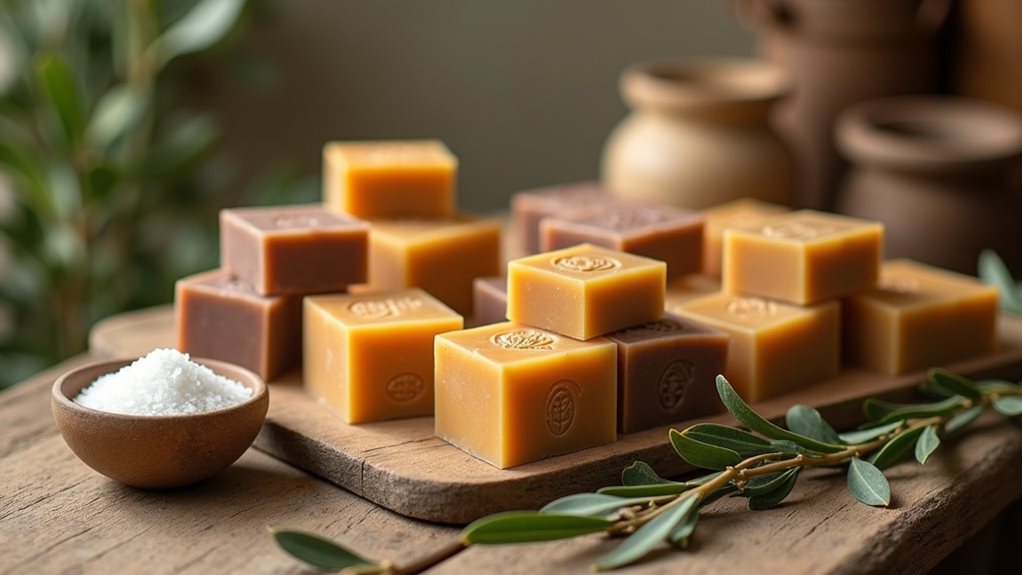

UNESCO has officially recognized Palestinian soap-making as an Intangible Cultural Heritage of Humanity, highlighting its rich history and sustainable craftsmanship. This centuries-old tradition, rooted in the olive-rich soils of Nablus, showcases the artistry involved in creating Nabulsi soap. From its unique mixing process to the artisan seals stamped on each bar, the craft not only supports local economies but also preserves cultural identity. If you’re intrigued by how this tradition has survived so many challenges, there’s a lot more to uncover!
Celebrating Palestinian Soap-Making Heritage
In a world where handmade crafts often tell tales of culture and resilience, the Palestinian soap-making tradition stands as a vibrant representation of history and identity. With roots stretching back over a millennium, this craft has thrived in the city of Nablus since the 10th century, becoming a crucial economic and cultural symbol.
By the 14th century, Nablus transformed into a soap manufacturing powerhouse, sending its prized Nabulsi soap across the Middle East and even to Europe, where it was favored by figures like Queen Elizabeth I.
The soap-making process is as intricate as it is beautiful, resembling a culinary ballet. It begins with virgin olive oil, water, and an alkaline compound derived from ash and lime. Over eight days, the mixture undergoes about 40 cycles of mixing and heating. Think of it as a soap opera—lots of drama, but a satisfying ending. Nabulsi soap-making relies heavily on locally sourced olive oil, ensuring that this tradition not only supports the craft but also the local economy. Furthermore, this recognition highlights the importance of preserving cultural heritage as it underscores the resilience of Palestinian artisans.
The soap-making process unfolds like a culinary ballet, blending tradition and artistry over eight days of careful craftsmanship.
Once ready, the soap is poured into wooden frames, cut into cubes, and stamped with unique seals, each cube bearing a mark of its artisan’s heritage.
Despite its rich history, the craft faces significant challenges. Wars, earthquakes, and political strife have whittled the number of factories down to just three. Add in military checkpoints and competition from mass-produced soaps, and you have a recipe for struggle.
Yet, these soap-making families have clung to their craft, embodying resilience in the face of adversity. This traditional practice exemplifies how sustainable craftsmanship contributes to building environmentally responsible and economically viable local communities.
Now, with UNESCO’s recognition in 2024, this tradition has earned its spot on the Intangible Cultural Heritage of Humanity list. This accolade not only celebrates the craftsmanship but also highlights its commitment to sustainability.
Nabulsi soap, free of harsh chemicals and made from locally sourced ingredients, is a gentle indication of both environmental care and cultural heritage. Consequently, the Palestinian soap-making tradition stands not merely as a craft, but as a reflection of the enduring spirit of a people.