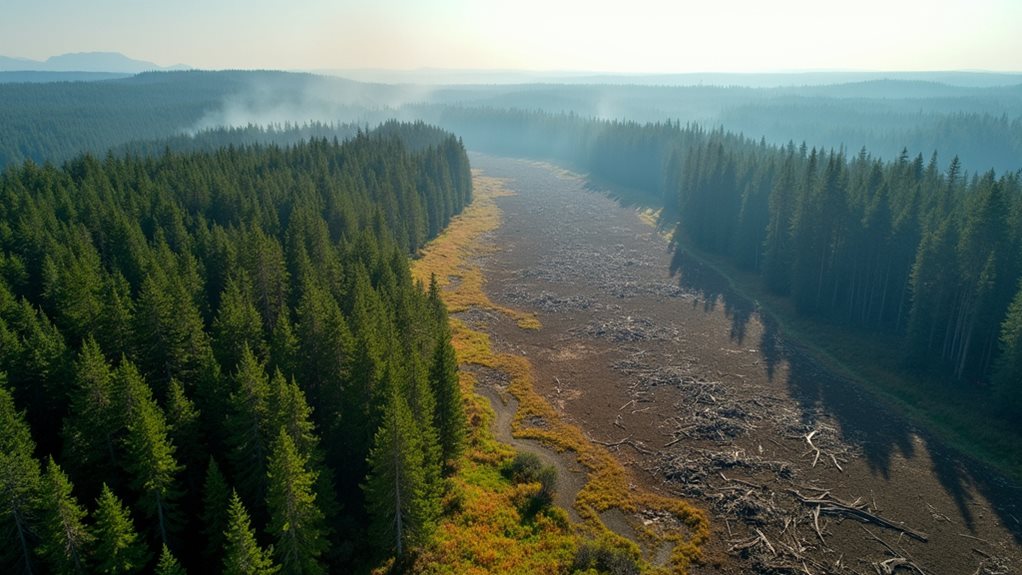

The USDA’s initiative to log 59% of federal forest lands aims to prevent wildfires, but it raises eyebrows about ecological risks. Logging can threaten habitats for endangered species and disrupt delicate ecosystems. It’s a bit like trying to fix a leaky faucet by whacking it with a hammer—hardly the best solution! Excessive logging might even release the CO2 that forests previously soaked up. Curious about how this gamble plays out for our forests and wildlife? Keep exploring!
Balancing Fire Prevention and Ecological Integrity
How does one strike a balance between fire prevention and ecological preservation in our forests? It’s a bit like trying to juggle chainsaws while riding a unicycle—challenging and potentially dangerous.
Logging has been touted as a fire prevention strategy, with thinning and removing dead trees aimed at reducing wildfire risks. By lowering the forest’s fuel loads, these practices mimic the healthier conditions of yesteryear, before fire suppression became the norm. However, it’s not all a walk in the park; poor logging techniques can actually leave behind flammable residues and create microclimates that could spark a wildfire frenzy.
But wait! There’s a flip side. Logging doesn’t just help manage fire risk; it can wreak havoc on wildlife habitats, particularly for endangered species like the northern spotted owl. Building roads for logging can fragment ecosystems, spread invasive species, and lead to soil degradation that would make Mother Nature weep. In fact, logging threats can lead to the reduction of old-growth forests, which are vital for maintaining biodiversity and ecosystem health.
The irony is thick—while aiming to protect forests, the very act of logging can diminish biodiversity and disrupt the delicate balance of local ecosystems. Sustainable practices could help mitigate these negative impacts while still allowing for responsible resource extraction.
Moreover, let’s not forget that logging old-growth forests releases stored carbon, which flips these carbon sinks into carbon sources. This is like having a savings account that suddenly empties itself. With U.S. forests offsetting 14% of national CO2 emissions thanks to untouched ecosystems, it raises the question of whether timber production is worth the potential climate repercussions. Furthermore, the U.S. Forest Service’s timber targets can exacerbate the environmental harm caused by logging practices.
In the grand game of land management, the USDA’s push for extensive logging often prioritizes timber over ecological health, driven by economic motives. Public land management plans aim to strike a balance but are sometimes criticized for neglecting environmental reviews.
As conservationists advocate for restrictions on old-growth logging, it becomes clear: the challenge remains—can we effectively juggle fire prevention and ecological preservation without losing our grip?