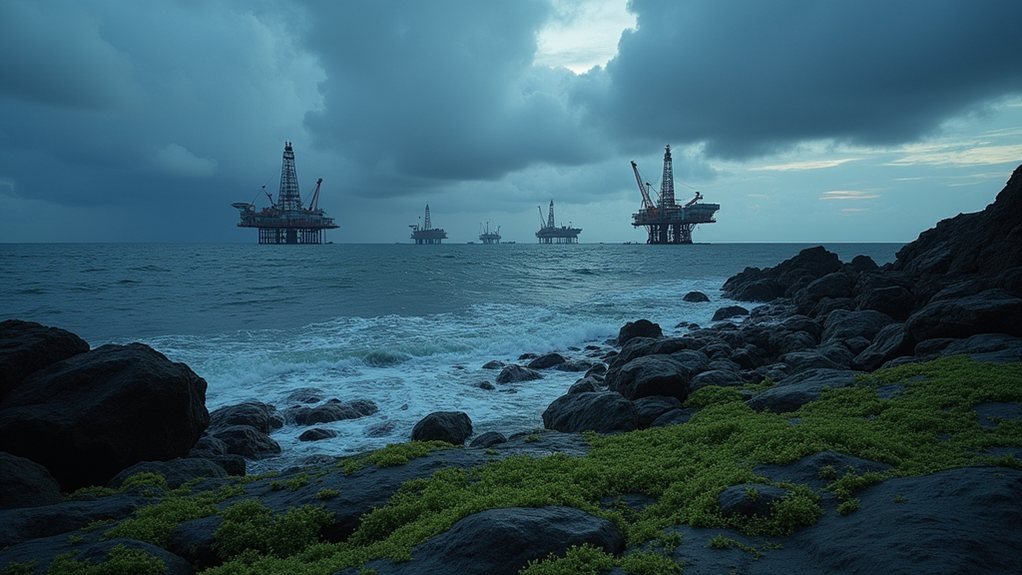

The UK’s North Sea Windfall Tax, a hefty 38%, is making oil and gas producers sweat. They warn that this tax could tax the industry into oblivion by 2026, hampering investments and job opportunities. With major projects now on the chopping block, leaders argue that immediate reforms are vital for protecting local economies and ensuring sustainable growth. The industry needs to adapt, balance profit with environmental responsibilities, and ultimately, discover what the future holds.
Quick Overview
- The North Sea Windfall Tax, currently at 38%, is expected to burden oil and gas producers until its potential end in March 2026.
- Industry leaders are advocating for an early termination of the Windfall Tax to prevent significant investment cuts and financial strain.
- High tax rates are likely to discourage new exploration and development projects, threatening the future viability of the North Sea sector.
- Public support exists for the tax but calls for its cessation by March 2026 reflect concerns for jobs and community livelihoods.
- Immediate tax reform is recommended to balance fiscal needs with sustainable investment in the oil and gas industry.
The UK North Sea Windfall Tax: Impact on Oil and Gas
In the ever-shifting landscape of energy economics, the UK North Sea Windfall Tax has frequently grabbed headlines, creating ripples in the oil and gas industry much like a pebble tossed into a tranquil pond.
Set at 38%, this hefty levy, combined with corporation tax, pushes the marginal tax rate to a staggering 78%.
Alas, investments are taking a nosedive, with cuts of 25% in 2023 and major projects under review.
The North Sea is now as competitive as a three-legged turtle in a marathon, and without reform, the outlook for production—and jobs—looks grim as the country edges toward increased imports and dwindling resources.
As the industry grapples with these fiscal pressures, operators must also incorporate climate-related risks into their long-term business strategies to remain resilient in an increasingly volatile energy transition.
What Industry Leaders Are Saying About the Windfall Tax?
While many industry leaders recognize the importance of taxing excess profits, they also warn that the UK’s hefty North Sea Windfall Tax might be the equivalent of trying to squeeze water from a stone—a perfectly plausible endeavor on paper, but decidedly unfulfilling in practice.
At a staggering 38%, the effective rate looms at 78%, reshaping investment decisions. Critics argue that without tax reform, the North Sea could be taxed into decline, jeopardizing jobs and community livelihoods.
While public support is strong, industry voices call for a swift end to the levy by March 2026 to revive investment and guarantee long-term sector viability. Ensuring equitable transitions requires balancing revenue needs with policies that protect workers and communities dependent on the oil and gas sector.
The Windfall Tax and Its Future Implications on North Sea Investment
Amidst a backdrop where industry leaders caution against the excessive North Sea Windfall Tax, the stakes for future investments couldn’t be clearer.
With the Energy Profits Levy at a staggering 78%, companies face a financial hangover from prior energy price spikes. This hefty tax discourages new explorations and could jeopardize existing projects, stalling the region’s oil ambitions.
While policymakers aim to keep operations alive, they risk making North Sea investments feel like racing with a flat tire. Unless there’s a fiscal refresh, the industry might shift its focus to quick tiebacks instead of greenfield developments, potentially sidelining long-term gains.
Investors and stakeholders increasingly scrutinize such fiscal policies through ESG frameworks, which evaluate how tax structures affect long-term sustainability and environmental commitments in energy sectors.