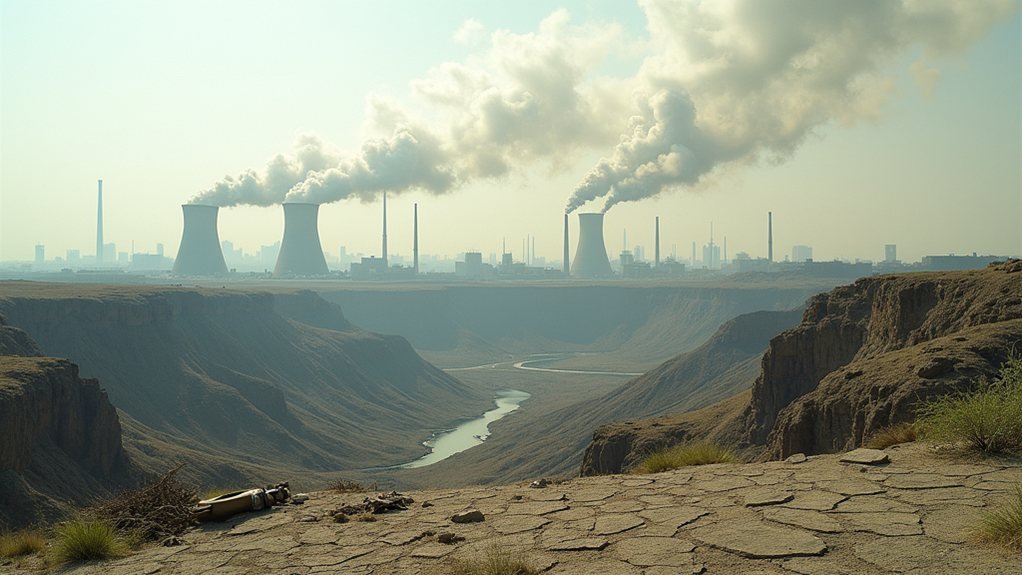

The UK mining sector is increasingly leaning on carbon offsets rather than making real emissions cuts. Think of offsets like a band-aid on a broken leg – they don’t fix the root problem. While these offsets, like tree planting and peatland restoration, are helpful, they can’t replace genuine reductions at the source. The emphasis should be on truly slashing emissions, as cleaner mining practices foster innovation. Stick around, and you might discover more surprising insights into sustainable mining tactics!
Quick Overview
- The UK mining sector heavily utilizes carbon offsets to combat emissions instead of focusing primarily on direct reductions at the source.
- Carbon offsetting projects, like tree planting, are integral to the mining industry’s environmental strategy under the UK ETS.
- Reliance on offsets can pose challenges, as true emissions reduction is more effective in addressing greenhouse gas accumulation.
- The sector has seen significant declines in emissions, but many reductions are still achieved through offsetting rather than direct mitigation efforts.
- Genuine emission cuts in mining are essential for fostering innovation and ensuring long-term sustainability beyond temporary offset solutions.
Understanding UK Mining Emissions
Understanding UK mining emissions is like peeling back the layers of an onion—there’s more than meets the eye. In 2022, this sector emitted nearly 16 million metric tons of CO2, yet it has slashed emissions by over 40% since 2000. Surprisingly, mining and quarrying contribute a mere fraction to the UK’s total emissions compared to transport and power generation. Coal’s decline, from a historical high to a whisper of its former self, plays an essential role. With methane from coal mining representing a significant piece of the emissions puzzle, the industry’s evolution reflects broader decarbonization efforts in the UK. While mitigation strategies focus on reducing these emissions at their source, adaptation measures prepare the industry for unavoidable climate impacts. Analyzing emissions data from the mining sector provides insights into the impact of mining on overall CO₂ emissions trends in the UK, especially considering that UK emissions have fallen 54% below 1990 levels.
Carbon Offsets: Their Role in UK Mining Strategies
Carbon offsets have emerged as a key player in the UK mining sector‘s strategy to mitigate its environmental footprint.
With the UK ETS imposing stricter emissions caps, mining operations are increasingly turning to accredited schemes like the Woodland Carbon Code and Peatland Code. These initiatives allow companies to offset emissions through projects like planting trees or restoring peatlands—think of it as nature’s version of a gym membership, trading carbon credits for greener practices. However, without broader regulations, these offsets remain limited. Consequently, mining firms are often left balancing compliance with a healthy dose of offset reliance—a tricky tightrope walk in the sustainability circus. To further challenge this reliance, the UK government aims to enhance domestic critical mineral production as part of its Vision 2035 strategy. Moreover, the UK ETS has set a cap aligned with the UK’s net-zero target by 2050, pushing for more significant reductions in emissions over time.
Why Reducing Emissions Matters More Than Offsetting
While many mining companies might be tempted to lean heavily on carbon offsets as a quick fix for their emissions woes, the reality is that reducing emissions at the source is a far more effective strategy.
Genuine reductions tackle the root causes of greenhouse gas emissions, making a lasting impact on the environment. Unlike offsets, which merely shuffle numbers around, direct cuts prevent atmospheric accumulation. As UK mining emissions fell considerably, embracing substantial reductions fosters innovation and sustainability. In fact, greenhouse gas emissions from the mining and quarrying industry in the UK are measured in metric tons of CO₂ equivalent, highlighting the importance of addressing these emissions directly.
Interestingly, the energy industry saw the largest emission reduction since 2022, demonstrating that significant cuts are achievable across sectors.
Implementing cross-sector strategies can maximize the effectiveness of carbon reduction efforts by identifying common solutions applicable to multiple industries.
Think of it as cleaning your room instead of just hiding the mess; real progress happens when companies commit to true environmental responsibility.