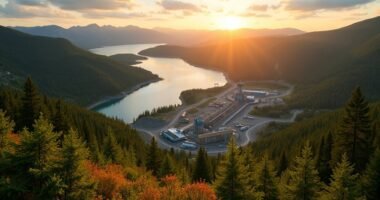
UK mining is feeling the heat from the EU’s Nature Restoration Law, a set of green expectations impacting even those across the Channel. While the law doesn’t directly affect the UK, it raises the bar for sustainability and competition. Miners must adapt, integrating tree planting and habitat protection like it’s part of their daily grind. It’s a lot like trying to bake a cake while juggling—challenging but essential for success. There’s more to this evolving story on compliance and strategies ahead.
Quick Overview
- UK mining companies may face increased market competition as EU Nature Restoration Law places heightened sustainability expectations on the sector.
- Although the NRL targets EU member states, UK miners must adopt habitat protection strategies to remain competitive.
- Compliance with environmental regulations, including biodiversity measures, is essential for UK miners to mitigate ecological impacts.
- Sustainable management practices are encouraged, enhancing operational resilience in response to evolving regulatory pressures.
- Continuous engagement with local communities and stakeholders is vital for UK miners to ensure compliance and garner support.
Key Changes in UK Mining Regulations Post-EU Nature Restoration Law
As the dust settles on the change away from EU regulations, the landscape of UK mining regulations is undergoing significant shifts, particularly in light of the newly introduced EU Nature Restoration Law.
The UK’s mining regulations are evolving dramatically post-EU, influenced by the new Nature Restoration Law.
While specifics about these changes remain elusive, the UK is already grappling with coal mining bans and phase-out policies. The coal ban is part of a broader strategy to align with climate goals and transition to renewable energy sources. The regulatory regime is expected to vary according to the specific mineral being mined, adding another layer of complexity for operators.
The existing frameworks, like the Coal Industry Act 1994 and Environmental Permitting Regulations, are under scrutiny. Companies must now consider implementing sustainable management practices that balance resource extraction with preserving forest ecosystems near mining sites. Meanwhile, the Coal Authority’s licensing roles may evolve, reflecting a tug-of-war between resource extraction and environmental stewardship.
As miners navigate this complex terrain, adaptability will be their new best friend—much like a chameleon at a color party.
What the EU Nature Restoration Law Means for UK Mining?
While the EU Nature Restoration Law (NRL) may not cast a direct legal shadow over UK mining operations, its implications ripple through the industry like a pebble dropped into a pond.
The NRL primarily targets EU member states, leaving UK mining free from its immediate grasp. However, as European mines adapt to stricter regulations, UK mining could face increased market competition. Restoring degraded ecosystems is a core goal of the NRL, which could lead to heightened expectations for sustainability across the mining sector. Furthermore, the NRL mandates the planting at least three billion trees by 2030, setting a standard that could influence ecological restoration practices in the UK.
Imagine a race where one runner is weighed down by rules while another sprints freely; the dynamics change.
Ultimately, UK miners must stay alert, as shifts in EU regulations might indirectly influence their operational landscape and market opportunities. Forward-thinking mining companies may need to adopt habitat protection strategies to align with global conservation efforts regardless of legal requirements.
Strategies for Complying With New Mining Regulations
Steering through the evolving landscape of mining regulations can feel a bit like trying to find your way through a maze while blindfolded—challenging, but not impossible.
To comply with new mining regulations, UK operators can adopt several strategies. First, they should conduct thorough environmental impact assessments to identify potential risks. Additionally, understanding the EU Methane Regulation can help operators address methane emissions effectively. Furthermore, being aware of the Conflict Minerals Regulations ensures compliance with obligations related to the sourcing of minerals.
Embracing new mining regulations starts with comprehensive environmental impact assessments to pinpoint risks effectively.
Second, integrating biodiversity measures can mitigate ecological damage. Third, fostering collaboration with local communities aids in gaining support. Fourth, staying updated on regulatory changes guarantees alignment with EU standards.
Companies should develop corporate biodiversity strategies that align with conservation goals while maintaining business viability.
Finally, implementing sustainable practices enhances operational resilience while promoting a greener image—because who wouldn’t want to be the eco-friendly superhero of mining?