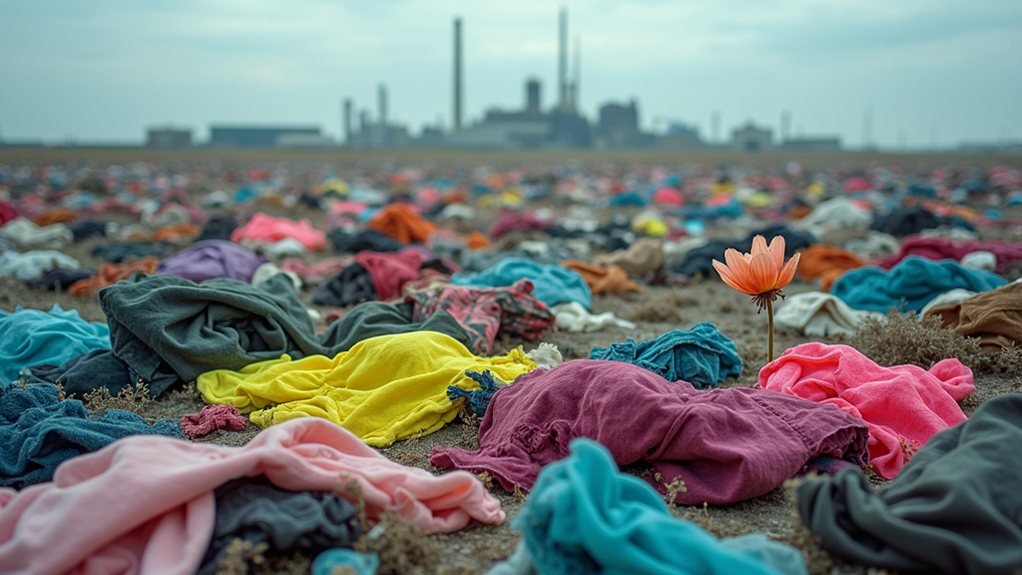

Fast fashion in the UK has hit a stitch-in-time dilemma as consumers splurge on an impressive 26 kilograms of clothing each year. Imagine a little mountain of outfits, half cast away faster than you can say “eco-disaster”. It’s not just your wardrobe getting bigger; this haberdashery hullabaloo adds up to monumental waste and CO2 emissions. So, what’s to be done? Sneak a peek at sustainable switches—or at least fake an interest in that green talk your eco-savvy friend loves.
Quick Overview
- Brits purchase an average of 26kg of clothing annually, contributing significantly to fast fashion waste in the UK.
- Fast fashion’s environmental cost includes contributing 8-10% to global carbon emissions and generating significant waste.
- Greenpeace highlights that fast fashion leads to unsustainable consumption and high waste levels in the UK.
- Each UK individual discards about 7kg of fashion waste annually, emphasizing the urgent need for sustainable practices.
- Without changes, fashion emissions could reach 26% of global totals by 2050, risking environmental catastrophe.
Shifting to Sustainable Fashion Practices
In the kaleidoscope world of fashion, where trends twirl as fast as a disco ball, the shift towards sustainable practices emerges not just as a trend but as a necessity. Imagine a universe where rental and upcycling are as chic as owning a Birkin. Brands are now like savvy detectives, tracing lifecycle journeys with Digital Product Passports, ensuring eco-claims aren’t just the sartorial equivalent of snake oil. Designers at LFW are promoting meaningful sustainable practices, focusing on excessive fabric production and consumption. The fashion industry’s impact on the environment necessitates exploring more responsible approaches to clothing production to ensure a sustainable future. As evidenced by UK clothing purchases, research shows that these generate significant carbon emissions. The fashion wizards have waved their design wands, crafting garments that stand the test of time. Think Cinderella’s gown, but built to last beyond midnight. The circular economy propels these changes, heralding fashion’s eco-chic renaissance.
Fast Fashion’s Waste Problem: The 26kg Challenge in the UK
While fast fashion might promise all the instant gratification of next-day delivery, it harbors a secret that the UK can’t zip up in a sleek garment bag. Every year, Brits indulge in a sartorial spree, snapping up 26kg of clothing, but half is tossed faster than last season’s handbag. They’re like magpies snagging shiny things only to stash them in overstuffed closets—57 unworn items each, to be precise. Clothing sales have doubled since 2000, even though utilization decreased over the same period. Annually, they generate 7kg of fashion waste per person. It’s a chaotic cycle where garments live a mere seven wears before joining their misfit cousins in landfill limbo—wasted treasures, indeed. Community Development Finance Institutions play a crucial role in channeling capital into sustainable solutions to mitigate the environmental impact of fast fashion. Furthermore, the fast fashion industry accounts for 10% of global carbon emissions, surpassing emissions from international flights and maritime shipping combined.
Fast Fashion’s Environmental Cost: Waste and CO2 Emissions
Imagine your closet as a charming little monster with an insatiable hunger for style, gobbling up the hottest trends faster than you can say “next-day delivery.”
Yet, this creature harbors a dark secret: its appetite is fueling a worldwide environmental fiasco. Fast fashion contributes to 8-10% of global carbon emissions, outstripping emissions from flights and shipping combined. In 2015, polyester production alone released an eye-popping 706 billion kilograms of greenhouse gases. Washing clothes? That adds another 120 million tonnes CO2e annually. Extending garment life by nine months can reduce its carbon footprint by up to 30%, offering a clear path for consumers to mitigate environmental impact. By adopting practical strategies to reduce food waste at every level, stakeholders can significantly lessen the environmental footprint similarly to how extending garment life offers reductions. In the UK, 300,000 tonnes of clothes end up in landfills each year, highlighting the urgent need for sustainable changes in consumer behavior to reduce waste.
Without intervention, fashion emissions might balloon to 26% of global totals by 2050. It’s like giving your closet a one-way ticket to climate chaos.