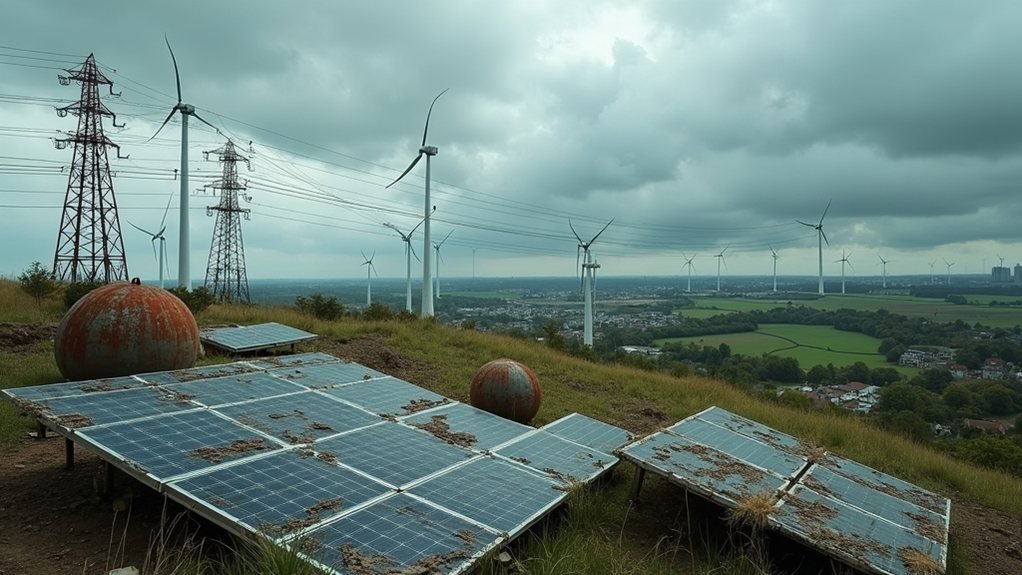
The UK’s energy shift is like trying to ride a unicycle while balancing a stack of books. There’s heavy reliance on fossil fuel-powered cars and gas boilers, which complicates progress. Additionally, a shortage of skilled tradespeople and slow infrastructure upgrades are major roadblocks. Swift action is needed to meet ambitious targets, but it requires cohesive policies and innovative solutions. Interested in discovering how these challenges might be tackled? The solutions are just around the corner!
Quick Overview
- The UK’s energy transition is hindered by a reliance on fossil fuels, with over half of cars still using gas and oil.
- Significant grid constraints and slow updates in the building sector impede progress towards energy targets and electrification.
- Urgent actions are needed to address Scope 3 emissions and improve training for skilled tradespeople in the energy sector.
- Investments in modernizing the grid and developing hydrogen infrastructure are critical for overcoming current barriers.
- Achieving a successful energy transition requires cohesive policies and a comprehensive understanding of renewable energy advantages.
What Are the Major Obstacles to Achieving UK Energy Transition Goals?
As the UK aims to dash toward its energy shift goals, it might feel a bit like trying to sprint through a muddy field—exhilarating, but with plenty of obstacles ahead.
The buildings sector looms large, with many homes still clinging to gas boilers as late as 2035.
Transport isn’t much better, with over half of cars still burning fossil fuels.
Add in a skills shortage for tradespeople, and the electrification needed to spark progress seems miles away.
Successfully managing climate-related risks requires businesses to integrate these challenges into their core strategic planning, moving beyond siloed thinking to embrace whole system approaches.
To truly evolve, the UK must tackle these hefty challenges, lest it find itself stuck, like a runner losing shoes in the mud.
What’s Blocking the UK From Hitting Its Energy Targets?
Charting the path to the UK’s energy goals is akin to trying to juggle flaming torches while riding a unicycle—exhilarating, yet fraught with peril.
A tangled web of grid constraints, lagging building sector updates, transport decarbonisation shortfalls, and sluggish policy implementation are major hurdles.
Two-thirds of homes cling to gas boilers, while over half of cars still burn fossil fuels.
Despite ambitious plans and funding efforts, the timing for electrifying transport and homes proves painfully slow.
Without swift actions, the UK risks tipping its balance from ambitious climate goals to a precarious cliff of missed targets.
Meanwhile, tracking and reducing Scope 3 emissions across complex supply chains remains a critical challenge that artificial intelligence tools are beginning to address.
What Actions Can Address These Obstacles?
While the UK grapples with its energy transformation, innovative solutions are emerging to tackle the multitude of obstacles in its path.
Modernising the grid, supported by Ofgem’s £28bn investment, is pivotal. Think of it as upgrading from a rotary phone to a smartphone—essential for smooth energy flow.
Long-duration energy storage projects, helping to integrate renewable sources, add much-needed flexibility. Meanwhile, hydrogen infrastructure development capitalises on existing gas pipelines, bridging the gap until green hydrogen becomes viable.
Understanding the advantages of renewable energy sources like solar, wind, and hydro is fundamental to developing effective implementation strategies across all sectors.
Finally, cohesive policy and clear regulations will orchestrate this complex symphony, ensuring all components harmonise for a successful energy transition.