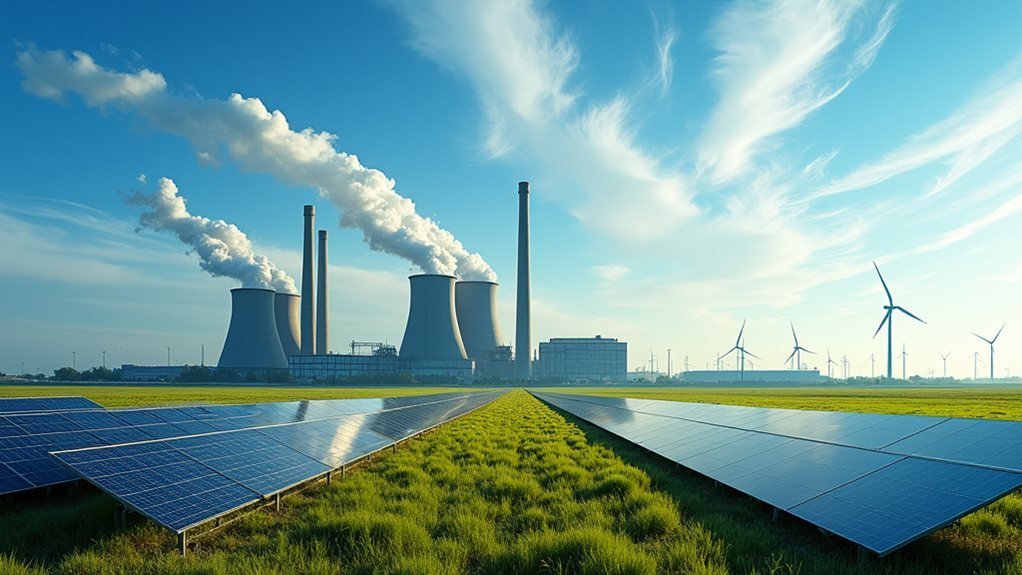

Texas has given the green light to its largest fossil fuel plant, a behemoth expected to power 1.2 million homes. While this might sound like a victory for energy demand—especially as usage is set to surge by 2026—it raises serious environmental concerns. Emissions from these gas plants could rival those of millions of cars, harming air quality and public health. As Texas navigates its energy future, balancing fossil fuel growth with cleaner options becomes increasingly essential—stay tuned to learn more!
Quick Overview
- Project Matador, Texas’ largest fossil fuel plant, is set to significantly increase gas power capacity to meet rising energy demands.
- Texas aims to double gas generation, anticipating peak electricity demand from data centers by 2034, potentially exceeding supply by summer 2026.
- Proposed gas facilities could emit 115 million metric tons of CO2, negatively impacting air quality and local health, especially in cities like Houston.
- Clean energy initiatives struggle against the proliferation of gas projects, complicating the pursuit of sustainability in the energy sector.
- Texas Energy Fund’s investment in fossil fuels may impede cleaner alternatives, necessitating a balanced approach to future energy planning.
Texas’ Largest Fossil Fuel Plant: Impacts on Energy Policy and Environment
As Texas strides boldly into its energy future, the approval of Project Matador—the state’s largest fossil fuel plant—has sparked a lively debate about its implications for both energy policy and the environment. Understanding strategies to cut carbon emissions is crucial as the state balances energy growth with ecological responsibility.
This colossal facility, with the capacity to power 1.2 million homes, represents a significant leap in natural gas reliance amidst soaring energy demands. Project Matador’s capacity is remarkable, as it exceeds all current fossil fuel plants in the U.S. However, with robust projects like the GW Ranch also on the horizon, some experts warn of dependency risks reminiscent of a candy binge. The scale of upcoming projects includes nearly 58 gigawatts in gas power to meet rising demand, setting the stage for a volatile energy landscape.
Texas’ goal to double gas generation suggests a thrilling race ahead, but one that might leave environmental checkered flags waving in protest.
Environmental Impact of Texas Gas Power Plants: Consequences for Clean Energy Initiatives
In the dynamic landscape of Texas energy, the environmental impact of gas power plants frequently raises eyebrows, prompting important conversations about the future of clean energy initiatives. Accurate measurement and reporting of emissions according to greenhouse gas protocols are essential to guide these discussions.
With around 130 proposed facilities potentially emitting 115 million metric tons of CO2 each year—akin to 26.8 million cars—Texas faces intensified climate challenges. Local air pollutants like nitrogen oxides and sulfur dioxide jeopardize air quality, worsening respiratory woes in cities like Houston. Furthermore, the Texas Energy Fund prioritizes gas over renewables, diverting invaluable resources away from cleaner, cost-effective alternatives. As these gas plants rise, the dream of sustainable energy feels like a fading mirage. The state’s electricity demand surge is largely driven by new data centers, an expected peak electricity demand to nearly double by 2034 further complicating its energy landscape.
What’s Next for Texas Energy? The Future of Gas Power?
What does the future hold for Texas energy as the state braces for a surge in demand and a deluge of new gas power projects?
With electricity needs projected to soar, particularly from data centers and emerging tech, Texas has a monumental task ahead. Over 40 gigawatts of gas capacity is set to power these digital dynamos, positioning Texas as a global leader in natural gas development. Texas’ energy demand could exceed supply starting summer 2026, further complicating the balance between gas and renewable energy sources. As gas-fired plants can quickly ramp up to meet increased demand, they play a crucial role in supporting the state’s energy transition. However, integrating these plants with renewable energy sources will be essential for creating a sustainable energy future.
The Texas Energy Fund aims to inject billions, but market dynamics keep everyone on their toes. Balancing gas needs with renewable energy trends will be like juggling flaming torches while riding a unicycle—exciting, yet precarious.