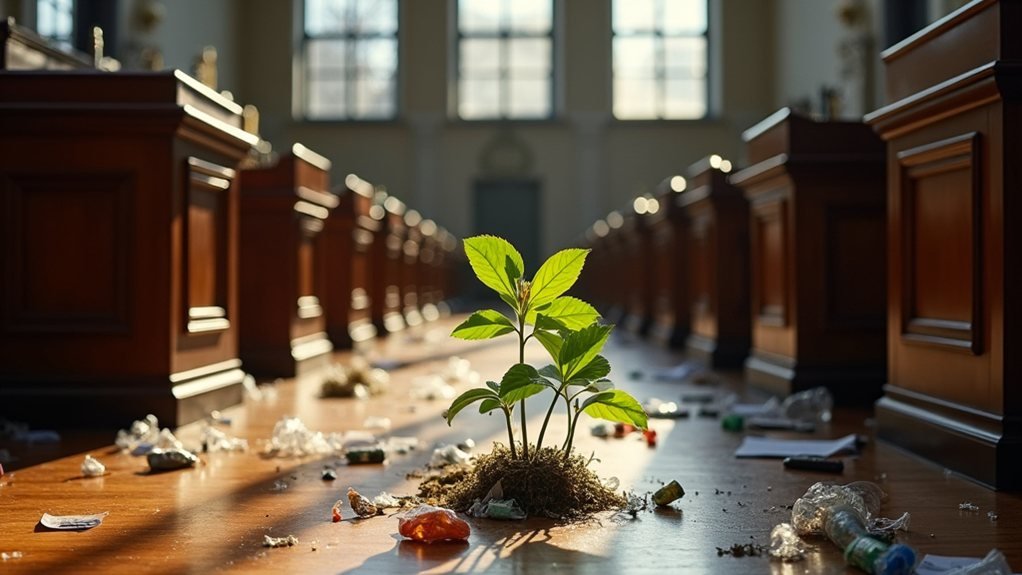

In 2024, only 6 of 169 proposed plastic reduction bills passed, showing how tricky it is to tackle plastic waste. Picture a massive game of legislative hopscotch, where regulatory confusion and industry lobbying make progress stumble. States like California and New York are trying out creative solutions, like Extended Producer Responsibility, to shift the burden onto producers. Despite the odds, public support is growing, hinting at potential wins ahead in the fight against plastic. Curious about those strategies?
Quick Overview
- Only 3.6% of proposed plastic reduction bills passed in 2024, highlighting significant legislative challenges.
- Regulatory complexities and lobbying from industries hindered the advancement of stricter plastic waste policies.
- California and New York successfully implemented Extended Producer Responsibility programs, setting examples for effective plastic legislation.
- Public support for reducing plastic pollution is growing, emphasizing the importance of conscious consumption and community involvement.
- Future legislation requires cohesive regulatory frameworks and sufficient funding to support ambitious recycling and waste reduction initiatives.
Overview of Legislative Outcomes in 2024
As the curtain rose on 2024, the landscape of plastic legislation revealed both hopeful aspirations and a sobering reality.
Out of 169 proposed bills aimed at reducing plastic waste, only six managed to cross the finish line—about 3.6%.
While states like California and New York led the charge with ambitious measures, progress was far from a sweeping victory. The Packaging Reduction and Recycling Infrastructure Act aims to reduce plastic pollution and save taxpayers money, reflecting the growing public support for such initiatives. Additionally, the recent bipartisan effort known as the “Accelerating a Circular Economy for Plastics and Recycling Innovation Act of 2024” seeks to establish national plastics recycling standards to modernize recycling infrastructure.
California and New York initiated ambitious plastic reduction efforts, yet meaningful progress remains a challenging endeavor.
Extended Producer Responsibility (EPR) programs and single-use plastic bans gained traction, but the overall passage rate showcased the uphill battle ahead. The focus on environmental consequences of plastic pollution has become increasingly central to legislative arguments nationwide.
It was a reminder that while ideas spark hope, turning them into action often requires more than just wishful thinking.
Challenges Hindering Plastic Reduction Legislation
Legislation aimed at reducing plastic waste may have found its footing, but the path forward is littered with challenges that would make even the most optimistic advocate cringe.
Regulatory complexities abound, with overlapping frameworks leading to confusion and conflict. Meanwhile, industries lobby fiercely, spinning tales of economic doom if stricter rules pass. Navigating the state-specific regulations requires companies to develop adaptable packaging strategies that can meet various compliance requirements. In addition, the growing number of advanced recycling bills being introduced is adding another layer of complexity to the legislative landscape. Furthermore, the introduction of Extended Producer Responsibility (EPR) programs in various states aims to shift the financial burden from taxpayers to producers, but implementation remains fraught with difficulty.
Add to this the uncertainty of funding for ambitious projects and a shaky grasp on recycling capabilities, and you have a recipe for delay.
It’s like trying to bake a cake with missing ingredients—everyone wants the end result, but no one can agree on how to make it happen.
Successful Strategies and Lessons Learned
Tackling plastic waste may feel like trying to teach a cat to fetch, but successful strategies emerging from various states and federal initiatives are proving that progress is possible. States like California and New York are pioneering Extended Producer Responsibility (EPR) programs, mandating producers to finance recycling and waste reduction. Meanwhile, the White House is pushing for a thorough plastic strategy, emphasizing partnerships and environmental justice, with a commitment to phase out federal procurement of single-use plastics by 2027. With ambitious recycling goals and innovative funding through the Bipartisan Infrastructure Law, these initiatives show that while the plastic problem is intimidating, targeted legislation and collaboration can cut through the clutter, leading to meaningful change. Notably, nine states pursuing EPR are taking significant steps to address packaging waste through legislative efforts. Individual citizens can complement these larger initiatives through conscious consumption practices that minimize waste generation at its source.