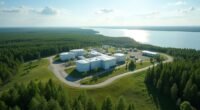
Ontario’s Ring of Fire is like the shiny treasure chest guarded by nature’s less glamorous but essential vaults—peatlands packed with carbon. As mining seeks chromite and nickel for electric dreams, it risks turning peatlands into carbon-spewing nightmares. Indigenous communities, the stewards of these lands, raise red flags over cultural and ecological loss. Balancing carbon footprints with green ambition sounds like walking a tightrope, but you might just find surprising depths behind the cautious optimism.
Quick Overview
- Mining disturbances in peatlands risk releasing significant quantities of stored carbon, such as carbon dioxide and methane, into the atmosphere.
- Ontario’s current governance frameworks fail to adequately address and assess emissions from peatland disturbances.
- Development in the Ring of Fire threatens peatland ecosystems critical for carbon storage and indigenous environmental stewardship practices.
- Mining in the Ring of Fire raises indigenous concerns over cultural loss and environmental degradation linked to peatland destruction.
- The ecological risks from mining, highlighted by the historical DeBeers Canada Victor diamond mine, underscore the need for responsible extraction practices.
The Impact of Mining on Ontario’s Peatlands
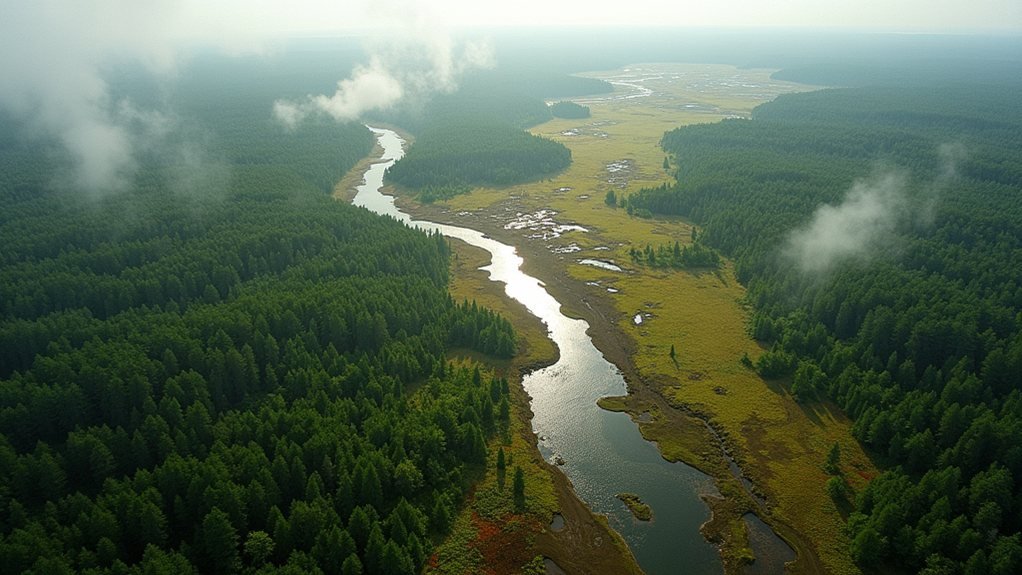
Peatlands might not headline the latest blockbuster, but their environmental significance is nothing short of epic – except, in this tale, it’s carbon that takes center stage. Ontario’s Far North peatlands store a colossal 35 billion tonnes of carbon, poised like the vault in Fort Knox, guarding against the climate’s greed.
But mining? A mischievous burglar, threatening to turn these carbon sinks into gushing carbon emitters. Disturbances release both carbon dioxide and methane—like a nature gone wild party, though not the kind anyone wants to attend. Historical evidence from the DeBeers Canada Victor diamond mine underscores the potential harmful effects on ecosystems, illustrating the ecological risks linked to such activities.
With methane’s 25-times stronger warming potential, it’s like throwing a barbecue under a climate-changing sun. Current governance frameworks fail to take into account the emissions from peatland disturbances, complicating efforts to safeguard these critical carbon stores. Evaluating these risks requires examining the full scope of harm across every phase of a mining operation, from extraction to site abandonment, a process known as lifecycle environmental assessment that remains underutilized in current regulatory approaches.
Key Minerals From the Ring of Fire: Their Role in Canada’s Future
Picture the Ring of Fire as Canada’s dazzling mineral treasure chest, one that promises to reshape the nation’s future. It’s like a fantastic candy store for geologists, packed with chromite reserves larger than any other in North America. Throw in buckets of nickel and copper, essential for electric cars, and you’re sitting on a battery revolution. Meanwhile, platinum group elements gleam with potential, catering to aerospace and high-tech whims. Not to miss is cobalt, cozying Ontario’s global producer status. Think of a mineral omelette, with rare earth garnishes, ready to feed economic appetites for the next century. Quite the bonanza, eh? Responsible extraction of these resources requires careful planning to ensure that sustainable forest practices are integrated into development strategies to protect surrounding ecosystems. This treasure lies within a strategically designated region, facilitating streamlined government approvals and development opportunities. The Ring of Fire also holds significant mineral deposits centered around McFaulds Lake, adding to its potential for economic impact on Canada.
Indigenous Concerns and the Balance of Economic Interests
Although Ontario’s Ring of Fire is often heralded as a game-changing geological wonderland, it’s also become a flashpoint for complex indigenous concerns.
Think of it as a tug-of-war between nature lovers and mineral hunters. On one side, Webequie and Marten Falls First Nations partner with Noront, enthusiastic for infrastructure. On the other, Neskantaga stares daggers, fearing cultural loss and environmental doom. The mining infrastructure development threatens one of the world’s largest carbon-storing peatlands, which could release significant carbon into the atmosphere, countering the benefits of EV resource development. This development occurs amid Ontario’s absence from critical environmental assessments, raising alarms over the province’s commitment to ecological and indigenous rights.
Peatlands—Mother Earth’s carbon vaults—hang in the balance, playing defense like a goalie in a tight game. The Ontario government seems tone-deaf, juggling Treaty 9 commitments while communities juggle boil-water advisories. Indigenous peoples have long employed traditional land stewardship practices such as controlled burns and rotational land use to maintain the ecological integrity of forests, grasslands, and waterways without depleting their carbon-storing capacity.
It’s a high-stakes match with no clear halftime.