U.S. natural gas production is gearing up for a thrilling spike, expected to hit 108.8 billion cubic feet daily by 2026. While many trumpet a green future, this surge suggests oil and gas exploration isn’t ready to exit stage left just yet. Key regions like Appalachia and Haynesville are busy cranking up their output, despite pipeline headaches. It’s like a high-stakes game of poker—know when to hold ‘em and when to fold ‘em. Curious about the challenges and market dynamics?
Quick Overview
- U.S. natural gas production is projected to reach a record high of 108.8 billion cubic feet daily by 2026, despite transition promises.
- Increased LNG exports are driving higher natural gas demand even as domestic consumption slightly decreases.
- Significant growth in key regions like Haynesville and the Permian bolsters overall production amid infrastructure challenges.
- Limited pipeline infrastructure, including delays on the Mountain Valley Pipeline, hinders some growth despite rising natural gas prices.
- A focus on integrating ESG principles indicates a push towards more sustainable practices in oil and gas exploration amidst production surges.
The Surge in U.S. Natural Gas Production by 2026
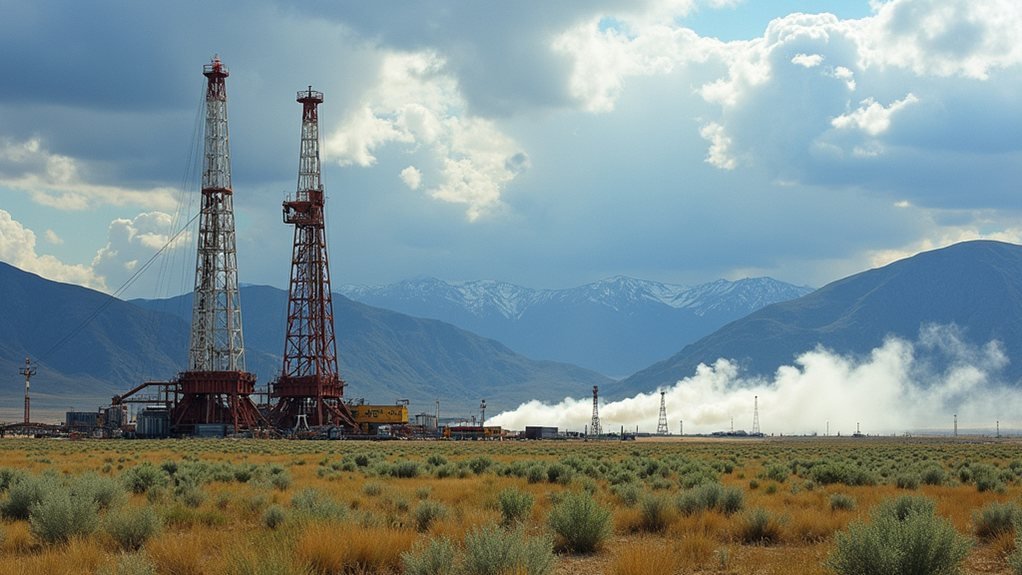
As the winds of change blow through the energy landscape, it’s clear that the surge in U.S. natural gas production by 2026 is not just a blip on the radar, but a seismic shift in the industry. With dry gas production forecasted to rise to 108.8 billion cubic feet daily, the U.S. is on a roll. Natural gas output projected to reach record high in 2026 adds further significance to this booming trend. While domestic use may dip slightly, LNG exports are set to soar—think of it as the country’s natural gas taking an international vacation. It is essential for companies involved in this surge to consider ESG principles to ensure sustainable practices are maintained. The real kicker? New pipeline capacities and advanced drilling techniques are primed to keep production flowing, making this energy boom one for the books. Additionally, a forecasted production growth of 2% in 2026 highlights the increasing output driven by favorable market dynamics.
Understanding Regional Contributions to U.S. Natural Gas Production Growth
The landscape of U.S. natural gas production resembles a competitive relay race, where each region plays an essential role in carrying the baton toward a record-breaking finish. Businesses engaged in this sector are increasingly focusing on aligning operations with sustainable practices to support broader development goals.
The Appalachia region has held a strong grip, dominating 32% of production, though pipeline constraints recently slowed its pace. Key production regions are projected to drive significant growth, contributing to the strong overall output. In particular, the projected increase in U.S. natural gas marketed production is expected to reach 120.8 Bcf/d in 2026, underscoring the momentum behind this sector.
Meanwhile, the Haynesville region is surging ahead with impressive forecasts of growth thanks to rising prices and proximity to lucrative markets.
Not to be left behind, the Permian contributes associated gas from oil production, boosting numbers despite declining oil prices.
Collectively, these regions forecast a staggering 120.8 Bcf/d output in 2026, signaling robust growth ahead.
Key Challenges Facing Natural Gas Production Growth
Natural gas production in the U.S. faces a kettle of challenges that could make even the most seasoned pros look twice.
A plethora of factors, from limited pipeline infrastructure to rig counts playing hide-and-seek, hamper growth. The Mountain Valley Pipeline, despite promising optionality, is stuck in legal limbo until 2024. Meanwhile, rising coal use is like an unexpected guest at a party, driving demand away from gas. Additionally, the industry’s response to price fluctuations is increasingly limited by reduced supply elasticity, adding another layer of complexity to market dynamics. With almost half of home heating in the U.S. utilizing natural gas, the stakes for production and pricing are higher than ever. This underscores the importance of supply chain evaluation to better understand and manage environmental and social impacts.
The price dance is wobbly too, with future forecasts hinting at a rollercoaster ride.
To summarize, the landscape is complex, but the quest for natural gas continues, fueled by determination and a touch of humor.