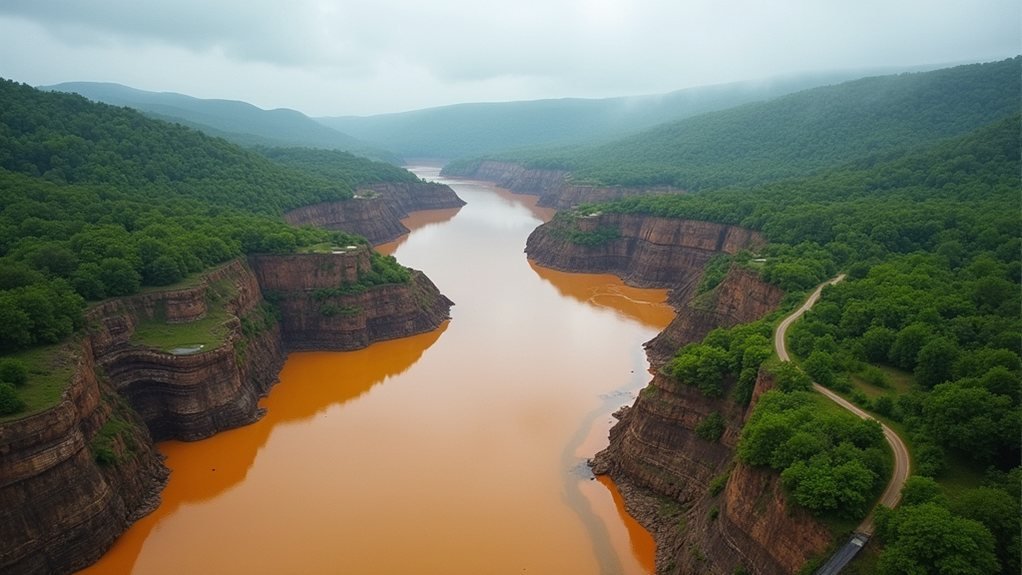

Pennsylvania’s acid mine drainage crisis is no small matter—it’s wreaking havoc over 5,500 miles of streams. Imagine vibrant waterways turned into lifeless, orange-tinted channels. This pollution stems from abandoned mines, releasing harmful metals like iron and aluminum. Local fish populations plummet, ruining beloved fishing spots and disrupting community ties. Struggling with a funding shortfall for cleanup efforts, the state faces an uphill battle. Fortunately, innovative restoration projects are emerging, promising hope for a cleaner future. Curious about the solutions on the horizon?
Quick Overview
- The Acid Mine Drainage Crisis in Pennsylvania affects over 5,500 miles of streams due to pollution from abandoned mines.
- Approximately 7,000 waterways are impacted, resulting in significant environmental degradation across the state.
- Contaminants such as iron and aluminum are released, leading to acidic conditions in local waterways.
- Fish populations decline dramatically in polluted areas, disrupting community identities tied to traditional fishing activities.
- Effective restoration projects and funding initiatives are crucial for reclaiming ecosystems and revitalizing affected communities.
What’s Going on With Pennsylvania’s Acid Mine Drainage Crisis?
What exactly is happening with Pennsylvania’s Acid Mine Drainage crisis?
Picture over 5,500 miles of streams, tarnished by pollution from more than 7,000 affected waterways—thanks to approximately 5,000 abandoned mines.
Over 5,500 miles of streams in Pennsylvania suffer from pollution due to 7,000 waterways impacted by abandoned mines.
These relics of the past leak contaminants like a leaky faucet in an old house. The culprits? Sulfide minerals in the rock react with water, turning it acidic and releasing iron and aluminum like an uninvited party guest. Implementing biodiversity conservation practices in these affected areas could help restore ecosystem health while providing sustainable resources for local communities.
With 28,000 abandoned mine sites statewide, Pennsylvania bears the burden of a historical coal mining legacy that continues to haunt it, raising the stakes for remediation efforts. Recently, the state is set to lose over $169 million in abandoned mine land funding, which complicates efforts to address this ongoing environmental crisis. Additionally, the Abandoned Mine Lands in Pennsylvania contribute significantly to local environmental problems and the climate crisis.
The Impact of Acid Mine Drainage on Local Communities and Ecosystems
Though the legacy of coal mining may seem like a distant memory, its impacts are still very much alive, deeply affecting local communities and ecosystems in Pennsylvania.
Acid mine drainage (AMD) transforms once-vibrant waterways into lifeless, orange-tinted streams, where fish populations plummet and cherished fishing spots become ghostly reminders of a healthier past. With nearly $245 million in funding allocated for cleanups, there is hope for restoring these waters to their former glory. The innovative project that eliminated a 3,000-gallon-a-minute acid mine discharge from the St. Michael site exemplifies the potential for substantial environmental restoration.
With 5,500 miles of polluted waterways, residents often shrug off the alarming signs of contamination as normal. This legacy not only disrupts aquatic ecosystems but also shakes community identities, as beloved traditions tied to these waters fade away, leaving behind a haunting reminder of environmental neglect and social disruption. Effective ecosystem rehabilitation approaches are essential for reversing the damage and restoring the ecological functions that support both biodiversity and human well-being.
Funding Challenges and Solutions for Acid Mine Drainage Cleanup
As Pennsylvania grapples with the lingering effects of acid mine drainage (AMD), the quest for funding to address this environmental crisis emerges as a critical component of the solution. With nearly $245 million annually from the Bipartisan Infrastructure Law, a whopping $3.8 billion is poised for coal mine cleanup over 15 years. However, challenges abound, including the need for swift contract execution and prioritizing human health. With an estimated $5 billion still required for reclamation, communities are revitalized through stream restoration projects that are part of the funding initiatives. These efforts align with the waste management hierarchy, prioritizing prevention of further contamination before addressing existing damage. As the state navigates funding complexities, it aims for cleaner waters and brighter futures—one grant at a time. The Pennsylvania Department of Environmental Protection has awarded over $700 million since 2022 to reclaim the state’s abandoned mine lands.