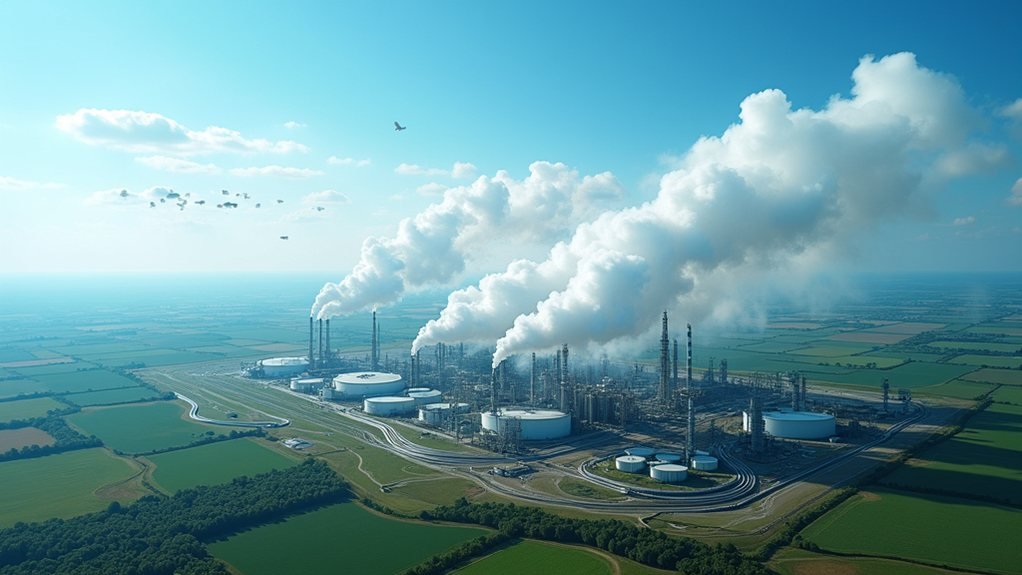
Investors, imagine them as the sharp-eyed Sherlocks of finance, are on the hunt for transparency in methane emissions from big oil and gas producers. With methane packing more punch than CO2—84 times over a two-decade showdown—they demand accurate emissions reporting to align with climate goals. Currently, the oil sector’s estimates sometimes miss the mark by a mile (or four). But, with satellites acting like ‘eco-detectives’ from above, the puzzle might just be solved. Curious for more? Stay tuned.
Quick Overview
- Investors seek precise methane emissions data to comply with regulatory demands and climate goals.
- Transparency in emissions reporting is essential to address underreported methane waste in the oil and gas sector.
- Implementation of advanced technologies can significantly improve the accuracy of methane emissions data.
- Global and standardized reporting frameworks are crucial for consistent and reliable emissions monitoring.
- Collaborative global initiatives, including satellite monitoring, aid in identifying and reducing methane emissions.
Why Investors Must Prioritize Methane Emissions Transparency
Methane is responsible for a third of warming since pre-industrial times, making it a critical focus for regulatory and investor action.
With regulatory risk looming large like a teacher with a red pen, the demand for pinpoint data grows.
Satellites now play Sherlock Holmes in the sky, identifying specific methane culprits with stunning precision.
Given that methane is 84 times more potent as a greenhouse gas over 20 years compared to carbon dioxide, these emissions demand urgent regulatory focus.
Investors, collectively managing trillions, are lobbying for stricter measures to align portfolios with climate goals. Accurate quantification of these emissions relies on direct monitoring methods, including continuous measurement systems and field-based detection technologies that provide verifiable data.
Failure to act risks a metaphorical catapulting of financial penalties—think tariffs and missed premiums.
As methane stealthily contributes to warming, action is imperative, unless investors fancy playing hot potato with climate reputations.
Tackling the Methane Reporting Challenge in Oil and Gas
Grappling with the methane reporting challenge in the oil and gas sector is like trying to solve a jigsaw puzzle where the pieces keep changing shape. Imagine this: Texas operators potentially underreport methane waste by up to 4.5 times, akin to colorblind puzzle enthusiasts guessing their way through a Rubik’s Cube. Meanwhile, satellite studies reveal emissions underestimated twofold – data shifts like a wily magician’s card trick. With reporting protocols likened to playing darts blindfolded, lacking a standardized, globally accepted method leaves operators in a state of decision paralysis. As methane leaks hemorrhage $1 billion annually, it’s akin to losing money in a fiscal Bermuda Triangle. International frameworks such as greenhouse gas reporting standards classify emissions across different scopes, providing a structured approach that could help address the inconsistencies plaguing the oil and gas sector. Notably, over one-third of Texas oil wells report oil production without any accompanying gas, indicating significant discrepancies in measurement or reporting. Advanced technologies can help detect and reduce methane emissions effectively, offering a promising solution to overcome reporting inaccuracies.
Global Efforts and Innovations in Methane Transparency
How can we truly shine a light on invisible methane emissions that float silently overhead? Enter satellites, the cosmic detectives. With support from partnerships like Carbon Mapper, these sky-high sleuths have spotted over 6,000 methane plumes—nature’s sneaky spoilers. Their global gaze provides high-resolution evidence, catching industry giants red-handed. The expansion of global satellite monitoring capabilities has been crucial in enhancing the detection of methane leaks, leading to more coordinated global action. Methane’s warming potential is significantly higher than carbon dioxide, making its monitoring vital for combating climate change effectively. Simultaneously, nations rally together. With Japan and Canada’s LNG emissions pact or Türkiye’s waste agenda at COP31, it’s clear—policymakers aren’t just pen-pushers; they’re methane marshals. Meanwhile, teams like the Environmental Defense Fund guarantee companies aren’t sneaking off stage without owning up. Methane emissions are categorized under Scope 1 emissions, meaning they are direct releases from sources owned or controlled by the reporting company. It’s a global Sherlock show, keeping emissions accountable.