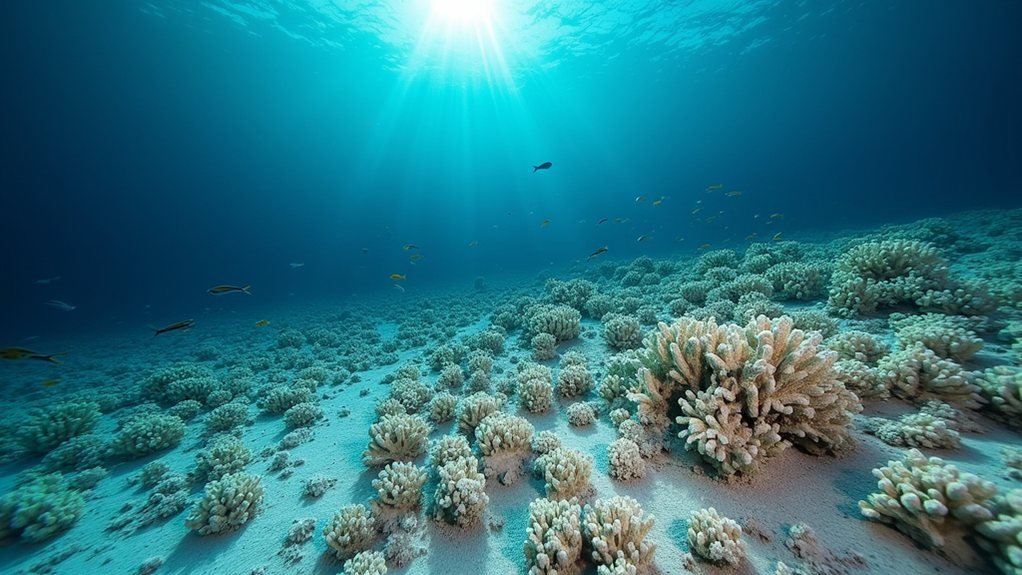

The 2023 heat wave dealt a brutal blow to Florida’s coral reefs, pushing the endangered staghorn and elkhorn corals to the edge of functional extinction. Imagine losing a few key players from your favorite sports team—a recipe for disaster! With temperatures soaring above 31°C for over 40 days, these corals faced staggering mortality rates, leaving them unable to fulfill their essential role in building reefs. But don’t worry, there’s a grand plan underway to restore these picturesque underwater neighborhoods!
Quick Overview
- The 2023 heat wave in Florida caused temperatures to exceed 31°C for an average of 40.7 days, severely impacting coral species.
- Staghorn and elkhorn corals experienced mortality rates nearing functional extinction due to unprecedented heat stress levels.
- Coral bleaching occurred as corals expelled symbiotic algae, leading to increased vulnerability and starvation among these species.
- The loss of these corals disrupts reef-building processes, threatening marine ecosystems and coastal protection.
- Conservation efforts are underway to restore coral populations, but recovery remains challenging given the extent of the heat wave’s damage.
How the 2023 Heat Wave Devastated Coral Species
As the summer of 2023 unfolded, it became clear that Florida’s coral reefs were in for a rough ride, much like a roller coaster that suddenly goes off the rails.
Temperatures soared above 31°C (87.8°F) for an average of 40.7 days, wreaking havoc on beloved coral species. Staghorn and elkhorn corals faced a staggering mortality rate, plunging toward functional extinction. Imagine losing the architects of the underwater world—these corals build the reefs! With heat stress peaking four times higher than ever recorded, the ecological consequences were dire, leaving marine life scrambling for shelter and coastal protection hanging by a thread. The damage from this marine heat wave is likely to be permanent, fundamentally altering the ecosystem. Functional extinction means these species exist in small numbers but no longer fulfill their vital ecological roles. This extreme event underscores the urgency of strengthening marine protection strategies to guard vulnerable reef communities against future warming trends.
Coral Bleaching: Impacts and Functional Extinction
Coral bleaching stands as a vivid reminder of the delicate balance within marine ecosystems, where even a slight rise in temperature can send shockwaves through the underwater world.
When corals expel their symbiotic algae, they reveal stark white skeletons—like a bad hair day for reefs. This loss of color signals vulnerability, leading to starvation and disease. Coral bleaching is primarily triggered by increased water temperatures, with a one-degree Celsius rise for four weeks being sufficient to initiate bleaching. The frequency and severity of mass bleaching events have been increasing since the early 1980s, making recovery even more challenging for affected species.
With species like staghorn and elkhorn facing functional extinction, they can no longer fulfill their role in building reefs. Imagine a construction crew dwindling to just a couple of workers—inevitably, the structure collapses.
As corals die, algae take over, blocking regrowth and sealing their fate.
What’s Being Done to Save Coral Reefs Now and in the Future?
A new chapter in coral conservation is unfolding as determined scientists and conservationists rally to protect these vibrant underwater cities. Initiatives like NOAA’s Mission Iconic Reefs aim to boost coral cover from a mere 2% to an ambitious 25%. They’re breeding resilient corals and outplanting species like massive brain corals, which are tougher than their branching cousins. Meanwhile, gene banking efforts at Mote Marine Laboratory freeze coral sperm for future use—think of it as a coral insurance policy! Healthy coral reefs support thousands of marine species, highlighting the critical role these ecosystems play in maintaining biodiversity. With a holistic approach that includes monitoring and pollution reduction, these programs are like a lifebuoy tossed to a struggling reef. Recently, 9,000 juvenile corals have been transferred to restoration partners, marking a significant step in the statewide effort to restore Florida’s coral reefs.expanding efforts to address climate resilience and habitat protection across coastal habitats coral restoration methods are being refined to maximize success and long-term biodiversity benefits.