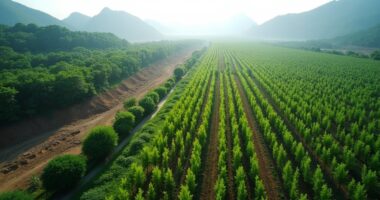

The recent federal lands hearing has emerged as a game-changer in the fight against climate change, spotlighting the urgent need for forest management. Wildfires are like nature’s uninvited guests, and overgrown forests are their comfort zone. The hearing advocates for mechanical thinning and prescribed fires, essential tools to prevent these fiery invasions. With community voices enriching the dialogue, there’s hope for balanced policies that prioritize both resource development and conservation. Stay tuned; more solutions ahead!
Quick Overview
- The Federal Lands Hearing aims to address climate change by enhancing forest management practices and promoting active fire prevention measures.
- Bipartisan support is crucial for advancing legislation like the Fix Our Forests Act, which streamlines federal land management to combat climate challenges.
- Community engagement, especially involving Indigenous voices, is essential for creating effective forest management strategies that reflect local knowledge and needs.
- Urgent action is needed to reduce high-risk fire areas through mechanical thinning and prescribed burns to prevent devastating wildfires.
- Balancing resource development with conservation efforts is vital to maintaining ecological integrity while addressing economic needs in forest management.
Why We Need to Act Now on Forest Management After the Wildfires
While many might think of forests as serene havens of nature, the reality is that they can also be ticking time bombs—especially after devastating wildfires.
The aftermath of these blazes reveals overgrown forests, a legacy of outdated suppression policies. To tackle this, immediate action is needed: mechanical thinning and prescribed fires are like giving forests a haircut before they ignite. Congress has recently directed a study on the consolidation of fire operations, highlighting the need for a cautious approach to wildfire management. With the introduction of the Fix Our Forests Act, forest management on federal land will be streamlined to address these urgent challenges.
Overgrown forests, a result of past policies, need urgent thinning and prescribed fires to prevent future wildfires.
With climate change intensifying fire risks, doubling investments in management resources is critical. Without urgent fuels reduction, high-risk firesheds remain vulnerable.
If we don’t act now, future wildfires could turn serene landscapes into chaotic infernos—definitely not the vacation spot anyone wants. Overgrown forests amplify fuel loads and complicate suppression, underscoring the need for proactive planning and implementation.
What Are the Key Policy Debates in Forest Management?
Forest management isn’t just a matter of keeping trees standing; it’s a lively debate about how best to protect these green giants and the ecosystems they support.
Key policy discussions revolve around wildfire readiness, advocating for interagency collaboration and increased prescribed fires to reduce risks. Active forest management practices emphasize timber production and ecological diversity. Continuous reinforcement of safety protocols is essential to ensure that forest management operations do not lead to accidents or injuries. Additionally, the recent bipartisan support for public lands highlights the importance of investing in forest management to address climate challenges effectively.
Meanwhile, regulatory reforms aim to streamline processes, cutting the red tape that stifles progress. Balancing resource development with conservation is another hot topic, as stakeholders weigh economic benefits against environmental integrity.
Ultimately, these debates shape the future of forests, intertwining resilience and sustainability in a complex dance.
How Can Community Voices Shape Solutions for Forest Management?
Community voices hold a treasure trove of insights that can redefine solutions for forest management, especially when these perspectives are woven into the fabric of decision-making. By prioritizing local knowledge, particularly from Indigenous peoples and women, initiatives can flourish. For example, grassroots advocacy in Sumatra preserved 10,000 acres of forest, safeguarding the lifeways of 250,000 individuals. Engaging community partners from the get-go fosters ownership and enhances collaboration. Regular inclusive meetings guarantee that every voice is heard, transforming forest management into a collective endeavor. When communities share their wisdom, it’s like adding secret sauce to the recipe—making solutions not just effective but truly special. Additionally, incorporating fair distribution of resources ensures that the benefits of forest management reach all community members equitably. By fostering relationships with stakeholders, projects can achieve sustained involvement and greater impact within the community.