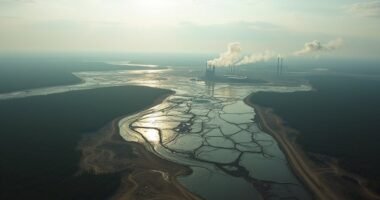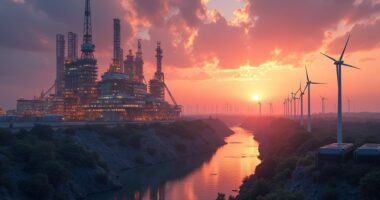

The Enbridge West Coast Pipeline expansion is a mixed bag, offering $3.22 billion in tax revenue and 1,300 construction jobs, but it doesn’t come without a hefty environmental price tag. Think of it as a classic tug-of-war: economic growth versus ecological sustainability. Construction threatens delicate ecosystems and ramps up greenhouse gases like adding a million cars to the road. If Alberta wants to hit its climate goals without tearing down its financial future, it needs a smart balance. Curious about how this unfolds?
Quick Overview
- The expansion poses significant environmental risks, including greenhouse gas emissions equivalent to 1.6 million cars and impacts on pristine ecosystems.
- Historical pipeline leaks have devastated local wildlife, showing potential for catastrophic ecological harm.
- Increased dependence on single pipelines raises reliability concerns for Alberta’s energy delivery and market stability.
- The anticipated economic benefits, such as job creation, may not outweigh the long-term risks to Alberta’s non-renewable resource revenue.
- A coordinated policy approach is crucial to balance economic growth with the pressing need for emissions reductions and environmental sustainability.
Economic Impacts of Expanding the Westcoast Pipeline
The expansion of the West Coast Pipeline is like setting the stage for a grand performance, where the economy takes center stage and the audience—British Columbians—anticipates the benefits.
With over 1,300 workers needed for peak construction, it’s a job bonanza addressing the forestry downturn. Tax revenues will swell, contributing $3.22 billion to the province, while $192.3 million in economic spinoffs tickle local wallets. Moreover, the project is expected to generate approximately $2.4 million in municipal taxes over 35 years, further enhancing economic stability. In addition, the project aligns with Enbridge’s strategic emphasis on record-high core earnings, showcasing its potential for sustainable growth and financial success.
The pipeline isn’t just a metal snake; it’s a lifeline for communities, creating well-paying jobs and partnerships with First Nations. Businesses can also measure their contribution to broader goals through sustainable development metrics to ensure long-term community benefits.
The pipeline is more than steel; it’s a community lifeline, forging jobs and uniting with First Nations.
It’s like a financial buffet—everyone’s invited, and the potential is deliciously enticing.
What Are the Environmental Concerns About Alberta’s Pipeline Development?
How does one balance the undeniable economic allure of Alberta’s pipeline development with the environmental concerns it raises?
Pipeline leaks have historically released harmful substances, causing a 100% mortality rate in wood frog larvae nearby—talk about an amphibian apocalypse! Chemical spills have been shown to drastically impact amphibian survival, further emphasizing the environmental risks involved. The expansion also considerably boosts greenhouse gas emissions, equating to 1.6 million more cars on the road increased production of 6.5 million tonnes of greenhouse gas emissions annually. Environmental impact assessments are meant to identify and mitigate such effects early in the project planning process, including impacts on sensitive habitats. Meanwhile, pipeline construction wreaks havoc on pristine ecosystems, crossing rivers and salmon spawning grounds.
Add in the risk of catastrophic tanker spills, and it’s clear: Alberta’s pipeline dreams might come with a hefty environmental price tag, leaving both nature and communities in peril.
Long-Term Risks of Natural Gas Capacity Expansion
While the allure of expanding natural gas capacity in Alberta promises a surge in energy production, it’s imperative to contemplate the long-term risks that could accompany such growth.
Limited pipeline infrastructure raises reliability concerns for natural gas power generation, while dependence on single pipelines heightens delivery risks. Moreover, the potential pipeline to serve Asian markets could further complicate the existing infrastructure challenges. Additionally, Alberta generates $21.9 billion in non-renewable resource revenue that could be jeopardized if infrastructure issues lead to market inefficiencies.
Limited pipeline infrastructure jeopardizes the reliability of natural gas power generation, increasing vulnerability from reliance on single delivery routes.
Additionally, unabated gas plants could lead to significant carbon emissions, risking Alberta’s climate goals. As demand increases, so do prices, putting pressure on consumers.
Ultimately, the rush for capacity expansion could result in stranded assets and inflated costs, much like buying a ticket to a concert that gets canceled at the last minute. A coordinated policy approach emphasizing emissions reductions across sectors can help avoid these outcomes.