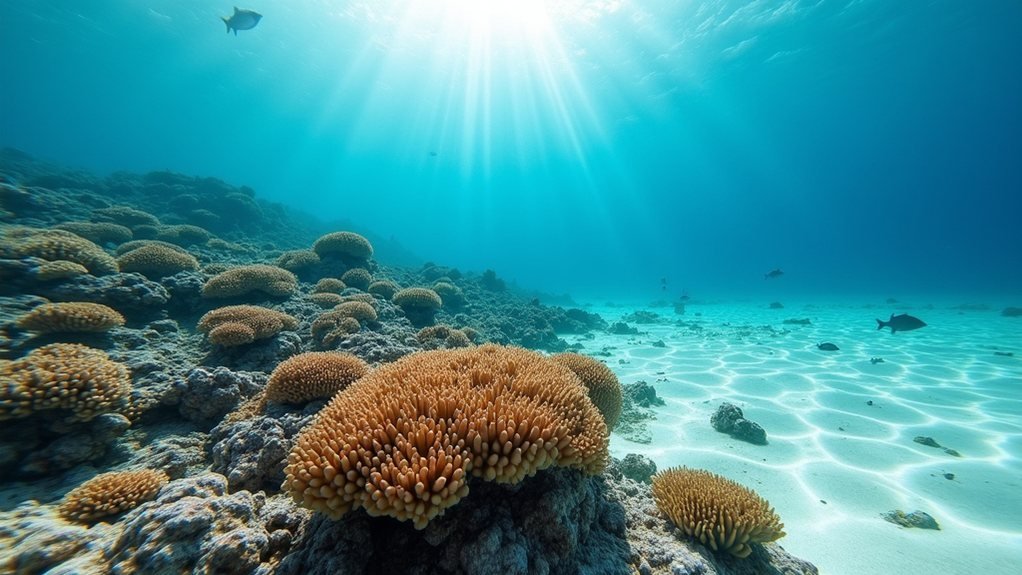

Coral reefs are facing a critical moment, especially as we approach 2026. Rising ocean temperatures are like a bad hair day for corals, causing them to expel their essential algae and suffer from bleaching. Overfishing and pollution only add to the stress. If we don’t act soon, these vibrant ecosystems could crumble under the pressure, leading to a world dominated by algae instead. There are solutions to save them, and the juicy details are just ahead.
Quick Overview
- Coral reefs face critical conditions by 2026, risking a tipping point that could lead to dominance of algae over corals.
- Rapidly rising ocean temperatures and frequent heatwaves are causing mass bleaching across 83 countries, threatening coral survival.
- Human activities like overfishing, pollution, and coastal development exacerbate the decline of coral reefs, increasing the urgency for action.
- Without effective marine protection measures, coral reefs may transform into lifeless structures, leading to biodiversity loss and economic impacts.
- Innovative restoration techniques and community involvement are essential to support coral health and resilience against climate stressors.
What Makes 2026 Critical for Coral Reefs?
As the ocean’s temperature keeps climbing like a rollercoaster on a hot summer day, 2026 looms large as a pivotal year for coral reefs—think of it as their moment in the spotlight, but not in a good way.
With record ocean heatwaves leading to mass bleaching across 83 countries, these underwater wonders face a dire future. Coral bleaching occurs when corals expel algae due to heat, further exacerbating their vulnerability. The increasing frequency of mass bleaching events only heightens the urgency for intervention and protection of these vital ecosystems.
The impending El Niño is like a ticking time bomb, threatening to deliver yet another blow before reefs can catch their breath.
If current trends continue, 2026 may see reefs crossing a tipping point, plunging into a chaotic world dominated by algae, leaving biodiversity gasping for air. Sustainable ocean management approaches such as sustainable fisheries and habitat protection can help support reef recovery and the coastal economies that depend on them.
How Do Climate Change and Human Actions Threaten Coral Reefs?
While the vibrant colors of coral reefs might seem like a picturesque postcard from a tropical paradise, lurking beneath that beauty is a precarious reality.
Climate change, with its rising ocean temperatures, stresses corals and causes them to bleach—imagine a sunburned coral losing its vibrant tan. Human actions, like overfishing and pollution, only add to the catastrophe.
Rising ocean temperatures and human impacts are turning vibrant corals into bleached shadows of their former selves.
Eutrophication, a fancy term for nutrient overload, promotes pesky algae that block coral larvae from settling. Dredging and coastal development further erode these underwater marvels. Ocean acidification weakens coral skeletons, making it even harder for these ecosystems to recover from the combined threats. Mass mortality occurs when corals do not have time to recover between stress events, highlighting the urgent need for action.
Together, these threats create a recipe for disaster, pushing reefs toward collapse faster than you can say “ocean acidification.” Effective marine protection and sustainable fisheries management can help reduce local pressures and give reefs a better chance to survive.
What Actions Can Save Coral Reefs?
Save coral reefs? It’s time to roll up our sleeves and get to work!
Marine Protected Areas (MPAs) are like VIP lounges for fish, boosting biodiversity and restoring reef structures. Imagine coral highways connecting networks, allowing heat-resistant larvae to hitch a ride to safety. With effective enforcement and local leadership, these well-managed MPAs can significantly increase fish biomass, creating a thriving marine environment. Additionally, protecting coral reefs can lead to a remarkable reduction of wave energy that benefits coastal communities.
Meanwhile, reducing land-based pollution is like giving reefs a revitalizing spa day—clean water equals thriving ecosystems. Many successful programs also include watershed management to cut runoff and sedimentation.
And don’t forget coral restoration techniques, like the “Super Sucker” vacuum, which tackles pesky algae.