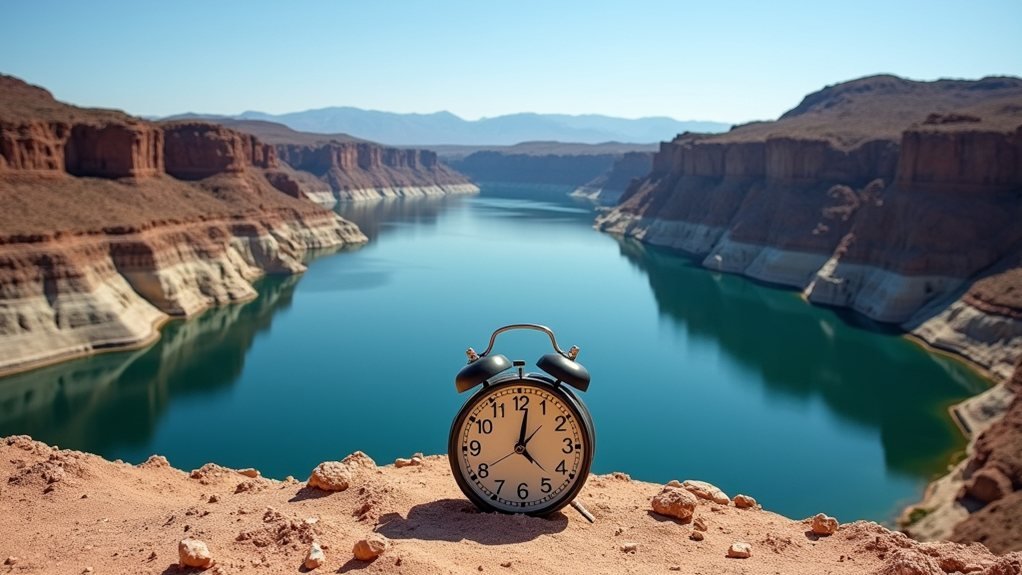

The Colorado River water deal failure among seven states has heightened tensions over vital water-sharing guidelines. This missed deadline could lead to drastic allocation cuts, as reservoir levels plunge. Upper Basin states are hesitant to reduce usage, citing infrastructure worries, while Lower Basin states scramble to secure their rights. With looming federal intervention and potential legal battles, cooperation is essential to avoid a water management disaster. The stakes are high, and the clock is ticking fast!
Quick Overview
- Seven states failed to meet a critical deadline for new water-sharing guidelines, exacerbating tensions over Colorado River water management.
- The missed deadline may result in significant cuts to water allocations, particularly affecting Lower Basin states already facing dwindling reservoirs.
- Legal action may arise as Lower Basin states consider enforcing cuts on Upper Basin states, complicating negotiations further.
- Tribal water rights claims add complexity to the ongoing dispute, with Tribal Nations holding rights to 3.2 million acre-feet annually.
- Urgent cooperation among states is essential to avoid drastic cuts and potential federal intervention in Colorado River management.
Overview of the Colorado River Water Crisis
The Colorado River, often dubbed the lifeblood of the American Southwest, finds itself in a precarious position, much like a tightrope walker balancing on a thin line.
With seven states failing to meet a critical deadline for new water-sharing guidelines, tensions simmer between the Upper and Lower Basin states. The Lower Basin, reliant on consistent water deliveries, faces a future threatened by dwindling reservoirs. Meanwhile, the Upper Basin grapples with natural variability, leading to a tangled web of negotiations and proposed cutbacks. As the clock ticks, the stakes rise, leaving many to wonder: can cooperation triumph over conflict? Federal water managers set a mid-February deadline that was not met, intensifying the urgency of the situation. This uncertainty is compounded by the expired drought management agreement which raises legal complexities for future water management strategies. Effective responses will require widespread water conservation efforts across agriculture, cities, and industry to stretch limited supplies.
Consequences of Missed Deadlines on Colorado River Water Allocations
While a lack of agreement among the seven states may seem like just another bureaucratic hiccup, the consequences of missed deadlines on Colorado River water allocations are anything but trivial.
With Lake Powell’s water levels perilously close to triggering mandatory responses, hydropower operations could face a shutdown by 2026. Lower Basin states have already endured allocation cuts, prompting urgent calls for collaboration. The Lower Basin states have historically used nearly all their allocations, intensifying the pressure for a resolution. Meanwhile, Upper Basin states resist mandatory reductions, citing insufficient infrastructure. If deadlines are not met, the federal government will likely step in, imposing drastic cuts that could ripple through communities, leaving them high and dry—or worse, with very soggy socks. The consensus-based efforts for Colorado River management have repeatedly failed, underscoring the urgency for new strategies. Sustainable resource management approaches that emphasize long-term availability and equitable allocation are needed to maintain water supplies for future generations.
Legal Ramifications of the Ongoing Colorado River Dispute
What happens when seven states can’t agree on how to share water from the Colorado River? Legal chaos could ensue. A deadlock for over two years raises the specter of Supreme Court litigation, where any state could file suit, leading to years of costly courtroom battles. Lower Basin states feel the pressure, threatening to use litigation to enforce cuts on the Upper Basin. Meanwhile, unresolved Tribal water rights claims complicate matters further, potentially diminishing supplies for non-Tribal users. If a consensus isn’t reached by the summer deadline, the federal government may step in, binding states to a solution—whether they like it or not. Notably, Tribal Nations hold rights to approximately 3.2 million acre-feet of water annually, which could significantly impact negotiations. Federal compliance with major environmental regulatory frameworks will shape how any imposed solution is implemented.