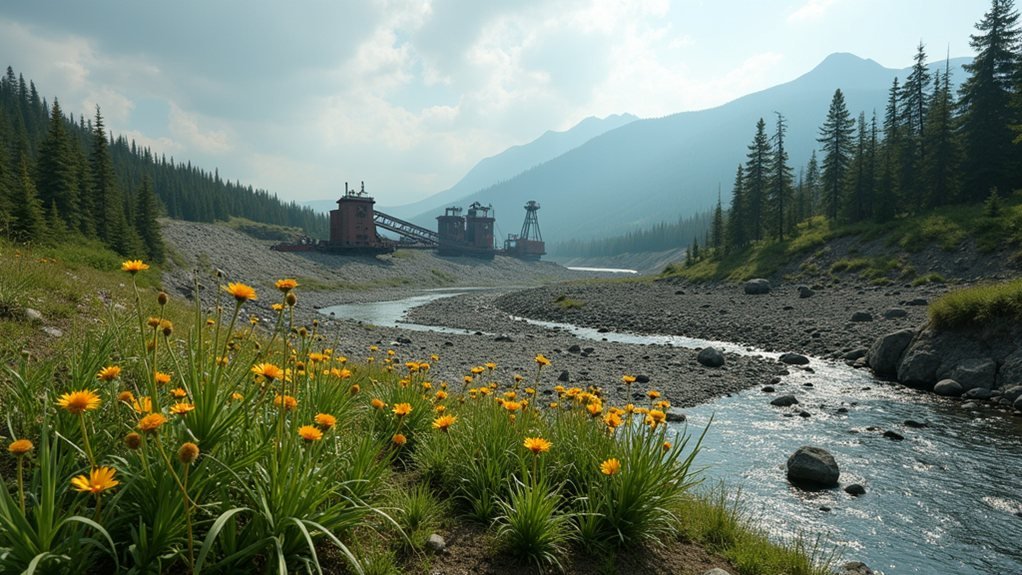

Canada’s mining industry claims to uphold sustainability, but the reality paints a different picture—think of a magician revealing their tricks. Pollution from mining activities contaminates air and water, endangering wildlife and human health. Acid rock drainage and heavy metals create long-lasting harm, especially near Indigenous territories. Cleanup often falls on taxpayers, while regulatory gaps complicate remediation efforts. For those curious about how all this plays out, there’s a deeper story waiting to be uncovered.
Quick Overview
- The mining industry often claims commitment to sustainability, but actual practices reveal significant environmental harm and pollution.
- A majority of active mines are situated near Indigenous territories, adversely impacting local communities and their ecosystems.
- Abandoned mines and tailings dam failures lead to substantial cleanup costs, shifting financial burdens to taxpayers.
- Environmental Impact Assessments frequently overlook community voices, undermining effective decision-making regarding mining projects.
- Rising mining emissions and pollution highlight the urgent need for accountability and improved regulatory frameworks in the industry.
Mining Pollution: Air Quality, Water Contamination, and Biodiversity Loss
As the world grows more reliant on minerals for technology and energy, the mining industry’s environmental impacts have emerged from the shadows, demanding attention like an unexpected pop quiz.
Acid rock drainage, a long-lasting contamination villain, can begin long after mines close, creating a never-ending mess. Mining emissions rose by three megatonnes in the last couple of decades, highlighting the need for industry accountability. Waste from mines can pollute local waters, further exacerbating the risks to both ecosystems and human communities.
Acid rock drainage lurks long after mines shut down, leaving a relentless trail of environmental chaos.
Meanwhile, tailings dam failures, like the infamous Mount Polley breach, remind us that spills can release chaos into local waterways.
Add heavy metals and chemicals that poison aquatic life, and it’s clear: mining isn’t just digging and hauling.
It’s a complex web of pollution that threatens air quality, water safety, and biodiversity—nature’s delicate balancing act. These threats directly impact marine protection strategies that are essential for maintaining ocean health and sustainable fisheries.
The Discrepancy Between Rhetoric and Mining Impact
While the mining industry often touts its commitment to sustainable practices and community support, the reality on the ground tells a different story, one that seems to be buried under layers of rhetoric thicker than the ore itself.
With 69% of active mines near Indigenous territories, the impact on local communities is undeniable. Abandoned mines and tailings dam failures haunt the landscape, leaving governments with hefty cleanup bills. Environmental Impact Assessments are crucial for ensuring that mining projects consider the voices of those most affected.
Cumulative effects on biodiversity threaten Canada’s conservation goals, while inconsistent assessments obscure true mining impacts. Conducting thorough evaluations before implementation would help identify potential environmental consequences and develop appropriate mitigation strategies. In this game of smoke and mirrors, the shiny promises often mask a reality that’s far less glamorous.
How Are We Cleaning Up After Mining?
Cleaning up after mining is akin to tackling a giant puzzle with missing pieces, but the stakes are high and the challenges are real.
For instance, the Giant Mine project, with its staggering 237,000 tonnes of arsenic trioxide dust, employs a freezing method to lock away contaminants for a century. This project, which is co-managed by the Governments of Canada and Northwest Territories, exemplifies the complexities of remediation efforts. Meanwhile, innovative techniques like microalgae treatment are turning toxic water into reusable resources—talk about a glow-up! This approach aligns with the goal of cleaning contaminated mine water through sustainable practices.
However, abandoned mines present a different monster, shifting billions in liabilities to taxpayers. Site rehabilitation processes require comprehensive planning that begins even before mining operations commence to ensure proper restoration of landscapes.
Ultimately, effective cleanup demands robust regulatory frameworks and community engagement, ensuring that mining’s legacy doesn’t leave a toxic footprint for future generations.