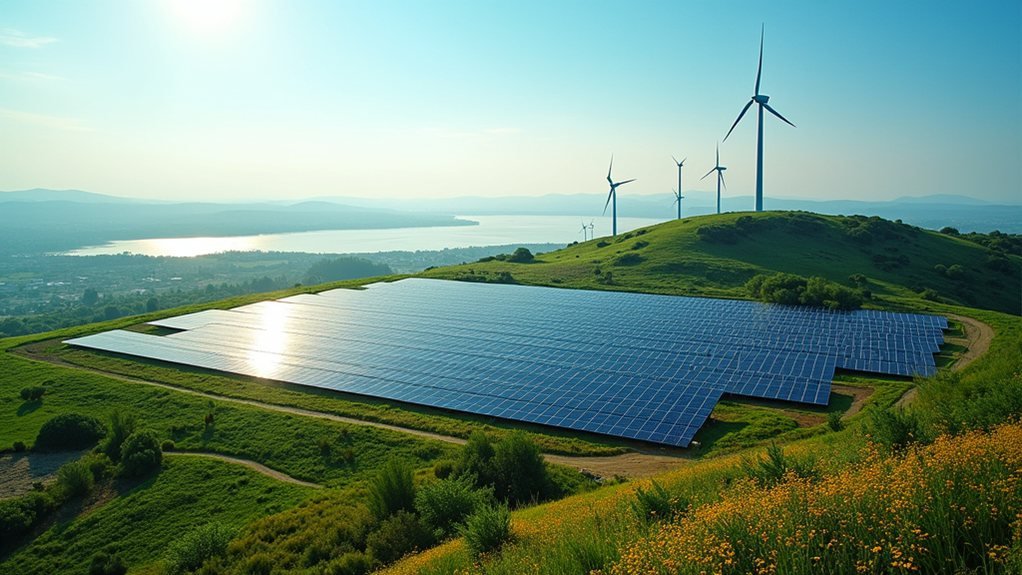

In March 2026, Canada and India kicked off a vibrant Strategic Energy Partnership, diving headfirst into renewable energy sectors like solar, wind, hydrogen, and biofuels. Think of it as a high-tech buddy movie, where both countries aim to power up a greener future. They’re not just swapping ideas; they’re fully geared up to tackle climate change and energy security together. And spoiler alert: this exciting collaboration is only just the beginning of their eco-adventure!
Quick Overview
- A Strategic Energy Partnership was launched during Prime Minister Mark Carney’s visit to India in March 2026, focusing on renewable energy collaboration.
- Canada and India agreed to enhance cooperation in solar, wind, hydrogen, and biofuels to foster a greener future.
- Canada became a full member of the International Solar Alliance, boosting its renewable energy efforts.
- The partnership includes a significant investment of $4.22 million for advancements in hydrogen technology between Simon Fraser University and the Hydrogen Association of India.
- Both countries emphasize the sustainable extraction of critical minerals necessary for the energy transition while encouraging innovations in cleaner energy solutions.
Key Agreements Shape Canada-India Renewable Energy Cooperation
In an era where energy needs are as pressing as a morning coffee craving, Canada and India have brewed up some exciting agreements that promise to reshape their renewable energy cooperation.
During Prime Minister Mark Carney’s 2026 visit, a Strategic Energy Partnership was officially launched, aimed at enhancing solar, wind, hydrogen, and biofuels collaboration.
Canada’s newfound full membership in the International Solar Alliance solidifies its commitment to global solar power expansion.
With a focus on critical minerals for clean energy, these agreements position both nations for a greener future—because, as we understand, a well-connected energy strategy is the secret sauce for success.
Understanding the advantages of renewable energy sources like solar and wind will be crucial as both countries work to implement these partnership initiatives.
What Are the Innovations in Hydrogen and Biofuels?
Renewable energy isn’t just about sunny days and gusty winds; it’s also taking significant strides in hydrogen and biofuels—two unsung heroes in the clean energy narrative.
A recent partnership between Simon Fraser University and the Hydrogen Association of India showcases exciting advancements in hydrogen technology, with over $4.22 million in collaborative funding.
A groundbreaking partnership between Simon Fraser University and the Hydrogen Association of India propels hydrogen technology forward with $4.22 million in funding.
Meanwhile, Canada’s full membership in the Global Biofuels Alliance enhances its role in shaping biofuels development and supply chains.
These initiatives illustrate a fresh perspective on energy, blending innovation and international cooperation while aiming to diversify and strengthen the shift to cleaner energy solutions.
In the aviation sector, sustainable aviation fuel is emerging as a critical tool to reduce emissions, with companies scaling production to meet growing demand from airlines committed to lowering their carbon footprint.
How Critical Minerals Drive the Energy Transition
Critical minerals are the unsung champions driving the energy shift, often overshadowed by flashier technologies. As demand skyrockets—from a mere 28 million tonnes in 2021 to a projected 41 million by 2040—copper and lithium become rock stars in this evolution.
Envision this: electric vehicles guzzling copper like a thirsty teenager, quadrupling the need for specific minerals!
Yet, vulnerabilities linger; over 60% of supply comes from few nations, particularly China. With geopolitical tensions looming, countries are scrambling to secure their mineral futures, proving that while shiny gadgets may dazzle, it’s really these critical elements that power the green revolution. The environmental impact of mining these minerals makes sustainable extraction practices essential for ensuring long-term resource availability.