
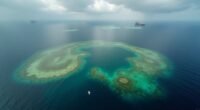
In 2026, Canada and the A-Tlegay Nations celebrated a historic fisheries reconciliation agreement, kicking off a Brave New Era in sustainable ocean management. Like fishing nets woven from tradition and innovation, this 20-year plan blends Indigenous knowledge with cutting-edge practices. Economic perks? Think seafood gold rush — from commercial licenses to fleet expansions. It’s a journey of growth, respect, and harmony, helmed by government and A-Tlegay leaders. Curious to unearth more treasures from this ocean of information?
Quick Overview
- The Fisheries Reconciliation Agreement is a 20-year plan between Canada and A-Tlegay Nations launched on February 19, 2026.
- It provides economic benefits through commercial fishing licenses, enhanced fleet capacity, and diversified economic opportunities.
- The agreement emphasizes sustainable fisheries practices by integrating Indigenous knowledge and modern management for ecosystem health.
- A collaborative governance structure with A-Tlegay Fisheries Society and Fisheries and Oceans Canada is established.
- The agreement aims for a balanced approach to economic prosperity and environmental stewardship, recognizing A-Tlegay Nations’ historical rights.
Understanding the 2026 Fisheries Agreement: Key Details
Envision this: the Government of Canada and the A-Tlegay Member Nations have just inked a deal that’s poised to make waves, quite literally, in the domain of fisheries.
Meet the 2026 Fisheries Reconciliation Agreement, a 20-year plan kicking off on February 19, 2026. The agreement builds upon a similar framework established in 2021, where collaborative efforts with Fisheries and Oceans Canada were initiated with eight First Nations across various sub-regions. Spearheaded by notable figures like Ministers Thompson and Alty, it’s a balanced act of tradition and innovation. The agreement supports the diversification and economic development of A-Tlegay Member Nations by providing new opportunities while honoring sustainable practices. Integral to this agreement is the understanding of biodiversity concepts, ensuring that species diversity is respected and maintained for long-term ecosystem health.
The A-Tlegay Nations, once sailing stormy waters, can now steer their ships with new licenses, quotas, and collaborative governance—no expansion needed.
Navigating a brighter future, the A-Tlegay Nations embrace fresh opportunities with enhanced licenses and governance, ensuring stability without expansion.
Sustainability is no longer a goal; it’s the journey.
What Economic Benefits Will A-Tlegay Nations Gain?
When it comes to economic windfalls, the A-Tlegay Nations are gearing up for a tidal wave of advantages, irrefutably born from the 2026 Fisheries Reconciliation Agreement.
The A-Tlegay are not just dipping their nets into the ocean but diving headfirst into a wealth of opportunities! Steering through the open-market, they can snag commercial fishing licenses and quotas, turbocharging their fishing fleet with growth and muscle. With a commitment to collaborative fisheries management with Fisheries and Oceans Canada, the First Nations are set to benefit from more efficient and equitable governance in their waters. By implementing practices such as marine protected areas, they can ensure sustainability in fish populations. The Reconciliation Agreement for Fisheries Resources (RAFR) not only unlocks avenues in fishing licenses but also facilitates the acquisition of commercial fishing assets, fostering economic diversification for the A-Tlegay Member Nations.
Meanwhile, aquaculture expansion is like adding a new solo to their symphony, blending shellfish harvesting with regional marine economics.
This is not just fishing; it’s a masterclass in economic diversification, promising prosperity for generations.
Reconciliation Through Collaborative Governance and Indigenous Rights
Unity – that’s the indefatigable force driving the Reconciliation Through Collaborative Governance and Indigenous Rights in the 2026 Fisheries Reconciliation Agreement between Canada and the A-Tlegay Nations.
Imagine a well-oiled machine, where Fisheries and Oceans Canada and the A-Tlegay Nations, led by the A-Tlegay Fisheries Society, join forces for the fishes. This collaboration is supported by various Indigenous programs and services related to fisheries provided by the government to ensure sustainable practices. Through this agreement, the sustainable management of natural resources becomes a cornerstone, ensuring their availability for future generations.
It’s a backstage pass to twenty years of collaborative concert planning, emerging from the 2021 Framework Agreement.
Recognizing Indigenous Rights? They’ve nailed it, honoring the A-Tlegay Member Nations’ historical stewardship while balancing economic growth and environmental care.
It’s like a two-decade handshake promising respect and shared future sustainability.