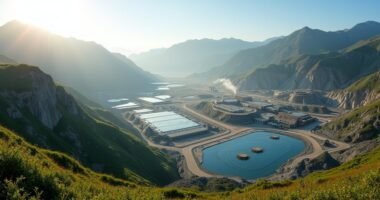

As ESG risks loom large in mining, the US and EU are playing mineral musical chairs, stockpiling like squirrels hoarding nuts before winter. They’re keen on critical minerals, not just for economic independence but to shake off dependency on China faster than you can say “trade weaponization.” Balancing this tightrope with sustainability isn’t just savvy; it’s survival strategy. Curious about how they’re pulling off this global mineral magic trick? Stick around—it’s quite the saga!
Quick Overview
- The US “Project Vault” and EU initiatives are designed to secure mineral supplies amid rising ESG-related challenges in mining operations.
- Stockpiling strategies focus on reducing reliance on foreign sources, particularly China, to safeguard economic independence.
- Growing ESG obligations in mining demand improved sustainability practices and regulatory compliance to mitigate environmental impacts.
- International partnerships and “One Big Beautiful Bill Act” accelerate mining projects and enhance domestic mineral production capacities.
- Lifecycle assessment methodologies evaluate environmental and social performance, aligning mineral sourcing with climate objectives.
US and EU Stockpiling Strategies: A Detailed Look
When it comes to the ambitious strategy of stockpiling critical minerals, both the US and EU are fighting for the front seat on the supply chain rollercoaster, and they have no intention of letting go.
The US launched its keenly-monikered “Project Vault”, intending to outpace reliance on foreign sources like China by securing key minerals for everything from smartphones to essential military gear.
It’s like choosing your own adventure, only with manganese instead of magical swords.
This initiative comes with a buffet of strategic objectives: stabilize markets, support industries, and mitigate environmental hurdles, all while keeping those minerals in the vault. The risk of weaponization of mineral trade by China in future disputes has motivated these stockpiling efforts to safeguard economic independence.
Aligning stockpiling choices with broader policy analyses is crucial to ensure that these efforts not only address immediate defense needs but also bolster economic and climate security in the long term. Companies operating within these supply chains must also develop robust frameworks for identifying climate risks to their operations, as shifting environmental conditions can disrupt mineral extraction and processing at the source.
The Urgent ESG Challenges in Mining Today
In the complex domain of mining, traversing environmental, social, and governance (ESG) challenges has become an epic quest—something akin to taming a dragon while simultaneously juggling flaming torches. Regulatory demands balloon, with miners tackling labyrinthine ESG obligations akin to an endless escape room. As the world shifts its focus towards clean energy technologies, the demand for critical minerals has quadrupled, emphasizing the need for stringent energy efficiency practices in mining operations. Detailed maps—IFRS standards, CSRD protocols—guide this pursuit, requiring reports that rival an epic tome. Climate accountability looms large; mining emits 4 to 7 percent of global greenhouse gases, with operations disrupted by the climatic equivalent of a zombie apocalypse. Proactive measures are necessary to address potential harms across value chains, underscoring the pressing need for an all-hands-on-deck approach. Tailings management stands as a looming specter—one misstep, and catastrophe awaits. Responsible handling of mining waste requires site rehabilitation strategies that restore ecosystems and prevent long-term environmental degradation. The urgent quest for digital solutions persists.
Strategic Approaches to Overcome Critical Mineral Supply Issues
Flex those strategic muscles and plunge into the domain of critical mineral supplies, where nations are scheming like chess grandmasters.
The US and EU are crafting complex strategies to guarantee mineral supply chains are as reliable as grandma’s Sunday dinners. Domestically, laws like the One Big Beautiful Bill Act (OBBBA) aim to speed up mining projects faster than a cheetah in a sugar rush. The Defense Production Act provides a framework to address these vulnerabilities, ensuring rapid procurement and expanding domestic manufacturing capabilities for national security-related supplies.
International partnerships aren’t just about handshakes; they involve friendshoring tactics, balancing Chinese influence with geopolitical acrobatics. Tariffs? More passé than last season’s fashion. Organizations are increasingly applying lifecycle assessment methodologies to evaluate the environmental and social performance of mineral sourcing across international partner networks.
Guaranteed contracts and strategic reserves add layers to the supply chain, minimizing volatility like your favorite anti-frizz serum. As global demand for critical minerals is set to grow by 2% per annum, these strategies are more crucial than ever in ensuring economic stability and industrial advancement.