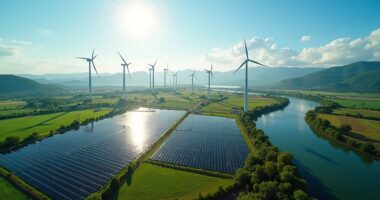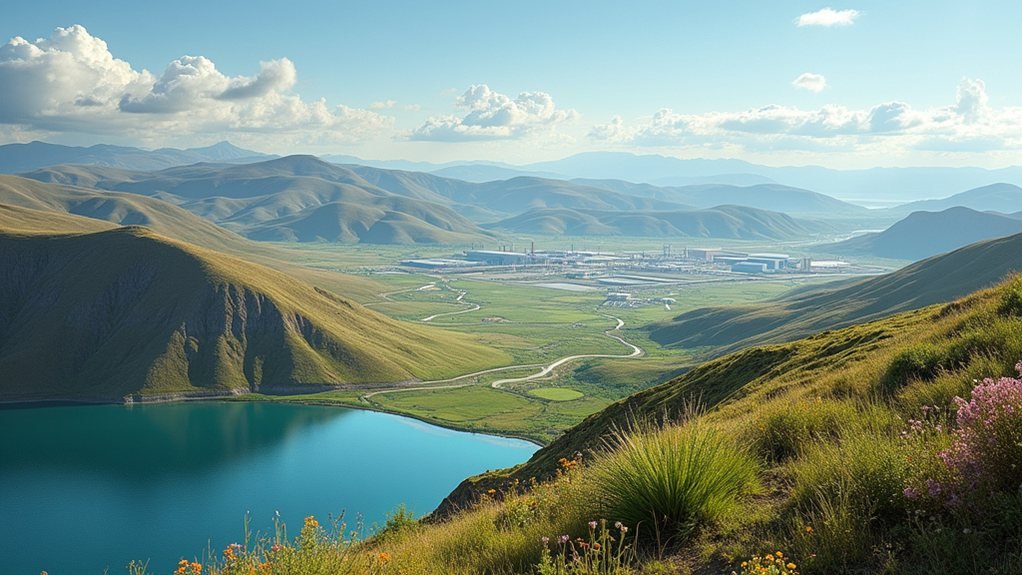

Imagine extracting lithium as effortlessly as ordering a latte at your favorite café. Alberta’s nifty breakthrough in direct lithium extraction—the brainchild of some brilliantly eco-minded pioneers—promises to trim emissions and save water like a seasoned coupon clipper. By channeling its ion-exchange superpower, Alberta is setting new standards in sustainable mining. It’s like swapping a gas-guzzler for a sleek hybrid, without skimping on power. Curious about this marvel of green ingenuity? There’s plenty more to uncover!
Quick Overview
- Direct lithium extraction in Alberta reduces emissions by using efficient ion-exchange materials and emissions reduction technologies.
- New extraction methods minimize water use via water recovery technology, drastically reducing water waste compared to traditional methods.
- Reinjection of unused underground brine reduces environmental impact, emphasizing sustainable lithium extraction practices.
- Alberta’s demonstration facility leverages clean technologies to showcase reduced carbon footprints and energy consumption.
- The province aims to become a leader in sustainable lithium production, enhancing economic growth and environmental responsibility.
Discover How Direct Lithium Extraction Transforms Efficiency
When it comes to revolutionizing lithium extraction, the Direct Lithium Extraction (DLE) process isn’t just playing the game—it’s redefining the rules. Imagine this: a system that uses specialized ion-exchange materials akin to sticky flypaper, selectively snagging lithium ions from briny depths. With lithium purity soaring to a jaw-dropping 99.7% at the demonstration stage, it shames traditional methods like evaporation ponds. More efficient than ever, it pumps subterranean brine, separates the treasure from the trash, and returns the leftovers underground. Alberta’s strict regulations ensure that developments adhere to sustainable practices, further enhancing ecological protection. Alberta’s first battery-grade lithium carbonate stands as proof, heralding a game-changing leap towards a sustainable and efficient lithium future. Complementing these advancements, adopting conscious consumption practices in everyday life further reduces the environmental footprint associated with resource-intensive industries. The E3 Lithium Demonstration Facility near Olds, Alberta, exemplifies the province’s commitment to advancing clean technology initiatives, promoting both environmental innovation and economic growth.
Unlocking Environmental Impact: Water and Emissions Reduction
While direct lithium extraction plays a symphony in the domain of efficiency, its environmental notes are just as melodic.
Water and emissions reduction technologies promise to revolutionize resource management. Imagine water recovery tech as a selective sieve, doubling lithium extraction sans evaporation ponds—essentially a miracle worker without a cape!
This process not only reinjects water underground but shuns water waste like that leftover mystery liquid in a fridge. Emissions get grounded too, shrinking like a sweater in hot wash due to the diminished energy appetite. With Alberta’s resource potential to produce over 10 billion EV battery packs, the shift towards more eco-friendly extraction methods becomes indispensable.
As demand for lithium continues to grow exponentially driven by electric vehicles and electronic devices, finding sustainable extraction solutions becomes increasingly crucial. Reducing reliance on traditional extraction also helps address plastic waste pollution generated by conventional mining operations and their associated supply chains.
It’s nature’s version of Marie Kondo, sparking joy by reducing carbon footprints alongside land use.
Exploring Sustainable Market Potential in Alberta
The allure of opportunity hums through Alberta like a new-found melody, singing of untapped potential in the world of sustainable lithium markets. Picture Alberta with its 82.5 million tonnes of lithium carbonate equivalent, enough to power over 10 billion electric vehicles. It’s like finding a pirate’s treasure chest—only shinier and electric. With the province emerging as a strong competitor against Chile, Argentina, and Australia, the global spotlight turns to Alberta’s vast resources. Federal investments include support for E3 Lithium, which focuses on enhancing EV battery production. E3 Lithium leads the charge, planning commercial production by 2027, using oil-industry expertise for direct lithium extraction. Like swapping an old bike for a Tesla, it promises efficiency. This extraction method also mirrors principles found in nature-based solutions, which seek to work with natural systems to reduce environmental impact and conserve critical resources like water. The potential—a market rivaling global leaders—whispers of over US$1 trillion. Alberta might just have struck lithium gold.