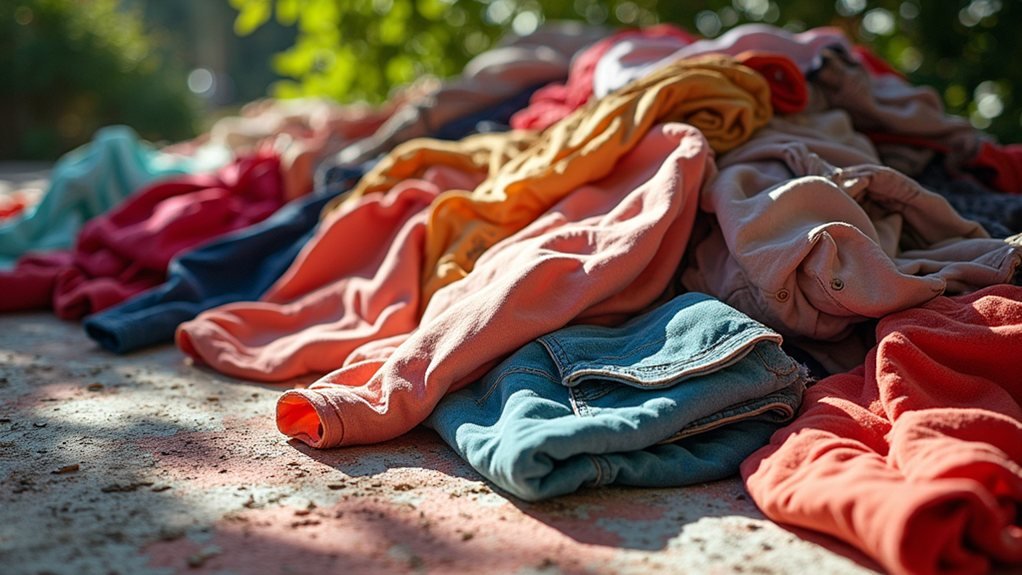

In March 2026, the EU’s ban on destroying unsold clothing takes effect. This landmark decision aims to tackle the fashion industry’s waste problem by preventing the destruction of pristine apparel, accessories, and footwear. While large companies must comply by July 2026, medium-sized brands have until 2030. The ban challenges brands to rethink their strategies, encouraging donations, recycling, and innovative reuse initiatives. It’s a pivotal moment that nudges the fashion world toward a more sustainable future—so let’s see what these creative solutions look like!
Quick Overview
- The EU ban on unsold clothes, effective July 19, 2026, prohibits large companies from destroying pristine inventory.
- This initiative aims to significantly reduce fashion waste and promote a circular economy, targeting 5.6 million tonnes of CO₂ emissions annually.
- Brands must adapt by implementing donation programs and exploring reuse systems for unsold items, shifting away from conventional disposal practices.
- Opportunities for brands include partnering with recycling specialists and creating buy-back programs to encourage sustainable consumption and customer engagement.
- The ban encourages a long-term cultural shift toward sustainability in the fashion industry, enhancing brand reputation and consumer loyalty.
EU’s Ban on Unsold Clothes: Key Points
Often, the fashion industry seems like a magical domain where new styles appear overnight and unsold items vanish into thin air.
However, a groundbreaking European Commission decision has banished this illusion. On February 9, 2026, measures were adopted to prohibit the destruction of unsold apparel, accessories, and footwear. Only pristine items, untouched by consumers, fall under this directive.
Large companies must comply by July 19, 2026, with medium-sized businesses following by 2030. This initiative aims to reduce waste and promote a circular economy, reminding fashion lovers that even the most beautiful garments deserve a second chance instead of a trip to the incinerator. Brands can explore options like donation programs and reuse systems to give surplus inventory new life while meeting environmental goals.
Ban’s Effects on Fashion
With the European Union’s ban on the destruction of unsold clothes now in motion, the fashion industry faces a seismic shift that promises to reshape how businesses operate and how consumers view their purchases.
No longer can companies resort to a “take-make-dispose” model, instead embracing circular practices like resale and donations. This ban, which could prevent the generation of 5.6 million tonnes of CO₂ annually, encourages a sustainable ethos.
Imagine a world where last season’s unsold dresses find new homes instead of the landfill—ethically chic! This law not only cuts waste, but also challenges brands to rethink their entire production philosophy.
Fashion stakeholders can draw inspiration from reducing food waste strategies, which demonstrate how effective supply chain interventions prevent loss at every level from production to consumer.
What Can Brands Do About Unsold Textiles?
Brands now face a crucial challenge: how to tackle the growing pile of unsold textiles that once might have ended up in a landfill.
To navigate this, they can partner with textile recycling specialists, managing returns smartly. Think of it as an unsold apparel dating service—finding good homes for those lonely garments.
Brands can reconnect unsold apparel with eager buyers by partnering with textile recycling specialists, turning loneliness into opportunity.
Implementing recommerce channels transforms excess inventory into revenue streams without more production costs.
Launching buy-back programs keeps customers engaged while boosting brand loyalty.
Finally, exploring reuse alternatives invites creativity—donations or remanufacturing bring stock back into circulation.
Adopting responsible production approaches not only addresses waste but positions brands as leaders in the shift toward more sustainable clothing consumption.
It’s time for brands to turn their surplus into sustainable opportunity!