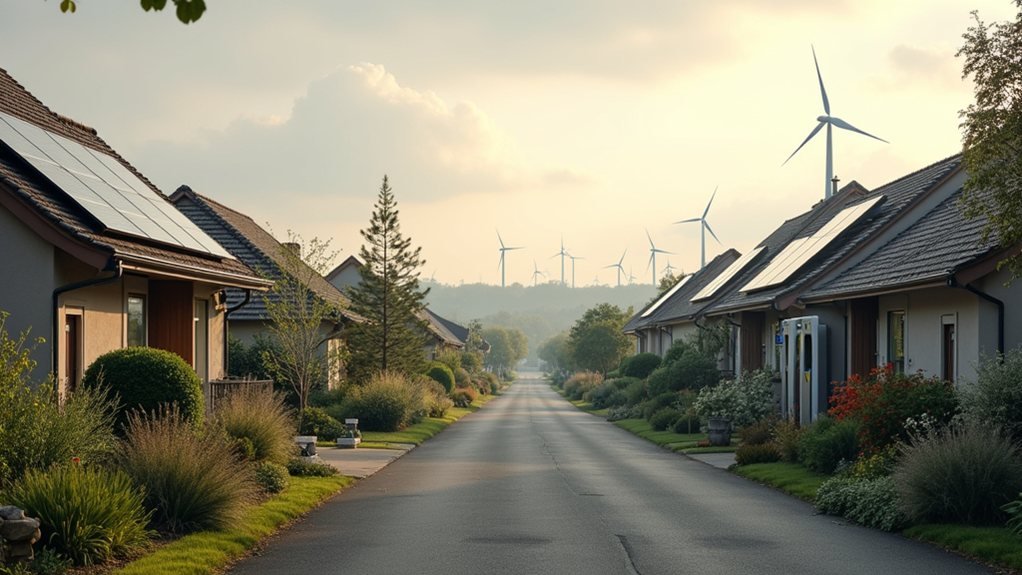

The UK’s energy market is approaching a critical juncture, especially with rising costs leading up to March 2026. As the energy price cap fluctuates—recently adjusting to £1,641—households might see slight relief. Government schemes aim to cushion the blow, but their upcoming termination could rattle budgets further. With challenges looming, like unpredictable geopolitical tensions, the shift to net-zero could redefine household expenses. Stay tuned, as this energy saga has more twists ahead!
Quick Overview
- The UK energy price cap is projected to face volatility, impacting household budgets before March 2026 due to geopolitical and supply chain factors.
- Government schemes like ECO and GBIS, providing energy efficiency measures, will end in March 2026, potentially losing annual savings of around £62.
- The Renewables Obligation could provide additional savings of £92 on typical electricity costs, affecting the transition to net zero by influencing prices.
- Emphasizing energy efficiency can lower household costs and carbon footprints, aligning with the UK’s long-term sustainability goals amid rising energy prices.
- Sustainable practices, including clean energy technologies and eco-friendly transportation, are crucial for reducing overall household energy expenditures during the transition to net zero.
How the New Energy Price Cap Affects Your Monthly Bills?
As the calendar flips to 2026, households across the UK might want to brace themselves, though not too tightly—most will see a slight thaw in their winter energy bills thanks to the newly announced energy price cap.
The Q1 figure stands at £1,758 annually, a mere £20 uptick from last year, but Q2 brings relief with a dip to £1,641. That’s about £10 in monthly savings—enough to treat yourself to a fancy coffee!
With gas at 5.74p per kWh and a standing charge dance below, these changes reflect a market adjusting, leaving wallets feeling slightly less pinched.
Looking ahead, the UK’s net zero transition may benefit from small modular reactors and other emerging nuclear technologies that promise cleaner, more stable energy generation to help stabilize long-term pricing.
How Government Schemes Are Shaping Your Energy Costs?
How exactly do government schemes affect the energy costs that households encounter each month? These initiatives, like the ECO and GBIS, have provided essential energy efficiency measures, helping to lower bills.
However, with their termination in March 2026, savings about £62 annually will vanish.
On the bright side, the Renewables Obligation will shift funding, slashing another £92 off typical electricity expenses.
The Renewables Obligation could reduce average electricity bills by an impressive £92, providing much-needed relief for households.
Plus, the Warm Homes Plan aims to alleviate fuel poverty for many. With the Warm Home Discount also expanding, households could enjoy more manageable bills.
It’s a mixed bag, but changes are coming that could redefine household budgets. Beyond energy policy shifts, adopting sustainable food practices can further reduce household costs and environmental impact.
Future Challenges and Opportunities for Household Energy Costs
Steering the future of household energy costs presents a unique blend of challenges and opportunities, particularly as fluctuating prices and increased demand for renewable sources push energy bills into uncharted waters.
With projected price caps swinging like a pendulum, homeowners face fluctuating costs driven by geopolitical tensions and supply chain woes.
While fixed fees like standing charges haunt budgets, the rise of clean energy tech offers a silver lining.
Embracing energy efficiency is akin to finding a hidden treasure: it doesn’t just save money, it helps reduce grid dependency.
Transitioning to eco-friendly transportation modes can further reduce household carbon footprints and complement energy-saving measures at home.
After all, who wouldn’t want to lower their bills while saving the planet?