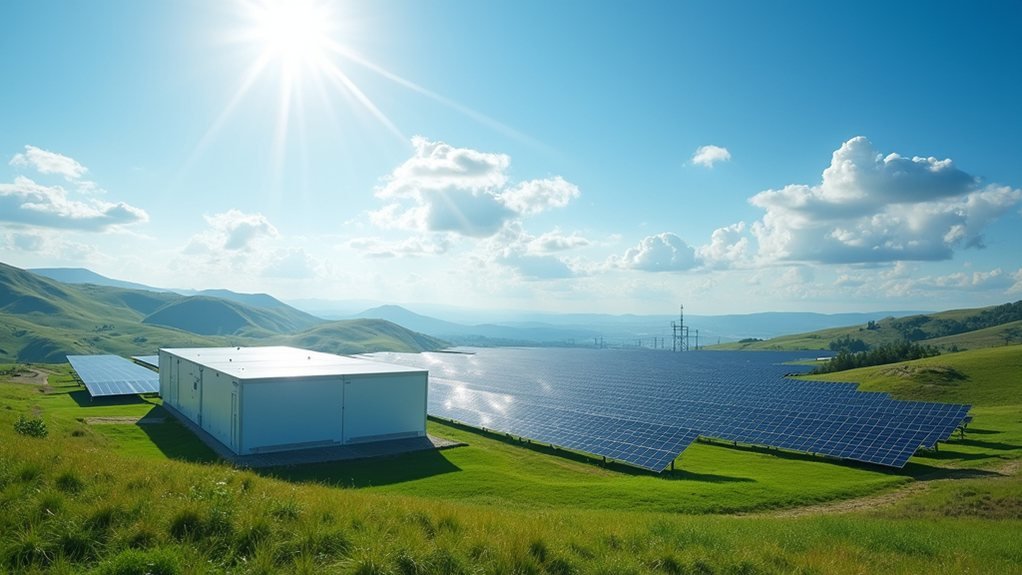

The U.S. is gearing up for a jaw-dropping surge in utility-scale power capacity, with a whopping 86 GW expected by 2026. Solar energy is leading the charge, contributing over 51% of this increase. States like Texas and California are racing to install solar panels faster than most can say “renewable energy.” As battery storage technology enhances grid reliability, this transformation from fossil fuels is not just exciting, it’s essential for a cleaner future. More intriguing insights await!
Quick Overview
- The US expects a record 86 GW increase in power capacity by 2026, primarily driven by renewable sources.
- Over 51% of new capacity additions will come from solar energy, marking a significant shift from fossil fuels.
- Texas leads in solar installations, contributing 17.4 GW, which is 40% of the total new solar capacity.
- Battery storage is essential for enhancing grid reliability and maximizing solar output, supporting the clean energy transition.
- The growth in solar and storage indicates strong regional competition and collaboration among states to achieve energy transition goals.
The Surge in US Utility-Scale Power Capacity for 2026
In a thrilling surge reminiscent of a racecar speeding past the competition, the United States is poised to add a record-breaking 86 gigawatts (GW) of utility-scale power capacity by 2026. This ambitious leap outshines 2025’s impressive 53 GW increase, signaling a robust growth, especially in solar energy, which will account for over 51% of the additions.
With Texas leading the solar charge and a boost in battery storage, the energy landscape is shifting dramatically. Wind energy also playfully re-enters the race, and together, these developments mark an exciting evolution in America’s power grid that outpaces traditional fossil fuels. Understanding the benefits of renewable energy sources like solar and wind is essential as the nation transitions toward cleaner power generation.
Regional Leaders in Solar and Storage Additions
As the renewable energy race heats up, some regions in the U.S. are standing out like stars on a clear night.
Texas shines brightest, contributing 40% of new solar installations at 17.4 GW, including the impressive Tehuacana Creek 1 Solar facility.
Texas leads the solar charge, powering 40% of new installations with a remarkable 17.4 GW contribution.
Following close behind are Arizona and California, each capturing about 6% of solar additions while adding significant battery storage capacity.
Even Michigan, with a less sunny reputation, claws its way to 5% of new installations.
With over half of the nation’s solar growth concentrated in these four states, the competition for solar supremacy is fierce—and quite electrifying!
This rapid expansion represents a crucial shift from carbon-intensive energy sources to cleaner alternatives across the nation.
How Solar and Storage Are Transforming the Energy Landscape
A remarkable transformation is unfolding in the American energy landscape, driven by the meteoric rise of solar power and battery storage technologies.
With 86 GW of new capacity projected for 2026, solar alone will contribute 51%, bringing enough juice to light up cities. Imagine the once-dominant fossil fuels now playing second fiddle!
Battery storage, like a trusty sidekick, is boosting grid reliability, ensuring solar output doesn’t flake out. As homes embrace solar installations faster than you can say “renewable energy,” the future glimmers brighter than a freshly polished solar panel, reshaping not just the electric grid but our very approach to energy. These advanced electrical grid technologies are essential for integrating variable renewable sources into the power system while maintaining stability and efficiency.