
On December 5, 2025, the UK set a dazzling record by generating 23,825MW from wind power, enough to light up over 23 million homes! This surge, fueled by strong winds and robust offshore projects, accounted for an impressive 47% of electricity demand, making wind power a key player in the energy game. As the country pushes for a greener future, this achievement hints at the exciting transformations ahead in renewable energy and its challenges, which are worth exploring further.
Quick Overview
- On December 5, 2025, the UK achieved a record wind power generation of 23,825MW, sufficient to power over 23 million homes.
- Wind energy accounted for 47% of the UK’s electricity demand during peak times on the record date.
- The increase in wind power resulted from strong winds, policy support, and significant investments in offshore projects.
- Wind power contributed nearly 30% to the UK’s electricity output in 2025, highlighting its importance in clean energy.
- Future energy reliability will depend on advancements in energy storage and smart grid technology to manage wind power’s variability.
The Impact of the 23,825MW Wind Power Record on UK Clean Energy
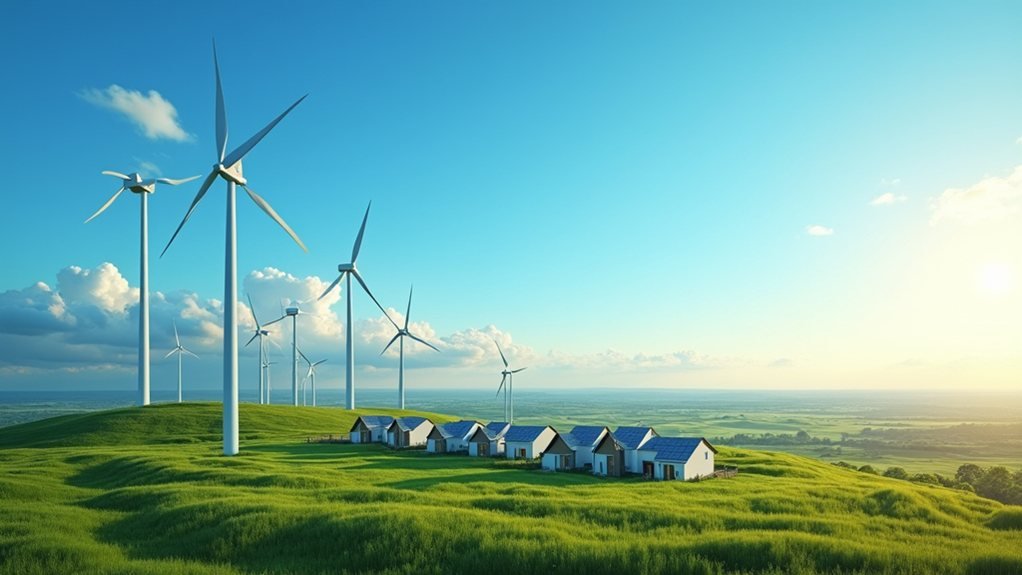
As the sun dipped below the horizon on December 5, 2025, something remarkable happened—it wasn’t just another evening in the UK; the nation hit a dazzling peak of 23,825MW in wind power generation, equivalent to lighting up more than 23 million homes. This record-breaking achievement marked wind’s critical role in decarbonisation, supplying 47% of the electricity demand during peak times. This growth underscores the role of offshore wind in decarbonising the grid. The record generation on this date reflected a significant increase in renewable energy output(new peak) during a year where renewables produced a record 44% of the UK’s electricity. Wind power’s dominance at nearly 30% illustrates its increasing significance. With installed wind capacity exceeding 30 GW(installed capacity) projected to be mainly from North Sea offshore projects, this surge hints at a future where clean energy will not only be abundant but also essential for economic stability.
What Contributed to the UK Wind Power Record?
Despite the chilly December air, the factors that converged to create the UK’s wind power record were anything but frosty. Policy support and investment in grid infrastructure have helped unlock this momentum grid integration. On December 5, 2025, strong winds swept through northern England and Scotland, enabling wind to generate a whopping 23,825 MW—enough to power over 23 million homes. This remarkable achievement not only surpassed the previous record, but wind contributed nearly 55.7% of the country’s electricity amid peak demand. Notably, this record was achieved on a day when wind energy supplied over half of the nation’s demand. With a robust total capacity, strategic investments, and an ever-growing offshore sector, the UK’s commitment to clean energy clearly paid off, paving the way for a greener, breezier future! Furthermore, this record amount of power produced highlights the significance of wind generation for national electricity output.
What Does This Mean for Future Energy Reliability and Sustainability?
Building on the remarkable achievements of the UK’s wind power sector, the focus now shifts to the implications of this record-breaking output for future energy reliability and sustainability. This shift will hinge on smart grids and scalable energy storage to smooth variability.
While wind currently provides a hearty slice of the energy pie, reliability is hampered by lower-than-expected load factors. In 2024, the average onshore wind load factor rose to 25.34%, but this remains a hurdle for consistent energy supply. Additionally, over 11,000 operational wind turbines across the country are essential for reaching these targets.
With government targets set high, achieving 50 GW offshore by 2030 feels a bit like aiming for the moon but only packing a slingshot.
Smart grids and energy storage are vital for managing the wind’s whims.
The road ahead requires infrastructure magic, balancing clean energy dreams with the reality of consumer costs—an ongoing juggling act indeed!