
Reforming the fracking ban is like giving the UK’s energy independence a much-needed booster shot. It promises 74,000 jobs and a £33 billion economic lift, while our North Sea oil is essential for keeping the lights on and independence intact. With a potential 97% gas import dependency looming, stepping back from net-zero policies could mean ramping up domestic production, ensuring stability. It’s time to bring energy home—stay tuned for why this matters so much!
Quick Overview
- Reforming fracking could create 74,000 jobs and inject £33 billion into the UK economy, promoting economic growth and job security.
- Strengthening North Sea oil production ensures energy independence, reducing the risk of relying on foreign gas imports.
- Ending net zero policies may increase domestic energy production, counteracting the declining trends in North Sea output.
- Streamlined regulations can enhance fossil fuel output while supporting renewable investments, balancing energy needs with environmental goals.
- High energy prices must be addressed through increased domestic supply to maintain economic stability and competitiveness.
Why Is Reforming the Fracking Ban a Patriotic Duty?
With the potential to create 74,000 jobs and pump £33 billion into the UK economy, fracking offers a clear path to self-sufficiency. This shift could also energy resilience, strengthening national readiness. It’s akin to trading foreign takeout for a homemade feast; suddenly, you’re less dependent on imports. Furthermore, the rise in domestic production could lower energy prices, saving households money—who wouldn’t want that? As energy independence strengthens national security, some see it as a noble way to safeguard Britain’s future, balancing economic growth with the kind of homegrown energy pride that would make even the Queen smile. Additionally, by harnessing local fossil fuel resources, the UK could reduce its reliance on foreign energy imports, contributing to a 7.5% reduction in greenhouse gas emissions as seen in the U.S. from similar industry efforts.
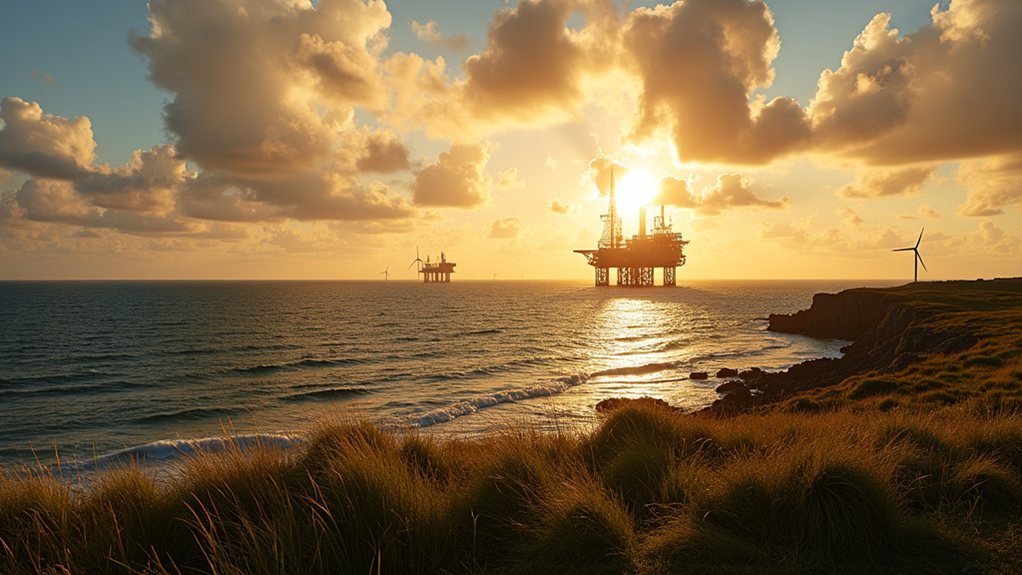
What Role Does North Sea Oil Play in Our Energy Independence?
As production from mature fields declines—predicted to drop to 33 million tonnes by 2030—the stakes get higher. Policy coherence across energy systems is essential for carbon emissions reduction and energy security. In 2022, domestic gas accounted for 44% of UK needs, making North Sea reserves crucial. However, the North Sea’s production is expected to halve in the coming years if current policies persist. Yet, restrictive policies threaten this supply, increasing reliance on foreign markets. With around 200,000 jobs reliant on oil and gas, the industry is feeling the pinch. Furthermore, the investment pullback due to current government policy has further exacerbated the situation, putting even more strain on the industry’s future.
Without fresh exploration and investment, the UK could see its gas import dependency soar to 97% by 2050—a reality akin to relying on a friend’s Netflix password forever.
Can Ending Net Zero Policies Increase Domestic Energy Production?
The discussion about the future of the UK’s energy landscape is getting hotter than a kettle left on too long. This broader energy debate intersects with sustainable food practices, where efficient logistics and reduced waste can lower overall environmental impact. Ending net zero policies could indeed spark domestic energy production. With a 68% decline in North Sea output, the industry finds itself in dire straits, facing a drop in investment. Gas plants, as beloved as an old sweater, are aging and inefficient, inviting costly retirements. However, simplifying regulations might reverse the trend, boosting fossil fuel output while supporting renewables. High electricity prices fundamentally, it’s about striking a balance; a little less carbon fuss, and a little more energy muscle could energize the UK’s future. Furthermore, UK emissions reduced by 48% from 1990 to 2021, showing that economic growth can occur alongside energy production.