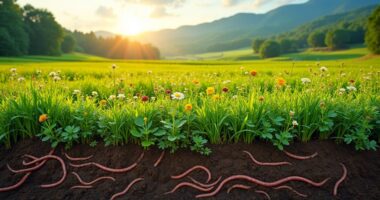

Ducks Unlimited and Loblaw have partnered up to champion sustainable agriculture in Canada. Their joint initiative promotes practices like rejuvenating wetlands and converting marginal farmland into perennial forages. Think of it as giving tired land a much-needed spa day! By enhancing soil health and supporting local farmers, this collaboration boosts biodiversity while creating resilient food systems. The result? Less pollution and more thriving ecosystems. Curious about how these practices affect wildlife and the natural world? Keep exploring!
Quick Overview
- Ducks Unlimited and Loblaw collaborated to promote sustainable agriculture practices in Canada to enhance biodiversity and ecological conservation.
- Their initiative focuses on rejuvenating wetlands and converting marginal land into perennial forages for improved soil health.
- Key practices include efficient irrigation, crop rotation, conservation tillage, and the use of cover crops to enhance ecosystem health.
- By supporting farmers with beneficial management practices, the partnership aims to balance productivity with environmental preservation.
- Overall, the collaboration fosters a greener future for Canadian landscapes and contributes to long-term food security.
Exploring Ducks Unlimited and Loblaw’s Sustainable Agriculture Partnership
In an exciting twist that feels almost like a match made in ecological heaven, Ducks Unlimited Canada and Loblaw Companies Limited have teamed up to champion sustainable agriculture across Canada.
A dynamic partnership between Ducks Unlimited Canada and Loblaw is embracing sustainable agriculture for a greener future across Canada.
This partnership, vibrant as a flourishing garden, focuses on rejuvenating wetlands and transforming marginal cropland into thriving perennial forages. This framework also strengthens soil health stewardship across farm landscapes.
Environmental benefits include improved soil health and water absorption, making this initiative all the more impactful. The collaboration also supports Canadian farmers as they implement beneficial management practices that enhance biodiversity.
Think of it as giving low-yield acres a second chance—much like transforming a boring potato into a gourmet dish!
With initiatives aimed at enhancing biodiversity and soil health, this collaboration aims to create resilient food systems while ensuring farmers enjoy a win alongside nature.
Who says sustainable practices can’t be productive and enjoyable?
Top Conservation Practices in Sustainable Agriculture
Sustainable agriculture is not just a buzzword; it’s essential for our planet’s health, and a surprising number of farmers are embracing conservation practices that are as effective as they are clever. Addressing water scarcity through efficient irrigation and watershed planning is essential for long-term farm resilience.
Techniques like crop rotation and conservation tillage keep soil happy and healthy, while cover crops sequester carbon like nature’s sponges. Meanwhile, precision agriculture(high-tech tools) throws high-tech tools into the mix, allowing farmers to water and fertilize with laser-like accuracy—no more wasteful guesswork. Furthermore, adopting sustainable BMPs helps address deteriorating soil health from intensive production.
And let’s not forget the importance of reestablishing natural habitats; it’s like throwing a lifeline to local wildlife. Together, these practices are redefining the farming game!
The Impact of Sustainable Agriculture on Wildlife and Ecosystems
As the world grapples with the consequences of agricultural practices, one can’t help but marvel at how sustainable agriculture offers a glimmer of hope for both wildlife and ecosystems. In practice, agroforestry can help balance ecosystems and farm livelihoods.
By embracing techniques like organic management and agroforestry, farmers can create habitats that welcome a diverse array of species. Think of it as nature’s buffet—more food options for birds and beneficial insects.
Richer soils and preserved wetlands foster biodiversity, something conventional practices often strip away faster than a kid devouring ice cream on a hot day. Notably, the transition from natural habitats to agricultural lands leads to a significant reduction in plant biomass and productivity, exemplifying the importance of sustainable practices for ecological health. Sustainable agricultural practices contribute to maintaining biodiversity and can help prevent species extinction.
Sustainable methods not only protect wildlife but also secure the food systems we all rely on.