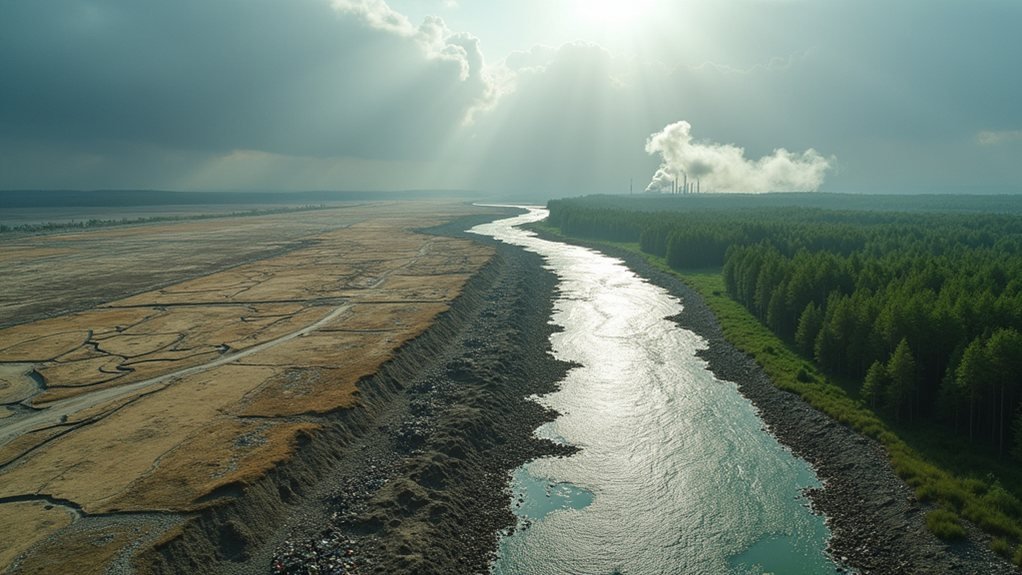

Ecocide is the intentional, harmful destruction of our environment, akin to setting the planet’s table on fire. As climate breakdown worsens, the call for strong legal frameworks to combat this behavior grows louder. With 15 countries drafting laws against ecocide, it’s like a game of environmental defense where the stakes are high. However, prosecuting these cases is tricky, often making pollution feel like an all-too-comfortable crime. For those curious about the legal battles ahead, there’s much more to unpack!
Quick Overview
- Ecocide laws are crucial for addressing severe environmental damage and promoting proactive governance against climate breakdown.
- Environmental justice demands accountability through legal frameworks, mitigating the inequities faced by vulnerable communities during climate crises.
- Criminalizing ecocide can deter harmful practices, fostering a culture of sustainability and responsibility among corporations and individuals.
- The prosecution of ecocide faces challenges such as jurisdictional limitations and difficulties in proving intent, hindering effective legal action.
- Recognizing ecocide within international law could enhance global awareness and spur more robust action against environmental degradation.
What Is Ecocide? A Comprehensive Definition and Its Environmental Impact?
Ecocide—sounds dramatic, doesn’t it? Yet, this term encapsulates severe environmental damage, often caused by reckless human behavior.
Ecocide captures the catastrophic impact of human actions on our environment, threatening the planet’s health and future.
Defined by an Independent Expert Panel, ecocide involves unlawful acts likely to bring widespread harm to Earth’s systems and its living beings. Think of it as dropping a bowling ball on your favorite vase and hoping for the best! Proactive governance and sustainable water management practices can mitigate such risks before they escalate.
It covers anthropogenic impacts ranging from climate change to biodiversity loss, highlighting our reckless disregard for nature’s delicate balance. The concept of transgenerational rights is crucial, reminding us that our actions today have lasting effects on future generations. The recent proposal to criminalize ecocide under international law underscores the need to address environmental harms that have gone unpunished.
If not curbed, humanity risks not just the planet’s health but our own—a future where clean water is a luxury, not a right.
How Domestic Laws Combat Ecocide
As the world grapples with the urgent need for environmental protection, laws combating ecocide are emerging as pivotal tools in the effort to safeguard the planet. Additionally, recognizing environmental justice highlights how burdens and benefits from ecocide laws can vary across communities.
With 15 countries enacting such legislation by February 2024, nations like Belgium, France, and Ukraine are stepping up. Belgium, for instance, just became the first EU member to define ecocide, while France lays down serious penalties—up to 10 years behind bars for severe damage. Criminalizing ecocide could deter harmful environmental practices and provide a legal framework for holding corporations and individuals accountable. Furthermore, Belgium’s law aligns with the EU Environmental Crimes Directive to enhance enforcement against serious environmental offenses.
From Vietnam starting the trend in 1990 to robust guidelines today, these laws are more than just legal jargon; they’re essential shields against environmental harm, turning conservation into a courtroom cause.
Navigating Prosecution Challenges in Ecocide
How does the legal system tackle the complex web of challenges surrounding ecocide prosecutions? These challenges ripple into long-term ecological stability and the preservation of ecosystem services. Steering through this terrain resembles untangling a ball of yarn after a cat attack.
Jurisdictional limits mean only those states ratifying the ecocide amendment face ICC oversight, but what about those outside? Proving knowledge of harm is like asking a fish to understand the water it swims in. Additionally, the ICC can’t touch corporations, leaving high-ranking culprits hidden behind corporate shields. Legal persons are responsible for up to 75% of environmental crime, complicating accountability efforts. With limited resources favoring flashy violence over “slow violence” like environmental degradation, it’s a wonder any ecocide cases make it past go. The proposed crime parallels a war crime already prohibited by the ICC, further complicating its legal standing.
Always a tricky game!