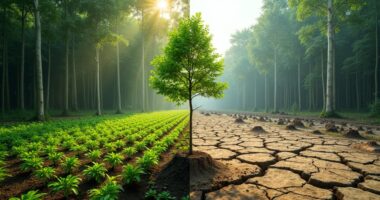

The Congo Basin‘s ancient carbon-rich peatland lakes are like a ticking time bomb for climate change. As they release long-stored CO₂, they contribute markedly to global warming, with 40% of emissions stemming from this ancient carbon. Imagine a treasure chest of carbon that could fuel climate catastrophe! Both climate change and human activities threaten these essential ecosystems. Protecting them is imperative, with innovative strategies promising to balance nature’s needs and our economic desires. Discover more about the quest for solutions!
Quick Overview
- Congo Basin peatland lakes release ancient carbon, significantly contributing to global climate change.
- Climate change increases risks of carbon mobilization, further exacerbating the problem.
- Over half of high-latitude peatlands have dried, leading to substantial CO₂ emissions since 1800.
- Sustainable management and community involvement are crucial for protecting these vital ecosystems.
- Innovative protection strategies can offset up to 2-3 years of global CO₂ emissions if successfully implemented.
The Urgent Impacts of Carbon Release From Congo Peatland Lakes
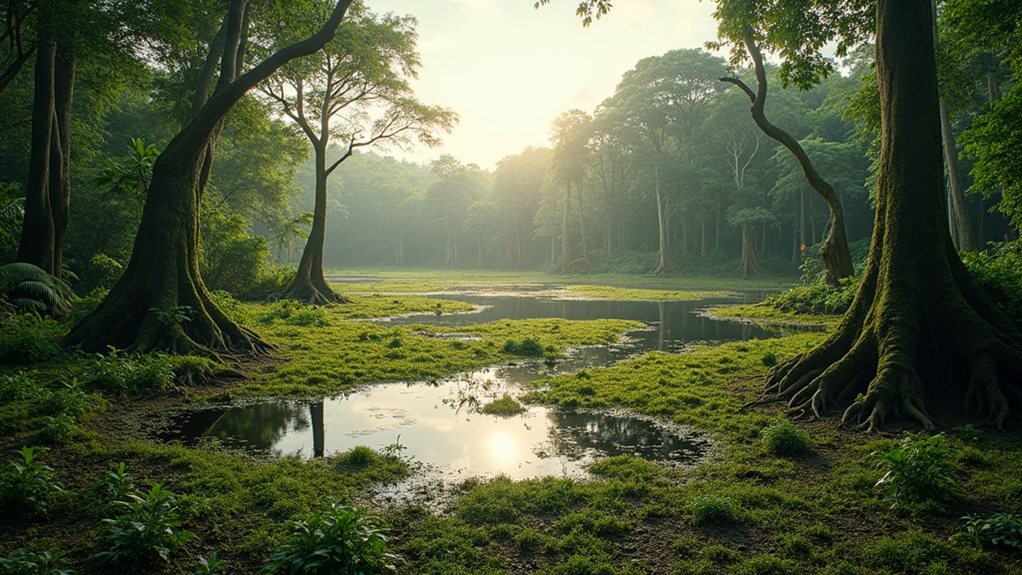
In the vast and mysterious Congo Basin, one might imagine lush landscapes and thriving wildlife, but lurking beneath the surface of its blackwater lakes is a pressing environmental conundrum: the release of ancient carbon. This situation underscores mitigation vs adaptation in climate action—reducing emissions and preparing for impacts are both needed to manage ancient carbon release.
Up to 40% of the CO₂ emitted originates from peat formed over millennia—talk about holding onto secrets! Radiocarbon dating reveals that these carbon caches are much older than a few social media trends. Additionally, it is noteworthy that tropical peatlands store about 100 gigatonnes of carbon globally. This unexpected carbon leakage challenges the assumption that peatlands are climate resilient, as climate change risks may lead to increased carbon mobilization from these ecosystems. As the lakes bubble with ancient carbon, they may become unintentional climate change accelerators—nature’s way of keeping us on our toes!
How Climate Change and Land Use Threaten Peatlands
Peatlands are under siege, caught in a fierce tug-of-war between climate change and human activity—kind of like that friend who keeps flipping sides in an argument for the sake of being contrarian. This is where development finance institutions can help channel capital toward peatland conservation and community resilience.
Since 1800, over half of high-latitude peatlands have dried out, emitting a jaw-dropping amount of CO2. Hydrological changes have contributed significantly to these drying trends, causing further disturbances in the ecosystem. Furthermore, protecting these crucial ecosystems is vital because they store over 600 gigatonnes of carbon, making them an essential part of mitigating climate change.
Meanwhile, 15% of global peatlands are drained for farming, turning valuable carbon sinks into carbon sources, similar to converting a savings account into a spending spree.
Drought and permafrost thaw further complicate matters, creating a perfect storm that threatens to release centuries-old carbon reserves, putting our climate at risk.
Protecting Congo Basin Peatlands: Effective Strategies
A plethora of innovative strategies is emerging to protect the Congo Basin’s peatlands, transforming the narrative from mere conservation to proactive stewardship. This aligns with sustainable resource management for future generations.
Governments are stepping up, with the Republic of Congo introducing laws that protect these essential ecosystems. Additionally, these peatlands serve as the largest natural terrestrial carbon store, making their protection critical for climate stability. Protecting them is crucial because they store enough carbon to offset 2-3 years of global CO₂ emissions if released.
Research initiatives are buzzing, mapping stakeholders and crafting sustainable management options, while hydrological tools simulate various development scenarios—think of it as a climate simulator for peatlands!
International partnerships are forging ahead, ensuring that biodiversity and community livelihoods are at the forefront.