The Trump administration’s plan aims to open up vast federal waters along California’s coast for offshore oil leasing, the first since 1984. This proposal, covering 1.27 billion acres, has stirred concerns about environmental degradation and economic threats, with 69% of Californians opposing the drilling. While the allure of jobs and GDP boost hangs in the balance, public and political resistance, driven by fears for wildlife, is rising fast. Stick around—there’s more to this unfolding drama!
Quick Overview
- The Trump administration’s draft plan proposes opening 1.27 billion acres of federal waters off California’s coast for oil leasing.
- This initiative includes six lease sales scheduled between 2027 and 2030, marking the first since 1984.
- Public opposition is significant, with 69 percent of Californians and over 270,000 comments submitted against the drilling proposal.
- Economic risks include jeopardizing nearly 746,000 jobs tied to California’s coastal economy, valued at $53 billion.
- Political and public advocacy emphasizes the protection of marine environments amidst concerns over wildlife and habitat risks.
Exploring Environmental and Economic Impacts of California’s Coastline
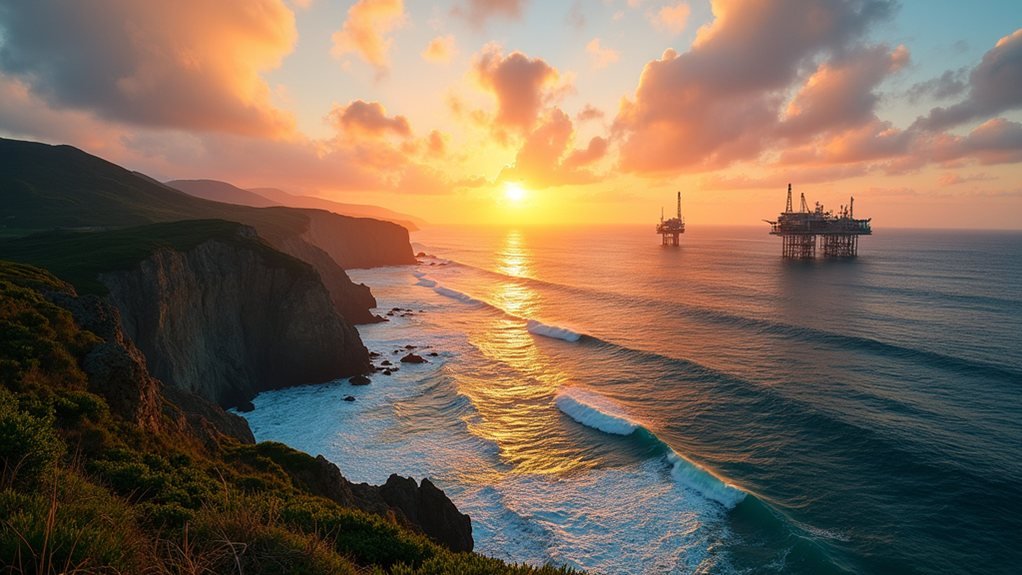
As the sun sets over California’s picturesque coastline, one might assume that the only concerns on the horizon are surfers and sunsets.
As twilight descends over California’s stunning shores, it’s easy to overlook the deeper, hidden challenges beneath the waves.
However, the ocean hides a murky truth beneath its glimmering surface. Historical oil spills, like the infamous 1969 Santa Barbara disaster, released millions of gallons of crude, wreaking havoc on marine life.
Daily, natural seeps release toxic oil, while drilling operations introduce heavy metals into the ecosystem. With 1.2 million oil facilities nationwide, the economic allure of offshore drilling collides with environmental risks, leaving a delicate balance disrupted. Natural oil seeps in the Santa Barbara area release 6,500-7,000 gallons of oil daily, contributing to ongoing ecological challenges. In addition, the submerged structure of Platform Holly, which served as a vertical reef, now supports dense marine life, adding another layer of complexity to the ecological landscape.
The stakes? Lives, habitats, and California’s iconic coastline hang in the balance. Efforts to reduce waste and promote sustainable practices onshore can help lessen pressures on coastal ecosystems.
Key Details of the Offshore Oil Leasing Proposal
While the waves of California’s coast might seem serene, the waters are stirring with a proposal that could reshape the future of offshore oil leasing.
The Trump administration’s draft plan, released on November 20, 2025, seeks to open federal waters along the entire California coast for oil leasing, marking the first lease sales since 1984. This ambitious program spans 1.27 billion acres and includes six sales from 2027 to 2030. With approximately 4,900 submissions received during the comment period, the proposal aims to tap into much-debated resources while maneuvering through protected areas, creating a complex dance between energy needs and environmental concerns. The recent Gulf of America Oil and Gas Lease Sale held in December 2025 indicates a renewed interest in offshore leasing amidst evolving policies. A concurrent focus on carbon emissions reduction strategies highlights tensions between expanding fossil fuel development and efforts to cut greenhouse gases.
Public and Political Opposition to Offshore Drilling Initiatives
Public and political opposition to offshore drilling initiatives is more than just a ripple in the water; it’s a tidal wave of resistance fueled by environmental concerns and community voices.
A staggering 69 percent of Californians stand against new offshore drilling, with 270,000 public comments highlighting their dissent. Over 65 cities and counties, representing more than half the state’s population, have formally expressed their opposition. At least 54 cities and counties have passed resolutions against offshore drilling expansion. Additionally, concerns about risks to wildlife and habitats are driving many to join the fight against these proposed initiatives. Conservation groups also emphasize the importance of sustainable fisheries and protected marine areas in their advocacy.
Even governors from California, Washington, and Oregon are vocal critics. With nearly 746,000 jobs and $53 billion in GDP at stake, the stakes are high, and the call for a cleaner ocean is louder than ever.