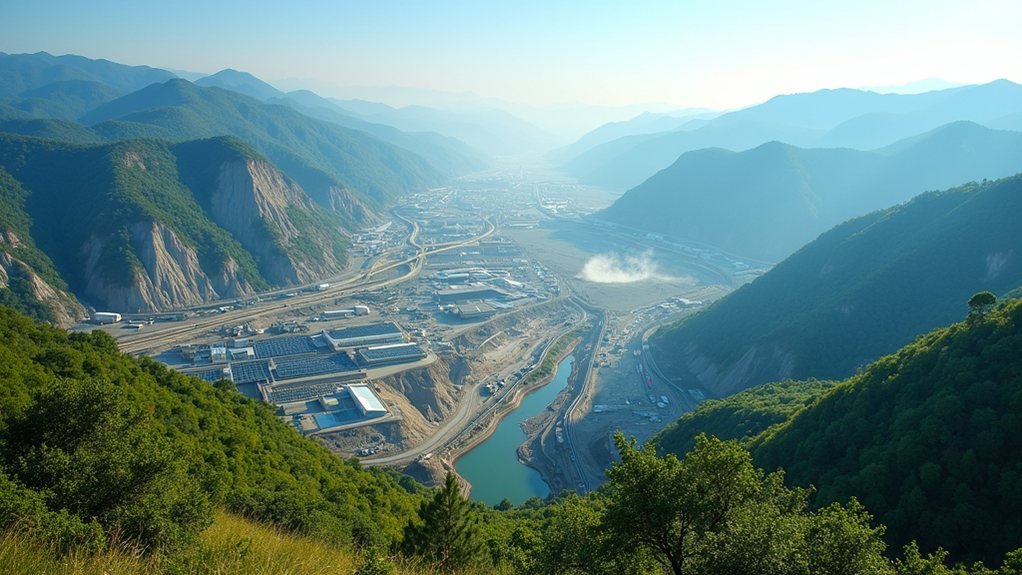

The US-EU Critical Minerals Trade Zone is shaking up the mineral market with its new preferential tariffs. This initiative aims to stabilize prices and foster resilience by creating a safe trading area, free from pesky external disruptions, particularly from China. Think of it as a protective umbrella for member nations, boosting investments and keeping manufacturing strong. The tariffs set price floors to guarantee fair competition, making certain the supply chain can dance smoothly, even when faced with global shifts. Curious about the future of this mineral game?
Quick Overview
- The US-EU Critical Minerals Trade Zone establishes preferential tariffs to stabilize pricing and prevent market flooding from foreign sources.
- Tariffs create price floors that encourage investments in domestic mining and processing sectors, enhancing market stability.
- The initiative aims to protect US manufacturing by exempting critical minerals from external tariff pressures.
- Exclusion of Chinese participation in this trade zone reshapes market dynamics and encourages private investment.
- Continuous evaluation of environmental and social performance is critical to ensure sustainable outcomes within the preferential tariff framework.
What You Need to Know About the US-EU Critical Minerals Trade Zone
The US-EU Critical Minerals Trade Zone is like a new club for countries that want to play it smart in the global commodities game. Launched by Vice President J.D. Vance, this initiative aims to redefine critical mineral trading by establishing reference prices and adjustable tariffs. With over 50 nations involved, including 11 newly signed agreements, it excludes Chinese participation to reshape the market dynamics. Think of it as setting up a fair poker game where everyone knows the stakes. The goal? To stabilize pricing and prevent market flooding from foreign sources, ensuring a level playing field for member countries. Additionally, the initiative focuses on creating diverse production centers to enhance resilience in critical minerals supply chains. To achieve this, the US government is seeking to reduce reliance on adversarial sources and secure reliable supplies of critical minerals. The initiative also emphasizes supply chain resilience through coordinated policies and diversified sourcing.
Preferential Tariffs and Sustainable Supply Chains
While maneuvering the intricate world of international trade, preferential tariffs play an essential role in establishing sustainable supply chains, especially within the US-EU Critical Minerals Trade Zone.
These tariffs create price floors, ensuring stability and encouraging investments in mining and processing. Think of them as guardrails that keep the market on track, preventing price dumping like a bad sitcom rerun. Additionally, the initiative aims to create a preferential trading area protected from external disruptions, which is crucial for long-term sustainability. The exemptions for critical minerals, including cobalt and indium, protect US manufacturing while partnerships with allies like Canada and Australia boost supply. Evaluation frameworks help assess environmental and social performance across suppliers and operations, strengthening supply chain sustainability.
Impact of Tariffs on Global Mineral Markets
In the ever-evolving landscape of global mineral markets, tariffs are shaping the game like a strategic chess match, where each move can influence the outcome for nations and industries alike. By enforcing price floors and excluding Chinese supply, the US-EU bloc aims to stabilize prices. This clever tactic counteracts market distortions and encourages private investment. Furthermore, this approach aligns with the emphasis on innovation in the chemical sector to reduce reliance on critical minerals. In addition, the U.S. has recently signed 11 bilateral critical minerals frameworks to further strengthen its position in the global market. However, higher input costs loom for manufacturers, akin to paying premium prices for organic kale at the grocery store. While boosting non-Chinese production, these tariffs might also raise eyebrows among EU industries reliant on minerals. The chess match continues, with every piece playing a vital role. This strategy also requires attention to life cycle impacts across extraction, processing, and disposal to ensure sustainable outcomes.