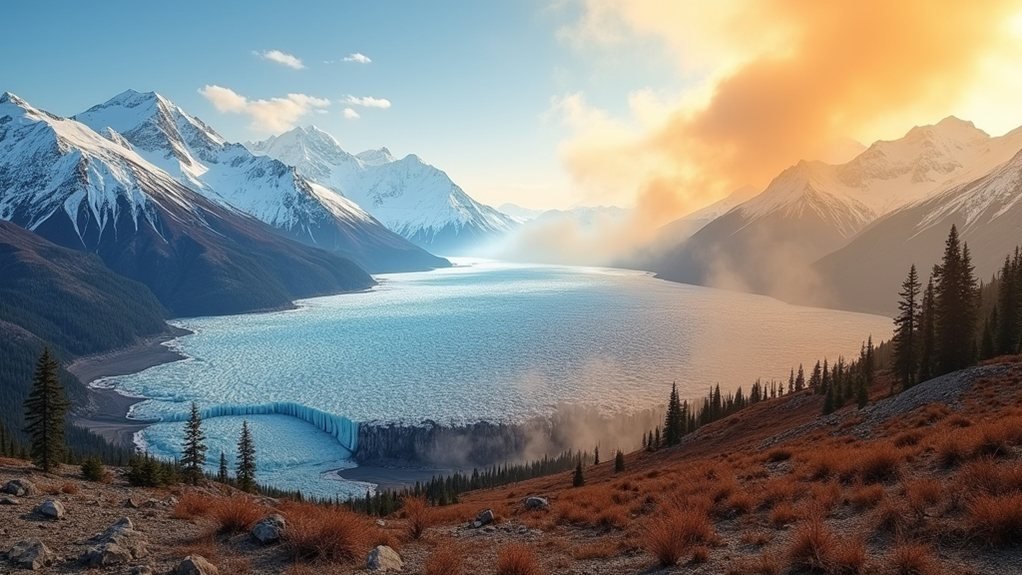
Canada’s warming climate is causing snowpacks to shrink, which spells trouble for water availability. Think of snowpack as nature’s reservoir; less snow means less water for drinking and farming. This reduction affects ecosystems too, disrupting fish habitats and contributing to salmon declines. And if you think those pesky wildfires won’t get worse, think again—droughts make them more likely. With smart strategies and community action, there’s hope for a cooler, safer future. Curious about what else can be done?
Quick Overview
- Climate change is causing a decline in snowpack across Canada, affecting water availability for ecosystems and agriculture.
- Reduced snow water supply contributes to warmer stream temperatures, negatively impacting salmon populations and aquatic ecosystems.
- Drought conditions linked to declining snowpack increase wildfire risks, necessitating community preparedness and strategic landscaping efforts.
- Farmers in regions like Okanagan face irrigation shortages, prompting them to adopt sustainable practices for water conservation.
- Effective conservation and management strategies, including early warning systems, are vital for mitigating climate change impacts and wildfire risks.
Understanding Climate Change’s Impact on Canada’s Snowpack
As climate change continues to reshape our planet, its effects on Canada’s snowpack are becoming increasingly evident, almost like watching a slow-motion train wreck—alarming yet hard to look away from.
The warming Arctic is melting ice, sending moisture up north instead of quenching southern thirst. Meanwhile, the Canadian Rockies, despite their small footprint, are losing precious snow water availability. Recent research indicates that 3% of Canada’s land mass has experienced declines in snowpack, further exacerbating the situation. As of February 1, 2026, the provincial mountain snowpack averages 96% of normal, representing a significant improvement from the previous year.
Rising temperatures are shifting snow depth and runoff timing, creating a mess that even Mother Nature couldn’t foresee. This creeping snow drought, though seemingly minor in spots, has a domino effect, impacting vast regions and the people relying on that water. Conservation strategies like water conservation and sustainable management can help reduce long-term impacts by preserving supplies and improving resilience.
How Declining Snow Water Supply Affects Ecosystems and Communities
The impact of declining snow water supply extends far beyond the mountains, trickling down into ecosystems and communities that depend on this frozen reservoir.
As snowpack wanes, aquatic ecosystems suffer; warm streams lead to salmon population crashes, while fish habitats struggle under altered river flows. The decline in snowpack threatens not only fish habitats but also the overall health of aquatic ecosystems that rely on consistent water levels. Additionally, modest further warming could drastically reduce snowpack across various regions, exacerbating these challenges.
As snowpack diminishes, warmer streams threaten salmon populations and disrupt fish habitats with changing river flows.
Agriculture faces its own crisis, with irrigation shortages threatening crops in regions like the Okanagan. Farmers increasingly must adopt soil health practices to maintain yields under lower water availability.
Hydropower generation also takes a hit, leaving energy supply uncertain.
Even the timing of plant growth shifts, risking a bizarre dance of late frosts and confused critters.
Communities must adapt as snow’s once-reliable bounty becomes increasingly unpredictable.
What Strategies Can Help Us Tackle Wildfire Risks During Drought?
While it may seem like wildfires are a seasonal inevitability, especially during drought conditions, a variety of strategies can be employed to tackle these fiery foes head-on.
Creating defensible spaces around homes by clearing flammable debris and selecting drought-resistant plants can considerably reduce risks. Strategic landscaping and fuel management, like thinning trees and establishing buffer zones, helps slow wildfires. Drought increases the probability of large-scale wildfires, making it essential to implement these strategies effectively.
Controlled burns can consume excess fuel while maintaining ecosystem health. Early warning systems utilizing drought data can enhance preparedness. Forest conservation practices that address drivers of forest loss—such as preventing unnecessary clearing and managing land-use change—also reduce wildfire risk.
Finally, engaging communities through education guarantees everyone understands their role in fire safety. Together, these strategies can turn the tide against wildfire threats.