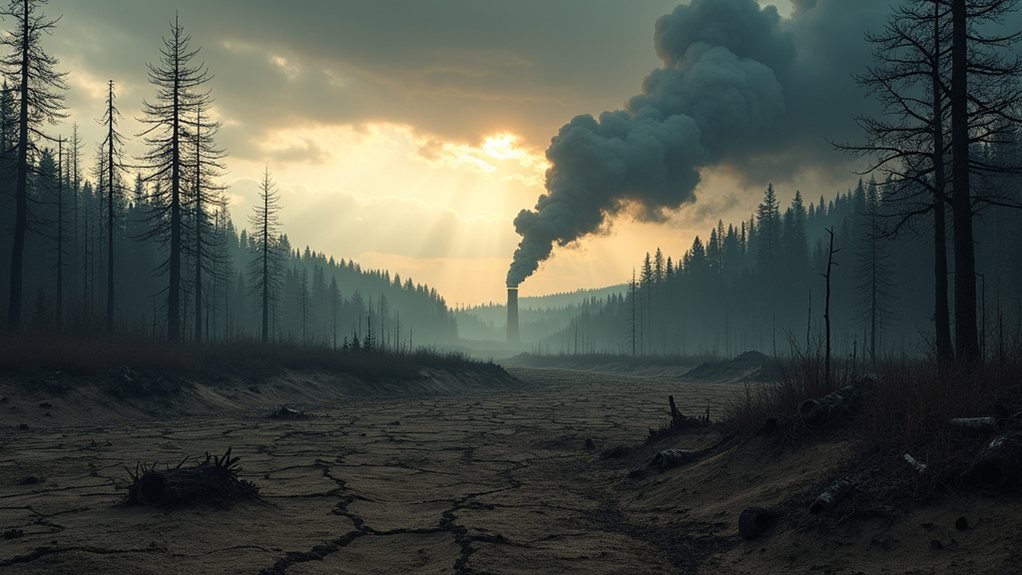

The 2026 repeal of the EPA’s greenhouse gas regulations is like removing the training wheels from climate action. This rollback not only risks public health—expect more respiratory issues and heart attacks from heightened air pollution—but it also threatens economic stability. While some might save $1.3 trillion out of the gate, the long-term health costs could reach $1,425 per vehicle! As we face the potential for extreme weather, embracing sound environmental practices is more essential than ever. Curious about the full impact?
Quick Overview
- The EPA’s repeal of greenhouse gas regulations in 2026 could significantly increase air pollution and public health risks, especially for vulnerable populations.
- Economic analysis suggests that repealing vehicle emission standards may save Americans $1.3 trillion, but could incur health costs of $1,425 per vehicle.
- The rollback undermines scientific consensus on climate change, weakening the EPA’s authority to limit climate pollution and jeopardizing air quality.
- Urgent climate action is needed as projections indicate global temperatures may rise significantly, increasing the likelihood of extreme weather events.
- Long-term consequences of the repeal include potential exacerbation of respiratory and cardiovascular diseases linked to deteriorating air quality and pollution.
How the EPA’s GHG Regulation Repeal Affects Public Health?
While one might think that a government agency’s decision to roll back regulations on greenhouse gases would simply be a matter of policy, the reality is far more complex—especially when it comes to public health.
The repeal opens the floodgates for increased air pollution, leading to a surge in respiratory and cardiovascular diseases. Vulnerable populations, like the elderly and children, bear the brunt of this health crisis. With a direct link between high pollution levels and heart attacks, the absence of federal protections becomes a serious concern. Furthermore, the repeal of the endangerment finding undermines scientific conclusions regarding the harmful effects of climate pollution on public health. Without these safeguards, the EPA’s authority to limit climate pollution is severely weakened, and communities face a formidable uphill battle against deteriorating air quality and its dire health consequences. Monitoring air quality and implementing mitigation strategies are essential to protect public health.
Economic Consequences of Eliminating Vehicle Emission Standards
The ripple effects of rolling back vehicle emission standards extend beyond public health concerns, reaching deep into the economy. The repeal could generate a staggering $1.3 trillion in savings for Americans between 2027 and 2055, translating to over $2,400 in average savings per vehicle. This makes new cars more affordable and enhances consumer choice, like a buffet of options at a fancy restaurant. However, lurking in the background are potential health costs and increased fuel spending that could hit $1,425 per vehicle. It’s a classic case of “you can’t have your cake and eat it too,” with real economic trade-offs at stake. The elimination of federal GHG emission standards could lead to unintended consequences that affect both the environment and public health in the long run, particularly as the transportation sector is responsible for 27.2% of U.S. greenhouse gas emissions. Businesses can respond with carbon reduction strategies to help mitigate some downstream impacts.
Expert Opinions on Climate Change Risks
In the grand arena of climate discourse, expert opinions on climate change risks echo with a sense of urgency that can’t be ignored.
With a staggering 100% consensus on human-caused climate change, the scientific community warns of dire consequences. Projections suggest global temperatures could rise by 1.5°C within the next few years, leading to intensified heatwaves and extreme weather events. Global temperatures are projected to remain at or near record levels from 2025 to 2029, further exacerbating the situation. Experts caution that crossing tipping points, like the collapse of the Amazon rainforest or Arctic permafrost, could release catastrophic amounts of CO2. Human activities, such as fossil fuel combustion and deforestation, are the primary contributors to this alarming trend.
As policies falter, the stakes grow higher, and the future of the planet hangs precariously in the balance. The basic science explains how greenhouse gases trap heat in the atmosphere and drive long-term warming.