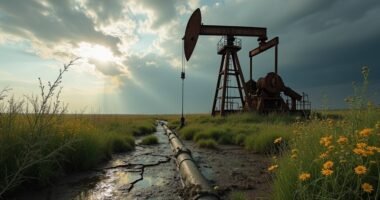

BP is under the microscope as shareholders raise eyebrows about its pivot back to fossil fuels, leaving ambitious climate goals in the dust. With a staggering $10 billion pledge to oil and gas, investors like the West Yorkshire Pension Fund are understandably concerned. They’re asking tough questions about sustainability and future profits. Will BP balance short-term gains with a long-term green vision? Spoiler alert: the stakes couldn’t be higher, and there’s more to unpack about this corporate saga.
Quick Overview
- BP is facing increased pressure from shareholders due to a shift in focus from ambitious emissions targets to financial performance.
- A coalition of 23 institutional investors is demanding greater transparency regarding BP’s sustainability commitments and future strategies.
- Investors are scrutinizing BP’s $10 billion annual investment in oil and gas, raising concerns about overshadowing past renewable investments.
- There is a need for BP to align investment strategies with realistic energy market forecasts and long-term sustainability goals.
- Clear communication with investors about emissions targets and societal contributions is essential to regain trust and support.
Key Shareholder Concerns About BP’s Climate Strategy Shift
In the ever-evolving landscape of corporate responsibility, shareholder concern has emerged as a formidable force, particularly when it comes to BP’s climate strategy.
Investors are increasingly wary as BP shifts focus from ambitious emissions targets to financial performance, especially amid the International Energy Agency’s predictions of declining oil demand].
As BP prioritizes financial performance over emissions targets, investor concerns grow amid predictions of falling oil demand.
A coalition of 23 institutional investors has rallied for transparency on value creation, especially after BP’s dividend cuts.
The company’s retreat from its net-zero production goals and reduced low-carbon investments only heightens these concerns, leaving shareholders wondering if BP is genuinely committed to a sustainable future or simply chasing profits.
Implications of BP’s Move Towards Fossil Fuels
While many might argue that BP’s recent pivot towards fossil fuels is a pragmatic response to market demands, the implications of this strategy shift ripple far beyond immediate profits.
By committing $10 billion annually to oil and gas, BP faces scrutiny from investors, including the West Yorkshire Pension Fund, demanding clear disclosures on future profits.
This renewed fossil fuel focus, led by incoming CEO Meg O’Neill, risks overshadowing past renewable investments that resulted in $5 billion write-downs. Additionally, the decision to increase oil and gas investment reflects a significant shift in corporate strategy that may heighten investor concerns over long-term value.
As shareholders rally for transparency, BP’s financial landscape may encounter turbulence, seeking clarity on the company’s long-term sustainability amidst evolving market dynamics.
A coordinated approach across sectors, including energy system changes like grid decarbonization, will be essential to meet emissions reduction goals and influence long-term market expectations.
How Can BP Manage Financial Risks in Future Investments?
Financial risks are like the weather—unpredictable and often out of one’s control, yet essential for planning ahead. To navigate these financial storms, BP must extend its risk modeling beyond 2030 and align investment strategies with realistic energy market forecasts. Furthermore, recent research indicates that BP may produce 84% more oil and gas by 2030 than originally planned, emphasizing the urgent need for a strategic shift. Emphasizing low-carbon investments is vital, especially as their current spending diverges markedly from the necessary shift. Furthermore, BP should focus on transparent emissions targets and engage with investors who prioritize climate alignment, particularly as they face risks from high-cost projects. Companies that align operations with the Sustainable Development Goals can better measure and communicate their contributions to long-term societal and environmental outcomes.