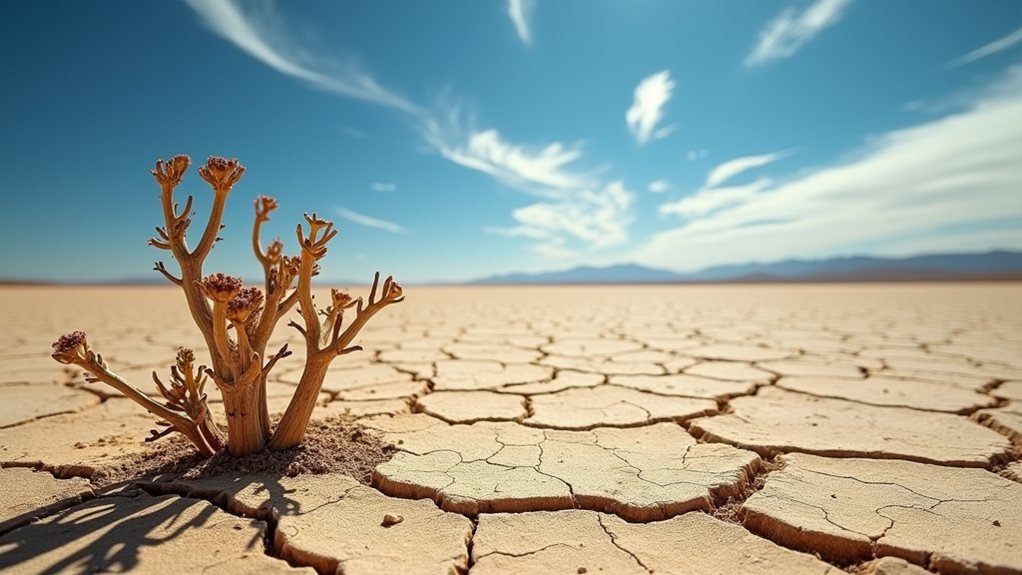

El Niño is throwing a global heat party that no one asked for. This weather phenomenon warms the Pacific, pushing temperatures to stunning highs, like a record 2.0°C above average in 2023-2024. It’s like winter decided to take a vacation, with the Southern U.S. getting wetter and the Northern U.S. losing its snowfall. As heat waves loom, experts predict 2026 might just overtake 2023 as the hottest year yet. Stick around to discover why this matters!
Quick Overview
- The 2023-2024 El Niño event has caused sea surface temperatures to rise by 2.0°C above average, threatening global heat records.
- Human-induced greenhouse gas emissions are contributing to long-term temperature increases, exacerbating the effects of El Niño.
- El Niño leads to significant shifts in weather patterns, including wetter winters in the Southern U.S. and reduced snowfall in the North.
- Climate change amplifies El Niño’s influence, resulting in unpredictable weather and extreme events that communities must prepare for.
- Predictions indicate that 2026 could be the hottest year on record, highlighting the urgency for carbon reduction efforts.
What You Need to Know About El Niño and Its Global Temperature Impact
When it comes to understanding El Niño and its impact on global temperatures, one might think of it as nature’s unpredictable DJ, spinning tracks that can either heat things up or cool them down.
This phenomenon, characterized by the warming of sea surface temperatures in the Pacific, occurs when trade winds weaken, pushing warm water eastward. Lasting 9-12 months, El Niño can elevate global air temperatures, leading to short-term spikes. For instance, the 2023-2024 event saw a staggering rise of 2.0°C above average. This cycle, part of the El Niño-Southern Oscillation, dances between warmth and cooler La Niña phases, influencing climate variability. In fact, the recent warming spike has led to approximately 0.20 °C per decade increase in global temperatures due to human-induced greenhouse gas emissions. During El Niño, the weaker easterly trade winds reduce upwelling, which can further amplify global temperature increases. Observations and models show that such events interact with long-term greenhouse gas driven warming to produce record-setting global temperatures.
El Niño’s Influence on Weather Patterns and Extreme Events
As El Niño takes center stage in the climate arena, it becomes clear that this phenomenon doesn’t just bring a warm embrace to the Pacific; it also orchestrates a dramatic shift in weather patterns across the globe.
With its arrival, expect fewer hurricanes in the Atlantic, as increased wind shear suppresses their development.
Meanwhile, the southern U.S. might experience wetter winters, while the north could see less snow—like winter’s version of a party favor gone wrong. La Niña’s rapid dissolution is expected to facilitate this transition, impacting weather systems across North America. The current transition to neutral ENSO conditions are already influencing predictions for the upcoming seasons.
The southern U.S. could face soggier winters, while the north may find snow dwindling—winter’s unexpected twist.
As climate change amplifies these effects, El Niño’s influence turns the weather into an unpredictable rollercoaster, leaving communities to brace for the wild ride ahead. Mitigation efforts that reduce greenhouse gas emissions can lessen long-term warming and thus influence the strength of future ENSO-related extremes, highlighting the importance of emissions reductions.
Heat Wave Predictions for 2026 and Beyond
With the relentless march of climate change, heat wave predictions for 2026 and beyond are shaping up to be as alarming as they are fascinating.
The UK Met Office forecasts a sweltering 1.46°C rise, potentially making it the second warmest year on record. 1.46°C rise Meanwhile, 2027 could see a peak of 1.7°C, thanks to a late El Niño, which acts like a turbocharger for global temperatures. As these heat waves loom, it’s clear: the Earth is warming faster than a pizza in a microwave. In fact, there is a 99% chance that 2026 will be hotter than all years before 2023. With 2026 likely among the hottest years, the future is heating up, and we’re all feeling the burn. Mitigation efforts focusing on carbon reduction across sectors will be crucial to limiting long-term warming.