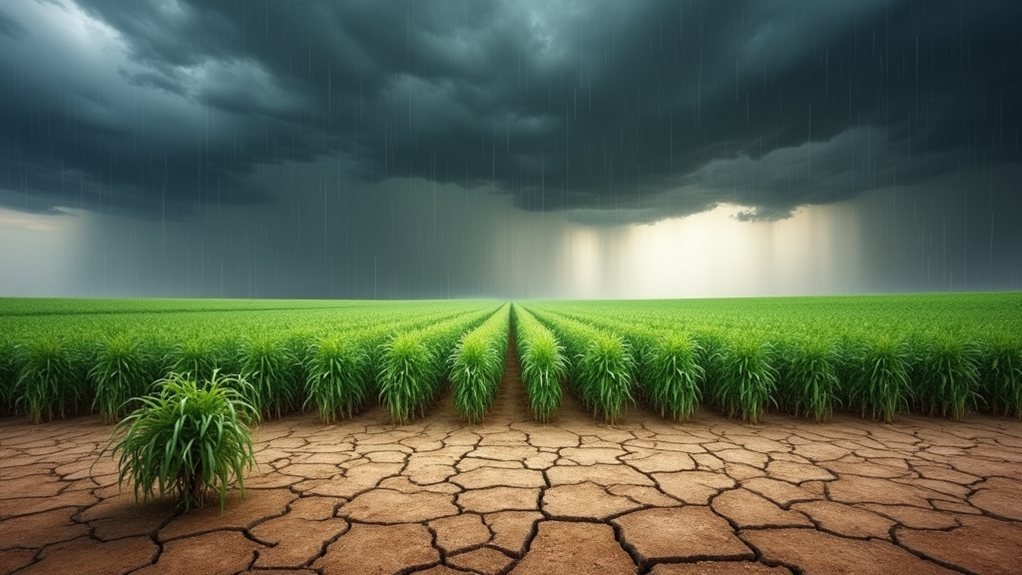
Extreme weather is becoming a major player in the UK’s agricultural drama, where droughts can turn once-fertile fields into barren wastelands, and heavy rains create mud pits that make farmers want to throw in the towel. With crop yields plummeting, the economic fallout is staggering. As climate change spices up the weather, farmers are feeling the heat—literally—and that could mean higher food prices for everyone. Stay tuned to uncover strategies for tackling these food security challenges!
Quick Overview
- Extreme weather events like droughts and heavy rainfall drastically reduce crop yields, threatening food supply stability in the UK.
- Climate change increases the frequency of severe weather, making UK agriculture more vulnerable to disruptions in food production.
- Rising reliance on imports from climate-vulnerable countries heightens the risk of food supply shocks due to global market instability.
- Financial strain on UK farmers from extreme weather could lead to increased food prices and long-term agricultural decline.
- Implementing sustainable practices and enhancing local production capabilities can mitigate the risks of climate-induced food supply shocks.
How Extreme Weather Disrupts UK Crop Production
In recent years, the impact of extreme weather on UK crop production has been nothing short of dramatic, with losses soaring to over £2 billion for arable farmers this decade.
Droughts have turned once-thriving fields into sunbaked deserts, crippling yields and shortening growth periods. Meanwhile, heavy rainfall has turned farmland into muddy no-go zones, preventing essential crop management. It’s like nature can’t decide whether to be a sunbather or a raincloud. High temperatures add another twist, stressing plants and reducing photosynthesis, the process that turns sunlight into lunch. Together, these extremes create a perfect storm, wreaking havoc on the nation’s food supply. The increased vulnerability of agriculture due to climate change only exacerbates these challenges.
Droughts and heavy rainfall are transforming fertile fields into barren wastelands, crippling yields and hindering vital crop management.
The estimated revenue reduction of over £828m for UK arable farmers in 2025 highlights the urgency of addressing these challenges. Improved water conservation practices and sustainable water management are essential to bolster resilience and reduce crop losses.
Global Factors Affecting UK Food Supply
While the UK prides itself on its rich agricultural heritage, the reality is that its food supply is increasingly at the mercy of global forces beyond its borders.
With 32% of its fruit and vegetables sourced from climate-vulnerable countries, the UK faces risks from droughts and floods in places like California and India. This reliance has increased significantly from 20% in 1987, highlighting the growing vulnerability of the UK’s food supply chain. Furthermore, the UK imports 48% of its total food, which further amplifies its dependence on international agricultural stability. Sustainable practices such as local sourcing and resilient distribution networks can help reduce exposure to those distant shocks.
Geopolitical tensions, such as Russia’s invasion of Ukraine, have already disrupted essential supplies.
Coupled with global market volatility and rising production costs, the interconnectedness of food trade means that the UK’s dinner table is often influenced by events thousands of miles away.
How Can We Tackle Food Security Risks in the UK?
Steering through the complexities of food security in the UK requires more than just a good recipe; it calls for a multi-faceted approach that blends innovation, policy, and community action. Sustainable production methods, like eco-friendly farming and biodiversity conservation, guarantee healthier food systems. Strengthening supply chains against climate shocks boosts resilience, while domestic production, fueled by agri-tech innovations, fills the gaps. The government aims for a food system where healthy food is accessible to all families, ensuring that everyone can benefit from nutritious options. Policies, like nutritional safety nets, help families access wholesome meals. With clear strategies from the government, including emergency measures for food insecurity, the UK can whip up a robust food security framework, making certain no one goes hungry—even during a storm. To achieve this, it is crucial to address critical vulnerabilities in the food system to enhance overall resilience. Integrating practices that preserve soil health underpins sustainable agriculture and secures long-term productivity.