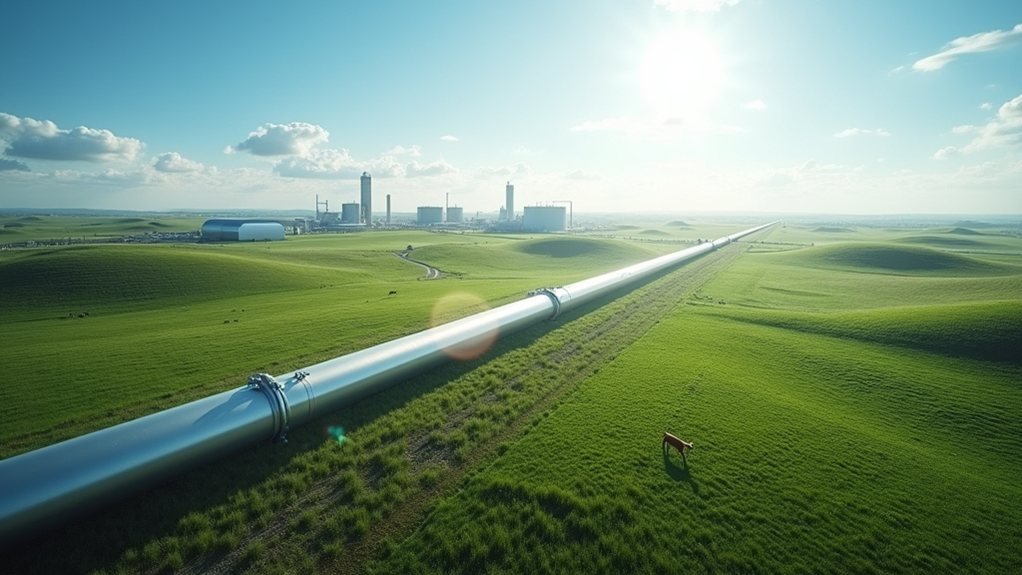

DNV is stepping up to design the H2East Pipeline, a major leap towards delivering low-carbon hydrogen across the UK. This pipeline will help industries like steel and chemicals ditch fossil fuels and clean up their act. With a whopping 11 gigawatts of hydrogen production capacity, it’s like providing a green energy buffet. Plus, DNV’s expertise will guarantee safety and efficiency, avoiding costly hiccups. Curious about how this impacts local economies and the bigger picture? Stay tuned!
Quick Overview
- DNV will provide technical expertise to ensure robust designs for the H2East hydrogen pipeline, addressing hydrogen’s unique challenges.
- The project aims to deliver low-carbon hydrogen to decarbonize hard-to-abate industrial sectors like steel and chemicals.
- DNV’s involvement enhances safety by identifying risks early, optimizing operations, and minimizing potential failures in the pipeline.
- The H2East pipeline is integral to the UK’s hydrogen strategy, supporting its goal of achieving net-zero emissions by 2050.
- Job creation and economic growth are expected from the pipeline, contributing to a resilient hydrogen economy and sustainable industrial development.
Key Benefits of the H2East Pipeline for Industrial Decarbonization
As industries grapple with the pressing need to cut carbon emissions, the H2East pipeline emerges as a beacon of hope, providing a lifeline to hard-to-abate sectors like steel and chemical production.
By supplying low-carbon hydrogen, it enables manufacturers to ditch natural gas, making operations cleaner and greener. Picture a world where the chemical industry waves goodbye to methane fuels! This pipeline also supports power generation and even extends its reach to brick and food manufacturing, transforming traditional processes. The 11 gigawatts of hydrogen production capacity from the H2East pipeline will significantly enhance energy supply for various industrial applications. Additionally, the project aims to decarbonize industry in the Humber, Lincolnshire, and Nottinghamshire regions, ensuring sustainable growth.
With a robust infrastructure, H2East not only prevents millions of tons of CO2 emissions but also fuels job creation in the burgeoning hydrogen economy. The project will complement existing renewable efforts by integrating solar and wind resources to supply low-carbon power for hydrogen production.
How the H2East Pipeline Supports the UK’s Net Zero Goals
While the journey to the UK’s net-zero goals may seem challenging, the H2East Pipeline emerges as a pivotal player in this ambitious quest. This innovative pipeline is designed to transport hydrogen, a clean energy source, thereby reducing carbon emissions considerably. By connecting industrial hubs, it enables businesses to shift from fossil fuels to greener alternatives, like switching from traditional gas to hydrogen—think of it as swapping your gas-guzzler for a slick electric ride. The H2East Pipeline not only supports decarbonization efforts but also fosters energy independence, making it a key asset in the UK’s pursuit of a sustainable future. Additionally, it plays a crucial role in meeting the UK’s estimated hydrogen demand of 460 TWh by 2050. With the anticipated publication of the UK government’s Hydrogen Strategy Refresh in 2026, the pipeline is set to be instrumental in shaping the future of hydrogen transportation and storage in the country. The project also complements developments in green hydrogen production and carbon management technologies that underpin corporate net-zero strategies.
What DNV Brings to the H2East Pipeline Project
The H2East Pipeline project isn’t just a shiny new piece of infrastructure; it’s a game changer in the quest for cleaner energy.
DNV brings a wealth of technical expertise, ensuring designs are robust and ready for hydrogen’s unique challenges. Think of them as the safety nets in a high-flying circus act—preventing costly tumbles by identifying risks early. Their specialized knowledge, from pipeline repurposing to advanced safety modeling, is invaluable. With DNV’s oversight, the project gains credibility, reducing risks and optimizing operations. It’s like having a seasoned navigator on a ship sailing through uncharted waters—essential for safe and successful hydrogen transport. This initiative is also part of the UK government’s commitment to advancing hydrogen infrastructure development, which highlights its significance in the national energy landscape. As the project connects three hydrogen production sites, it sets the stage for a robust hydrogen transmission network that supports industrial decarbonization. The project also aligns with efforts to build resilient supply chains that can withstand climate and geopolitical disruptions.